


Anti-counterfeit Cosmetic Packaging Market Outlook
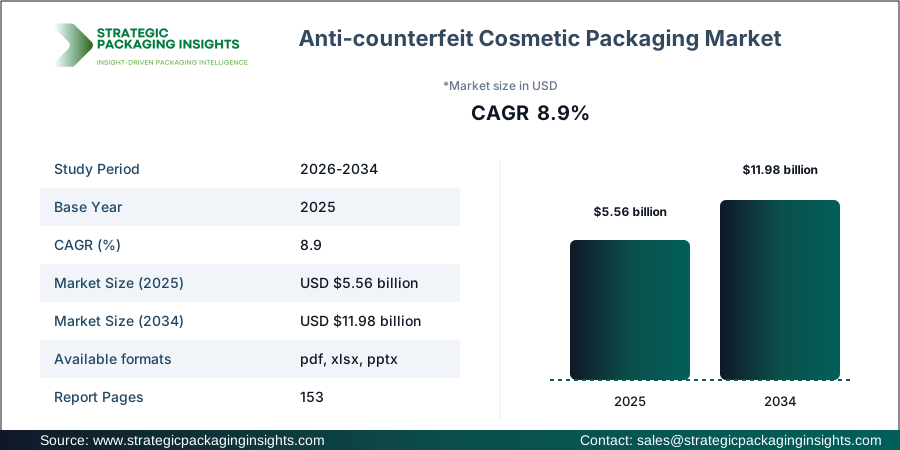
The Anti-counterfeit Cosmetic Packaging market was valued at $5.56 billion in 2025 and is projected to reach $11.98 billion by 2034, growing at a CAGR of 8.9% during the forecast period 2026-2034. This market is driven by the increasing demand for secure packaging solutions in the cosmetic industry, which is plagued by counterfeit products. The rise in consumer awareness regarding product authenticity and safety is pushing cosmetic brands to adopt advanced anti-counterfeit technologies. Additionally, the growth of e-commerce and the global expansion of cosmetic brands are further fueling the demand for anti-counterfeit packaging solutions. The market is also benefiting from technological advancements in packaging, such as the integration of QR codes and RFID technology, which enhance product traceability and authentication.
Despite the promising growth prospects, the Anti-counterfeit Cosmetic Packaging market faces certain challenges. High implementation costs and the complexity of integrating advanced technologies into existing packaging lines can be significant barriers for small and medium-sized enterprises. Moreover, the lack of standardized regulations across different regions can hinder market growth. However, the potential for growth remains substantial, driven by the increasing focus on sustainability and eco-friendly packaging solutions. As consumers become more environmentally conscious, there is a growing demand for packaging materials that are not only secure but also sustainable. This trend is expected to create new opportunities for market players to innovate and differentiate their offerings.
Report Scope
| Attributes | Details |
| Report Title | Anti-counterfeit Cosmetic Packaging Market Size, Future Growth and Forecast 2034 |
| By Technology | QR Codes, RFID, Holograms, Tamper Labels |
| By Packaging Type | Labels, Closures, Cartons, Bottles |
| By Application | Skincare, Fragrances, Makeup, Haircare |
| By End Use | Cosmetic Brands, Luxury Brands, Retailers |
| Region | Asia Pacific, North America, Latin America, Europe, Middle East & Africa |
| Base Year | 2025 |
| Historic Period | 2018-2024 |
| Forecast Period | 2026-2034 |
| Number of Pages | 153 |
| Customization Available | Yes* |
Opportunities & Threats
The Anti-counterfeit Cosmetic Packaging market presents numerous opportunities for growth, particularly in the realm of technological innovation. The integration of smart packaging solutions, such as QR codes and RFID tags, offers significant potential for enhancing product security and traceability. These technologies not only help in authenticating products but also provide valuable data insights for brands to understand consumer behavior and preferences. Additionally, the growing trend of personalized packaging is creating opportunities for companies to offer customized anti-counterfeit solutions that cater to specific brand needs. As the demand for premium and luxury cosmetics continues to rise, there is a corresponding need for sophisticated packaging solutions that can protect brand integrity and enhance consumer trust.
Another opportunity lies in the expansion of the e-commerce sector, which is driving the demand for secure packaging solutions. With the increasing prevalence of online shopping, there is a heightened risk of counterfeit products entering the supply chain. This has led to a surge in demand for anti-counterfeit packaging solutions that can ensure product authenticity and safety during transit. Companies that can offer innovative and cost-effective solutions to address these challenges are likely to gain a competitive edge in the market. Furthermore, the growing awareness of environmental sustainability is prompting brands to seek eco-friendly packaging options, creating opportunities for companies to develop sustainable anti-counterfeit solutions.
However, the market also faces certain threats that could impede its growth. One of the primary challenges is the high cost associated with implementing advanced anti-counterfeit technologies. For many small and medium-sized enterprises, the financial burden of adopting these solutions can be prohibitive. Additionally, the lack of standardized regulations across different regions poses a significant challenge for market players. The absence of uniform guidelines can lead to inconsistencies in product quality and safety, undermining consumer confidence. Moreover, the rapid pace of technological advancements means that companies must continuously innovate to stay ahead of counterfeiters, which can be a daunting task for many organizations.
Drivers & Challenges
The Anti-counterfeit Cosmetic Packaging market is primarily driven by the increasing demand for secure and authentic cosmetic products. As consumers become more aware of the risks associated with counterfeit cosmetics, there is a growing emphasis on product safety and authenticity. This has led to a surge in demand for advanced packaging solutions that can effectively deter counterfeiting and protect brand integrity. Additionally, the rise of e-commerce and the global expansion of cosmetic brands are further fueling the demand for anti-counterfeit packaging solutions. The convenience of online shopping has made it easier for counterfeit products to enter the market, prompting brands to invest in secure packaging solutions that can ensure product authenticity and safety.
Technological advancements in packaging are also playing a crucial role in driving market growth. The integration of smart packaging solutions, such as QR codes and RFID tags, is enhancing product traceability and authentication. These technologies not only help in authenticating products but also provide valuable data insights for brands to understand consumer behavior and preferences. Moreover, the growing trend of personalized packaging is creating opportunities for companies to offer customized anti-counterfeit solutions that cater to specific brand needs. As the demand for premium and luxury cosmetics continues to rise, there is a corresponding need for sophisticated packaging solutions that can protect brand integrity and enhance consumer trust.
Despite the promising growth prospects, the Anti-counterfeit Cosmetic Packaging market faces certain challenges. High implementation costs and the complexity of integrating advanced technologies into existing packaging lines can be significant barriers for small and medium-sized enterprises. Moreover, the lack of standardized regulations across different regions can hinder market growth. The absence of uniform guidelines can lead to inconsistencies in product quality and safety, undermining consumer confidence. Additionally, the rapid pace of technological advancements means that companies must continuously innovate to stay ahead of counterfeiters, which can be a daunting task for many organizations. However, the potential for growth remains substantial, driven by the increasing focus on sustainability and eco-friendly packaging solutions.
Market Share Analysis
The competitive landscape of the Anti-counterfeit Cosmetic Packaging market is characterized by the presence of several key players who are actively engaged in developing innovative solutions to combat counterfeiting. Companies such as Avery Dennison, CCL Industries, and 3M are leading the market with their advanced packaging technologies and strong brand presence. These companies have established themselves as leaders in the industry by offering a wide range of anti-counterfeit solutions that cater to the diverse needs of cosmetic brands. Their extensive product portfolios and strong distribution networks have enabled them to maintain a competitive edge in the market.
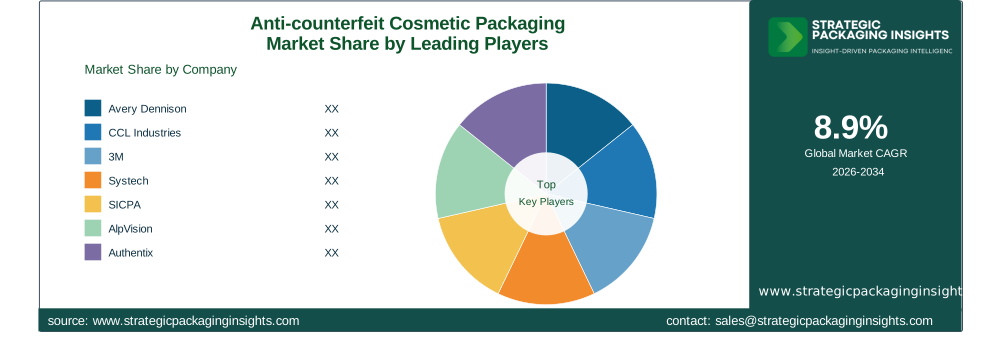
Avery Dennison, for instance, is renowned for its innovative labeling solutions that incorporate advanced security features to prevent counterfeiting. The company's strong focus on research and development has enabled it to introduce cutting-edge technologies that enhance product security and traceability. Similarly, CCL Industries is a prominent player in the market, offering a comprehensive range of anti-counterfeit packaging solutions that include labels, closures, and cartons. The company's commitment to sustainability and eco-friendly packaging has further strengthened its position in the market.
3M is another key player in the Anti-counterfeit Cosmetic Packaging market, known for its expertise in developing tamper-evident and secure packaging solutions. The company's extensive experience in the packaging industry and its strong focus on innovation have enabled it to offer a wide range of solutions that cater to the specific needs of cosmetic brands. Other notable players in the market include Systech, SICPA, AlpVision, Authentix, Zebra Technologies, UFlex, and De La Rue. These companies are actively engaged in developing advanced anti-counterfeit technologies that enhance product security and protect brand integrity.
Systech, for example, is a leading provider of serialization and traceability solutions that help brands combat counterfeiting and ensure product authenticity. The company's innovative solutions have gained widespread recognition in the industry, making it a preferred choice for many cosmetic brands. Similarly, SICPA is known for its expertise in developing secure inks and coatings that enhance product security and deter counterfeiting. The company's strong focus on innovation and sustainability has enabled it to maintain a competitive edge in the market.
Key Highlights
- The Anti-counterfeit Cosmetic Packaging market is projected to grow at a CAGR of 8.9% from 2026 to 2034.
- Technological advancements, such as QR codes and RFID, are driving market growth by enhancing product traceability and authentication.
- The rise of e-commerce is increasing the demand for secure packaging solutions to ensure product authenticity during transit.
- High implementation costs and the complexity of integrating advanced technologies are significant challenges for small and medium-sized enterprises.
- The lack of standardized regulations across different regions poses a challenge for market players.
- There is a growing demand for eco-friendly packaging solutions as consumers become more environmentally conscious.
- Key players in the market include Avery Dennison, CCL Industries, 3M, Systech, SICPA, AlpVision, Authentix, Zebra Technologies, UFlex, and De La Rue.
Top Countries Insights
In the Anti-counterfeit Cosmetic Packaging market, the United States stands out as a leading country, with a market size of approximately $2.5 billion and a CAGR of 9%. The country's strong regulatory framework and high consumer awareness regarding product authenticity are key drivers of market growth. The presence of major cosmetic brands and the rapid adoption of advanced packaging technologies further contribute to the market's expansion. However, the high cost of implementing anti-counterfeit solutions remains a challenge for smaller companies.
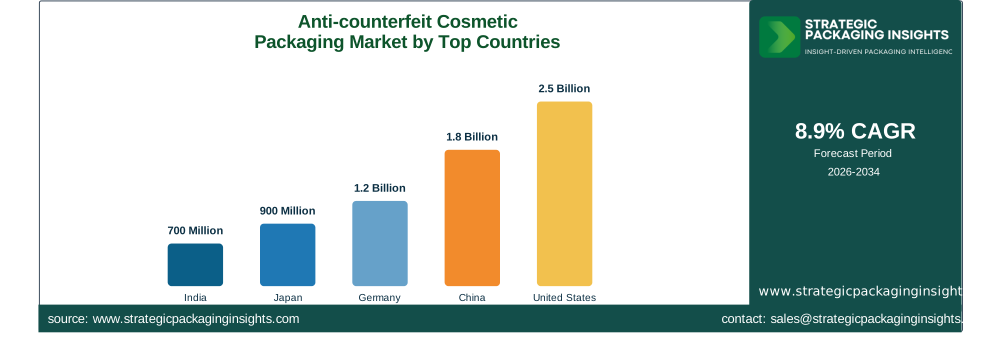
China is another significant player in the market, with a market size of around $1.8 billion and a CAGR of 12%. The country's booming e-commerce sector and the increasing prevalence of counterfeit products are driving the demand for secure packaging solutions. Government initiatives to combat counterfeiting and enhance product safety are also contributing to market growth. However, the lack of standardized regulations and the complexity of integrating advanced technologies pose challenges for market players.
Germany, with a market size of approximately $1.2 billion and a CAGR of 8%, is a key market for anti-counterfeit cosmetic packaging in Europe. The country's strong focus on sustainability and eco-friendly packaging solutions is driving market growth. Additionally, the presence of leading cosmetic brands and the increasing demand for premium products are contributing to the market's expansion. However, the high cost of implementing advanced technologies remains a challenge for many companies.
In Japan, the market size is estimated at $900 million, with a CAGR of 7%. The country's strong regulatory framework and high consumer awareness regarding product safety are key drivers of market growth. The increasing demand for premium and luxury cosmetics is also contributing to the market's expansion. However, the high cost of implementing anti-counterfeit solutions and the lack of standardized regulations pose challenges for market players.
India, with a market size of around $700 million and a CAGR of 10%, is an emerging market for anti-counterfeit cosmetic packaging. The country's growing middle-class population and increasing consumer awareness regarding product authenticity are driving market growth. The rapid expansion of the e-commerce sector and government initiatives to combat counterfeiting are also contributing to the market's expansion. However, the lack of standardized regulations and the complexity of integrating advanced technologies remain challenges for market players.
Anti-counterfeit Cosmetic Packaging Market Segments Insights

By Technology Analysis
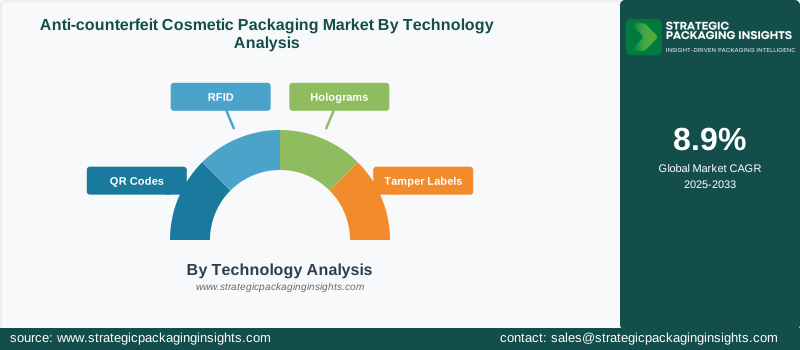
The Anti-counterfeit Cosmetic Packaging market is segmented by technology into QR Codes, RFID, Holograms, and Tamper Labels. QR codes are gaining popularity due to their ease of use and ability to provide detailed product information to consumers. They are increasingly being used by cosmetic brands to enhance product traceability and authentication. RFID technology, on the other hand, offers advanced tracking capabilities and is widely used in the supply chain to prevent counterfeiting. Holograms are also a popular choice for anti-counterfeit packaging, as they provide a visually appealing and secure solution for product authentication. Tamper labels are used to indicate any unauthorized access to the product, providing an additional layer of security.
The demand for these technologies is driven by the increasing need for secure packaging solutions in the cosmetic industry. As consumers become more aware of the risks associated with counterfeit products, there is a growing emphasis on product safety and authenticity. This has led to a surge in demand for advanced packaging solutions that can effectively deter counterfeiting and protect brand integrity. Additionally, the rise of e-commerce and the global expansion of cosmetic brands are further fueling the demand for anti-counterfeit packaging solutions. The convenience of online shopping has made it easier for counterfeit products to enter the market, prompting brands to invest in secure packaging solutions that can ensure product authenticity and safety.
By Packaging Type Analysis
The Anti-counterfeit Cosmetic Packaging market is segmented by packaging type into Labels, Closures, Cartons, and Bottles. Labels are the most commonly used packaging type, as they offer a cost-effective and versatile solution for product authentication. They can be easily integrated with advanced technologies such as QR codes and RFID tags to enhance product security and traceability. Closures, on the other hand, provide an additional layer of security by preventing unauthorized access to the product. They are widely used in the packaging of liquid cosmetics, such as perfumes and lotions.
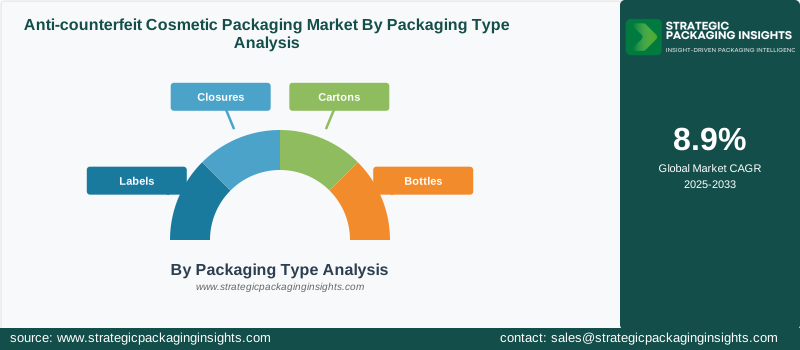
Cartons and bottles are also popular packaging types in the cosmetic industry, as they offer a visually appealing and secure solution for product packaging. Cartons are often used for the packaging of premium and luxury cosmetics, as they provide a sophisticated and elegant look. Bottles, on the other hand, are commonly used for the packaging of liquid cosmetics, such as shampoos and conditioners. The demand for these packaging types is driven by the increasing focus on product safety and authenticity, as well as the growing trend of personalized packaging. As consumers become more environmentally conscious, there is also a growing demand for eco-friendly packaging solutions that are not only secure but also sustainable.
By Application Analysis
The Anti-counterfeit Cosmetic Packaging market is segmented by application into Skincare, Fragrances, Makeup, and Haircare. Skincare products are the largest segment in the market, as they are highly susceptible to counterfeiting due to their high value and demand. The increasing consumer awareness regarding product safety and authenticity is driving the demand for secure packaging solutions in this segment. Fragrances are another significant segment in the market, as they are often targeted by counterfeiters due to their high value and popularity.
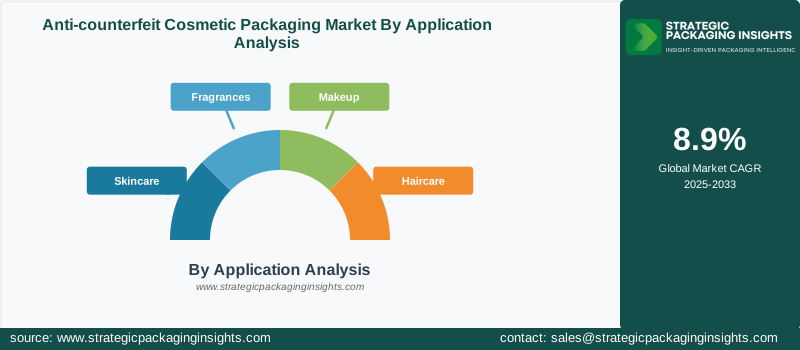
Makeup and haircare products are also important segments in the market, as they are widely used by consumers and are often targeted by counterfeiters. The demand for anti-counterfeit packaging solutions in these segments is driven by the increasing focus on product safety and authenticity, as well as the growing trend of personalized packaging. As consumers become more environmentally conscious, there is also a growing demand for eco-friendly packaging solutions that are not only secure but also sustainable. The rise of e-commerce and the global expansion of cosmetic brands are further fueling the demand for anti-counterfeit packaging solutions in these segments.
By End Use Analysis
The Anti-counterfeit Cosmetic Packaging market is segmented by end use into Cosmetic Brands, Luxury Brands, and Retailers. Cosmetic brands are the largest end-use segment in the market, as they are highly susceptible to counterfeiting due to their high value and demand. The increasing consumer awareness regarding product safety and authenticity is driving the demand for secure packaging solutions in this segment. Luxury brands are another significant end-use segment in the market, as they are often targeted by counterfeiters due to their high value and exclusivity.
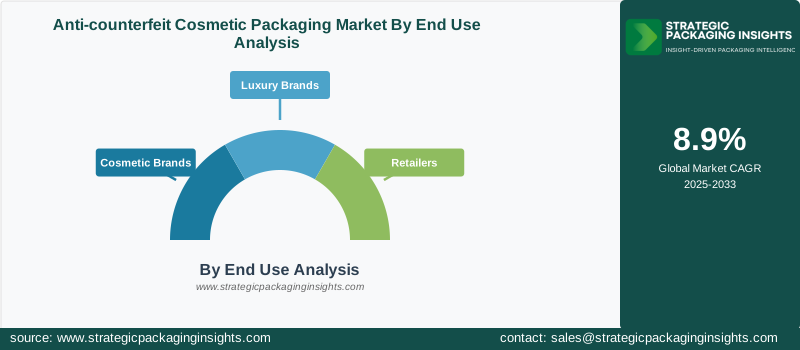
Retailers are also an important end-use segment in the market, as they play a crucial role in ensuring product authenticity and safety. The demand for anti-counterfeit packaging solutions in this segment is driven by the increasing focus on product safety and authenticity, as well as the growing trend of personalized packaging. As consumers become more environmentally conscious, there is also a growing demand for eco-friendly packaging solutions that are not only secure but also sustainable. The rise of e-commerce and the global expansion of cosmetic brands are further fueling the demand for anti-counterfeit packaging solutions in these segments.
Anti-counterfeit Cosmetic Packaging Market Segments
The Anti-counterfeit Cosmetic Packaging market has been segmented on the basis ofBy Technology
- QR Codes
- RFID
- Holograms
- Tamper Labels
By Packaging Type
- Labels
- Closures
- Cartons
- Bottles
By Application
- Skincare
- Fragrances
- Makeup
- Haircare
By End Use
- Cosmetic Brands
- Luxury Brands
- Retailers
Region
- Asia Pacific
- North America
- Latin America
- Europe
- Middle East & Africa




