


Anesthesia Breathing Bags Market Outlook
The anesthesia breathing bags market was valued at $342.35 million in 2025 and is projected to reach $618.89 million by 2034, growing at a CAGR of 6.8% during the forecast period 2026-2034. This growth is driven by the increasing demand for anesthesia procedures across the globe, coupled with advancements in healthcare infrastructure. The rising prevalence of chronic diseases necessitating surgical interventions is also a significant factor contributing to the market's expansion. Furthermore, the growing awareness about the importance of anesthesia safety and the need for efficient breathing systems in surgical settings are expected to fuel market growth. The market is also benefiting from technological advancements in anesthesia equipment, which are enhancing the efficiency and safety of anesthesia delivery.
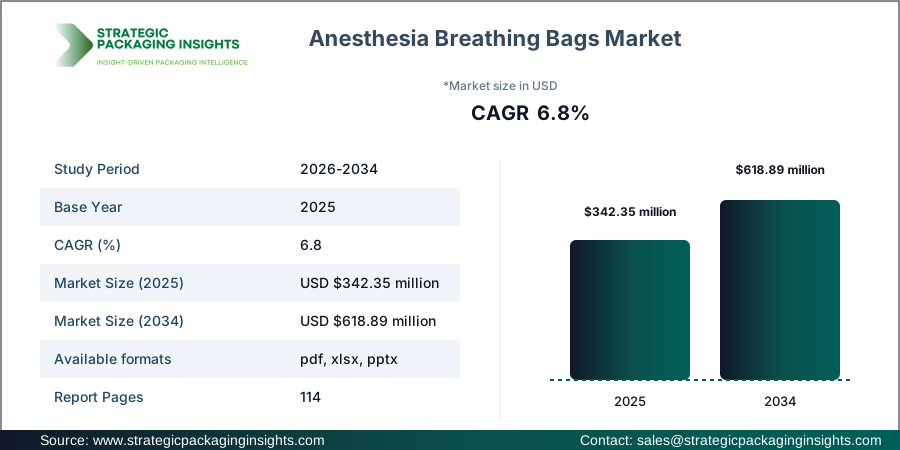
Report Scope
| Attributes | Details |
| Report Title | Anesthesia Breathing Bags Market Size, Future Growth and Forecast 2034 |
| By Product Type | Latex-Free Bags, Reusable Bags, Disposable Bags |
| By Material Type | Silicone, PVC, Rubber |
| By Capacity | Below 1L, 1–3L, Above 3L |
| By End Use | Hospitals, Ambulatory Surgical Centers, Anesthesia Clinics |
| Region | Asia Pacific, North America, Latin America, Europe, Middle East & Africa |
| Base Year | 2025 |
| Historic Period | 2018-2024 |
| Forecast Period | 2026-2034 |
| Number of Pages | 114 |
| Customization Available | Yes* |
Opportunities & Threats
The anesthesia breathing bags market presents numerous opportunities for growth, primarily driven by the increasing number of surgical procedures worldwide. As healthcare systems expand and improve, particularly in emerging economies, the demand for anesthesia equipment, including breathing bags, is expected to rise significantly. Additionally, the growing focus on patient safety and the need for high-quality, reliable anesthesia delivery systems offer substantial opportunities for market players to innovate and expand their product offerings. The shift towards minimally invasive surgeries, which often require precise anesthesia management, further enhances the market potential for advanced breathing bags.
Another opportunity lies in the development of eco-friendly and sustainable anesthesia breathing bags. With increasing environmental concerns and regulatory pressures, there is a growing demand for medical products that minimize environmental impact. Companies that can develop biodegradable or recyclable breathing bags may gain a competitive edge in the market. Furthermore, the integration of smart technologies in anesthesia equipment, such as sensors and connectivity features, can provide real-time monitoring and data analytics, offering significant value to healthcare providers and enhancing patient outcomes.
However, the market also faces certain threats that could hinder its growth. One of the primary challenges is the stringent regulatory environment governing medical devices, which can delay product approvals and increase compliance costs for manufacturers. Additionally, the high cost of advanced anesthesia equipment may limit adoption, particularly in cost-sensitive markets. The presence of counterfeit products in the market also poses a threat to the reputation and sales of established brands. Moreover, the ongoing COVID-19 pandemic has disrupted supply chains and healthcare operations, potentially impacting market growth in the short term.
Drivers & Challenges
The anesthesia breathing bags market is driven by several key factors, including the increasing prevalence of chronic diseases and the rising number of surgical procedures globally. As the global population ages, the incidence of conditions requiring surgical intervention, such as cardiovascular diseases and cancer, is expected to rise, thereby driving the demand for anesthesia equipment. Additionally, advancements in healthcare infrastructure, particularly in developing regions, are facilitating greater access to surgical care, further boosting the market for anesthesia breathing bags. The growing emphasis on patient safety and the need for precise anesthesia delivery systems are also significant drivers of market growth.
Technological advancements in anesthesia equipment are another major driver of the market. Innovations such as the development of latex-free and disposable breathing bags are enhancing the safety and convenience of anesthesia delivery, thereby increasing their adoption in healthcare settings. The integration of smart technologies, such as sensors and connectivity features, is also transforming the anesthesia equipment landscape, providing healthcare providers with real-time monitoring and data analytics capabilities. These advancements are expected to drive the demand for advanced anesthesia breathing bags in the coming years.
Despite these drivers, the market faces several challenges that could impede its growth. One of the primary challenges is the high cost of advanced anesthesia equipment, which may limit adoption, particularly in cost-sensitive markets. Additionally, the stringent regulatory environment governing medical devices can delay product approvals and increase compliance costs for manufacturers. The presence of counterfeit products in the market also poses a threat to the reputation and sales of established brands. Furthermore, the ongoing COVID-19 pandemic has disrupted supply chains and healthcare operations, potentially impacting market growth in the short term.
Market Share Analysis
The anesthesia breathing bags market is characterized by a competitive landscape with several key players vying for market share. Companies such as Ambu, Medline Industries, Teleflex, Smiths Medical, Vyaire Medical, Intersurgical, Mercury Medical, Dräger, GE Healthcare, and Fisher & Paykel Healthcare are some of the prominent players in the market. These companies are focusing on product innovation, strategic partnerships, and mergers and acquisitions to strengthen their market position and expand their product portfolios.
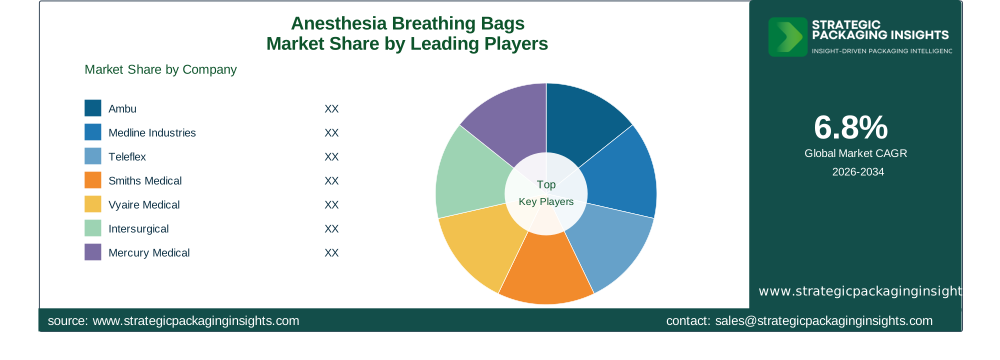
Ambu is a leading player in the anesthesia breathing bags market, known for its innovative and high-quality products. The company has a strong presence in the global market and is continuously investing in research and development to enhance its product offerings. Medline Industries is another major player, offering a wide range of anesthesia equipment, including breathing bags. The company is focused on expanding its product portfolio and strengthening its distribution network to increase its market share.
Teleflex is a prominent player in the market, known for its advanced anesthesia equipment and solutions. The company is focused on innovation and has a strong pipeline of new products in development. Smiths Medical is another key player, offering a comprehensive range of anesthesia products, including breathing bags. The company is focused on expanding its product offerings and strengthening its presence in emerging markets.
Vyaire Medical is a leading provider of respiratory and anesthesia solutions, with a strong focus on innovation and quality. The company is continuously investing in research and development to enhance its product offerings and expand its market presence. Intersurgical is another major player in the market, known for its high-quality anesthesia products and solutions. The company is focused on expanding its product portfolio and strengthening its distribution network to increase its market share.
Key Highlights
- The anesthesia breathing bags market is projected to grow at a CAGR of 6.8% from 2026 to 2034.
- Technological advancements in anesthesia equipment are driving market growth.
- The increasing prevalence of chronic diseases is boosting the demand for anesthesia procedures.
- Eco-friendly and sustainable breathing bags present significant market opportunities.
- Stringent regulatory environment poses challenges for market players.
- Key players are focusing on product innovation and strategic partnerships.
- The market is characterized by a competitive landscape with several key players.
- The ongoing COVID-19 pandemic has impacted supply chains and healthcare operations.
- Emerging markets offer significant growth opportunities for market players.
- Integration of smart technologies in anesthesia equipment is transforming the market.
Top Countries Insights
In the anesthesia breathing bags market, the United States holds a significant share, driven by the advanced healthcare infrastructure and high prevalence of surgical procedures. The market in the U.S. is expected to grow at a CAGR of 5%, supported by the increasing demand for advanced anesthesia equipment and the presence of key market players. The country's focus on patient safety and the adoption of innovative technologies are also contributing to market growth.
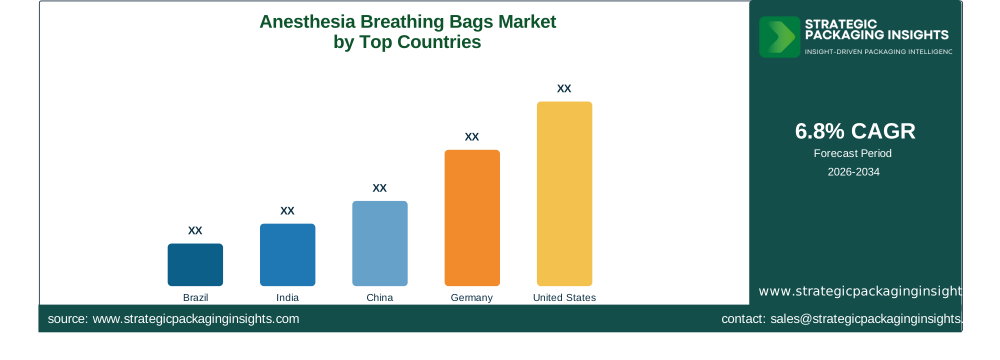
Germany is another key market for anesthesia breathing bags, with a strong emphasis on healthcare quality and patient safety. The market in Germany is projected to grow at a CAGR of 4%, driven by the increasing number of surgical procedures and the adoption of advanced anesthesia equipment. The country's stringent regulatory environment and focus on eco-friendly products are also influencing market dynamics.
China is emerging as a significant market for anesthesia breathing bags, supported by the rapid expansion of healthcare infrastructure and the increasing prevalence of chronic diseases. The market in China is expected to grow at a CAGR of 8%, driven by the rising demand for surgical procedures and the government's focus on improving healthcare access and quality.
India is another emerging market for anesthesia breathing bags, with a growing focus on healthcare infrastructure development and increasing demand for surgical procedures. The market in India is projected to grow at a CAGR of 7%, supported by the government's initiatives to improve healthcare access and the increasing adoption of advanced anesthesia equipment.
Brazil is also a key market for anesthesia breathing bags, with a growing emphasis on healthcare quality and patient safety. The market in Brazil is expected to grow at a CAGR of 6%, driven by the increasing number of surgical procedures and the adoption of advanced anesthesia equipment. The country's focus on eco-friendly products and the presence of key market players are also contributing to market growth.
Anesthesia Breathing Bags Market Segments Insights

Product Type Analysis
The anesthesia breathing bags market is segmented by product type into latex-free bags, reusable bags, and disposable bags. Latex-free bags are gaining popularity due to the increasing prevalence of latex allergies and the growing demand for safer and more comfortable anesthesia solutions. These bags are designed to minimize the risk of allergic reactions and provide a more comfortable experience for patients. Reusable bags are also widely used in healthcare settings, offering cost-effective and environmentally friendly solutions for anesthesia delivery. However, the demand for disposable bags is increasing due to their convenience and the growing focus on infection control and patient safety.
Disposable bags are particularly popular in hospitals and surgical centers, where the risk of cross-contamination is a significant concern. These bags are designed for single-use, reducing the risk of infection and ensuring a high level of hygiene in surgical settings. The growing emphasis on patient safety and the need for efficient and reliable anesthesia delivery systems are driving the demand for disposable bags in the market. Additionally, the development of eco-friendly and biodegradable disposable bags is expected to further boost their adoption in the coming years.
Material Type Analysis
The market is also segmented by material type into silicone, PVC, and rubber. Silicone bags are widely used in anesthesia delivery due to their flexibility, durability, and resistance to high temperatures. These bags are designed to provide a comfortable and reliable anesthesia experience for patients, making them a popular choice in healthcare settings. PVC bags are also commonly used, offering a cost-effective and durable solution for anesthesia delivery. However, the growing environmental concerns and regulatory pressures are driving the demand for alternative materials, such as silicone and rubber.
Rubber bags are gaining popularity due to their flexibility and durability, offering a reliable and comfortable anesthesia experience for patients. These bags are designed to withstand high temperatures and provide a consistent and reliable anesthesia delivery, making them a popular choice in healthcare settings. The growing focus on patient safety and the need for efficient and reliable anesthesia delivery systems are driving the demand for rubber bags in the market. Additionally, the development of eco-friendly and biodegradable rubber bags is expected to further boost their adoption in the coming years.
Capacity Analysis
The anesthesia breathing bags market is segmented by capacity into below 1L, 1-3L, and above 3L. Bags with a capacity of 1-3L are the most commonly used in healthcare settings, offering a versatile and reliable solution for anesthesia delivery. These bags are designed to provide a consistent and reliable anesthesia experience for patients, making them a popular choice in hospitals and surgical centers. The growing demand for efficient and reliable anesthesia delivery systems is driving the demand for 1-3L bags in the market.
Bags with a capacity of below 1L are also widely used, particularly in pediatric and neonatal anesthesia, where smaller volumes are required. These bags are designed to provide a comfortable and reliable anesthesia experience for young patients, making them a popular choice in pediatric and neonatal care settings. The growing focus on patient safety and the need for efficient and reliable anesthesia delivery systems are driving the demand for below 1L bags in the market. Additionally, the development of eco-friendly and biodegradable bags is expected to further boost their adoption in the coming years.
End Use Analysis
The market is segmented by end use into hospitals, ambulatory surgical centers, and anesthesia clinics. Hospitals are the largest end users of anesthesia breathing bags, driven by the high volume of surgical procedures and the need for efficient and reliable anesthesia delivery systems. The growing emphasis on patient safety and the need for high-quality anesthesia equipment are driving the demand for anesthesia breathing bags in hospitals.
Ambulatory surgical centers are also significant end users of anesthesia breathing bags, offering a cost-effective and convenient solution for outpatient surgical procedures. These centers are focused on providing high-quality anesthesia care, driving the demand for advanced anesthesia equipment, including breathing bags. Anesthesia clinics are also key end users of anesthesia breathing bags, offering specialized anesthesia care and driving the demand for efficient and reliable anesthesia delivery systems. The growing focus on patient safety and the need for high-quality anesthesia equipment are driving the demand for anesthesia breathing bags in anesthesia clinics.
Anesthesia Breathing Bags Market Segments
The Anesthesia Breathing Bags market has been segmented on the basis ofBy Product Type
- Latex-Free Bags
- Reusable Bags
- Disposable Bags
By Material Type
- Silicone
- PVC
- Rubber
By Capacity
- Below 1L
- 1–3L
- Above 3L
By End Use
- Hospitals
- Ambulatory Surgical Centers
- Anesthesia Clinics
Region
- Asia Pacific
- North America
- Latin America
- Europe
- Middle East & Africa




