


Aluminum Bubble Film Market Outlook
The Aluminum Bubble Film market was valued at $1.29 billion in 2025 and is projected to reach $2.46 billion by 2034, growing at a CAGR of 7.40% during the forecast period 2026-2034. This market is experiencing significant growth due to the increasing demand for efficient insulation materials in various industries. The construction sector, in particular, is driving the demand for aluminum bubble films as they offer superior thermal insulation properties, which are crucial for energy-efficient building designs. Additionally, the logistics and packaging industries are increasingly adopting aluminum bubble films for their protective qualities, ensuring the safe transport of goods. The automotive industry is also contributing to market growth as manufacturers seek lightweight and effective insulation solutions to enhance vehicle performance and fuel efficiency.
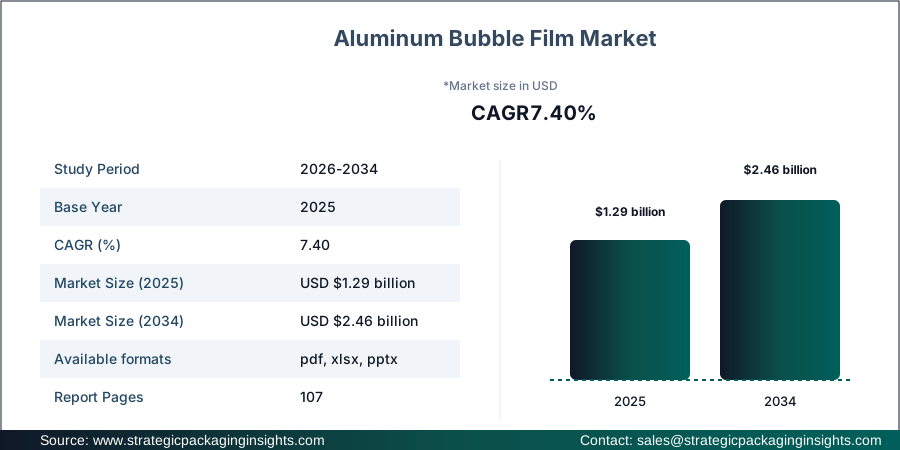
Despite the promising growth prospects, the Aluminum Bubble Film market faces certain challenges. Regulatory restrictions on the use of certain materials and environmental concerns related to plastic waste are potential restraints. However, the market holds significant growth potential as manufacturers innovate to develop eco-friendly and recyclable aluminum bubble films. The increasing focus on sustainable building practices and the rising demand for energy-efficient solutions are expected to create new opportunities for market players. Moreover, advancements in manufacturing technologies are likely to reduce production costs, making aluminum bubble films more accessible to a broader range of applications.
Report Scope
| Attributes | Details |
| Report Title | Aluminum Bubble Film Market Size, Future Growth and Forecast 2034 |
| Product Type | Single Bubble Foil, Double Bubble Foil, Woven Foil Bubble Insulation, Reflective Bubble Film |
| Application | Building Insulation, Packaging Protection, HVAC Insulation, Cold Chain Packaging |
| Thickness | Thin Gauge, Medium Gauge, Heavy Gauge, Multi-Layer |
| End Use | Construction, Logistics, Industrial Packaging, Automotive |
| Region | Asia Pacific, North America, Latin America, Europe, Middle East & Africa |
| Base Year | 2025 |
| Historic Period | 2018-2024 |
| Forecast Period | 2026-2034 |
| Number of Pages | 107 |
| Customization Available | Yes* |
Opportunities & Threats
The Aluminum Bubble Film market presents numerous opportunities, particularly in the construction and packaging sectors. As the global emphasis on energy efficiency and sustainable building practices intensifies, the demand for high-performance insulation materials like aluminum bubble films is expected to rise. These films offer excellent thermal insulation, which is crucial for reducing energy consumption in buildings. Additionally, the growing e-commerce industry is driving the need for effective packaging solutions to protect goods during transit. Aluminum bubble films, with their lightweight and protective properties, are well-suited for this purpose, offering significant growth potential for manufacturers.
Another opportunity lies in the development of eco-friendly aluminum bubble films. With increasing environmental awareness and regulatory pressures, there is a growing demand for sustainable packaging solutions. Manufacturers are investing in research and development to create recyclable and biodegradable aluminum bubble films, which could open new market segments and enhance their competitive advantage. Furthermore, the expansion of the cold chain logistics sector, driven by the rising demand for temperature-sensitive products, presents additional growth opportunities for aluminum bubble films as they provide effective thermal insulation.
However, the market also faces threats, primarily from regulatory restrictions and environmental concerns. The use of certain materials in the production of aluminum bubble films may be subject to stringent regulations, which could impact manufacturing processes and increase costs. Additionally, the growing focus on reducing plastic waste poses a challenge for the market, as aluminum bubble films are often made from plastic materials. To mitigate these threats, manufacturers need to focus on developing sustainable alternatives and enhancing their recycling capabilities.
Drivers & Challenges
One of the primary drivers of the Aluminum Bubble Film market is the increasing demand for energy-efficient building materials. As governments and organizations worldwide strive to reduce carbon emissions and promote sustainable construction practices, the need for effective insulation solutions is growing. Aluminum bubble films, with their superior thermal insulation properties, are becoming a preferred choice for builders and architects. Additionally, the rising awareness of the benefits of energy-efficient buildings, such as reduced energy costs and improved indoor comfort, is further driving the demand for aluminum bubble films.
The logistics and packaging industries are also significant drivers of market growth. With the rapid expansion of e-commerce and global trade, there is a growing need for protective packaging solutions to ensure the safe transport of goods. Aluminum bubble films offer excellent cushioning and protection, making them ideal for packaging applications. Moreover, the automotive industry is increasingly adopting aluminum bubble films for their lightweight and insulating properties, which contribute to improved vehicle performance and fuel efficiency.
Despite these drivers, the Aluminum Bubble Film market faces several challenges. One of the main challenges is the environmental impact of plastic waste, as aluminum bubble films are often made from plastic materials. This has led to increased scrutiny and regulatory pressures, which could impact market growth. Additionally, the high cost of raw materials and production processes may pose a challenge for manufacturers, particularly in price-sensitive markets. To overcome these challenges, companies need to focus on developing sustainable and cost-effective solutions, as well as enhancing their recycling capabilities.
Market Share Analysis
The Aluminum Bubble Film market is characterized by a competitive landscape with several key players vying for market share. Reflectix, Sealed Air, and Pregis are among the leading companies in the market, known for their innovative products and strong distribution networks. Reflectix, for instance, is renowned for its high-performance insulation solutions and has a significant presence in the construction and packaging sectors. Sealed Air, a global leader in protective packaging, offers a wide range of aluminum bubble films designed to meet the diverse needs of its customers.
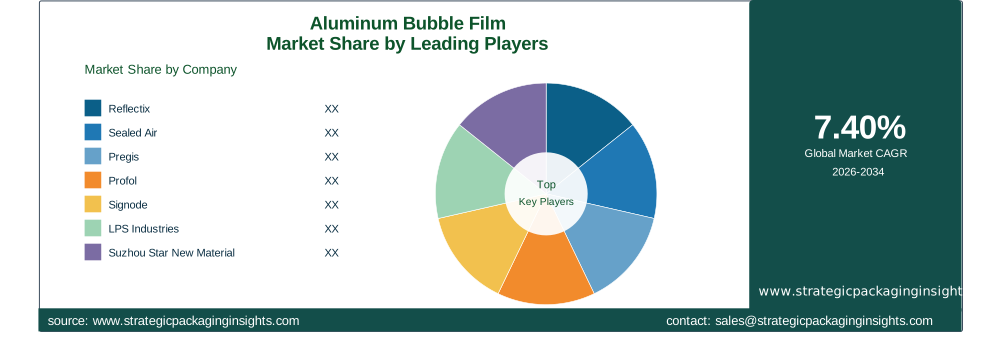
Pregis, another major player, is recognized for its commitment to sustainability and innovation. The company has developed eco-friendly aluminum bubble films that cater to the growing demand for sustainable packaging solutions. Profol and Signode are also prominent players in the market, offering a variety of aluminum bubble films for different applications. Profol is known for its high-quality films and has a strong presence in the European market, while Signode specializes in protective packaging solutions for the logistics and industrial sectors.
LPS Industries, Suzhou Star New Material, and USI Corporation are other notable companies in the Aluminum Bubble Film market. LPS Industries is a leading provider of flexible packaging solutions, including aluminum bubble films, and has a strong focus on customer satisfaction and innovation. Suzhou Star New Material, based in China, is a key player in the Asia Pacific region, offering a wide range of insulation and packaging products. USI Corporation, a Taiwanese company, is known for its high-quality films and has a significant presence in the global market.
Insul-Foam and Jiaxing Hengfeng are also important players in the market, known for their innovative products and strong customer relationships. Insul-Foam specializes in insulation solutions and has a strong presence in the North American market, while Jiaxing Hengfeng is a leading manufacturer of aluminum bubble films in China. These companies, along with others, contribute to the competitive dynamics of the Aluminum Bubble Film market, driving innovation and growth.
Key Highlights
- The Aluminum Bubble Film market is projected to grow at a CAGR of 7.40% from 2026 to 2034.
- Increasing demand for energy-efficient building materials is a major driver of market growth.
- The logistics and packaging industries are significant contributors to market expansion.
- Development of eco-friendly aluminum bubble films presents new growth opportunities.
- Regulatory restrictions and environmental concerns pose challenges to market growth.
- Reflectix, Sealed Air, and Pregis are among the leading companies in the market.
- Advancements in manufacturing technologies are expected to reduce production costs.
- The automotive industry is increasingly adopting aluminum bubble films for insulation.
- Expansion of the cold chain logistics sector is driving demand for thermal insulation solutions.
- Manufacturers are focusing on developing sustainable and recyclable aluminum bubble films.
Top Countries Insights
In the Aluminum Bubble Film market, the United States stands out as a key player, with a market size of approximately $450 million and a CAGR of 6%. The country's focus on energy-efficient building practices and the growth of the e-commerce sector are major drivers. Government incentives for sustainable construction and the increasing demand for protective packaging solutions further bolster market growth. However, regulatory challenges related to plastic waste management remain a concern.
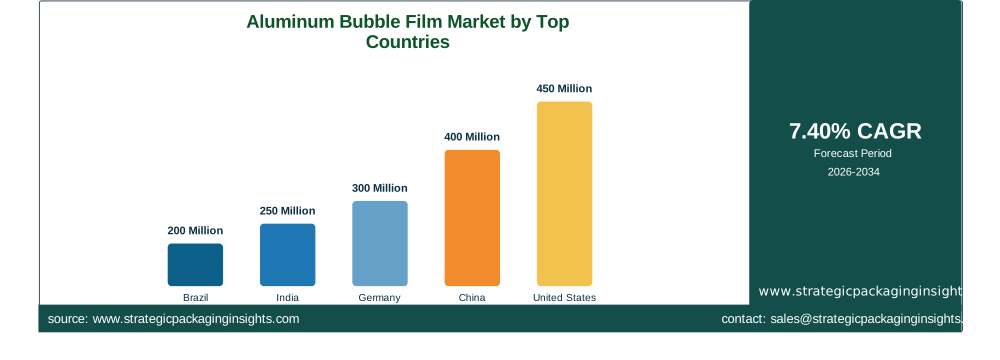
China, with a market size of around $400 million and a CAGR of 8%, is another significant market for aluminum bubble films. The country's booming construction industry and rapid urbanization are driving demand for insulation materials. Additionally, China's expanding logistics sector, driven by the growth of e-commerce, is contributing to market expansion. However, environmental regulations and the need for sustainable packaging solutions present challenges for manufacturers.
Germany, with a market size of approximately $300 million and a CAGR of 5%, is a key market in Europe. The country's stringent energy efficiency standards and focus on sustainable building practices are driving demand for aluminum bubble films. The automotive industry, a major contributor to the German economy, is also adopting these films for insulation purposes. However, high production costs and regulatory pressures pose challenges for market players.
India, with a market size of around $250 million and a CAGR of 9%, is an emerging market for aluminum bubble films. The country's growing construction and logistics sectors are driving demand for insulation and protective packaging solutions. Government initiatives to promote energy-efficient buildings and infrastructure development are further supporting market growth. However, the lack of awareness about the benefits of aluminum bubble films and the high cost of raw materials are challenges for manufacturers.
Brazil, with a market size of approximately $200 million and a CAGR of 7%, is a key market in Latin America. The country's construction industry is a major driver of demand for aluminum bubble films, as builders seek energy-efficient insulation solutions. The growth of the logistics sector, driven by increasing trade activities, is also contributing to market expansion. However, economic instability and regulatory challenges related to environmental sustainability are concerns for market players.
Aluminum Bubble Film Market Segments Insights

Product Type Analysis
The Aluminum Bubble Film market is segmented by product type into single bubble foil, double bubble foil, woven foil bubble insulation, and reflective bubble film. Single bubble foil is widely used due to its cost-effectiveness and ease of installation, making it a popular choice for residential and commercial building insulation. Double bubble foil, on the other hand, offers enhanced thermal insulation properties, making it suitable for applications requiring higher energy efficiency. Woven foil bubble insulation is gaining traction in industrial applications due to its durability and resistance to harsh environmental conditions. Reflective bubble film is increasingly used in packaging applications, providing superior protection and insulation for temperature-sensitive products.
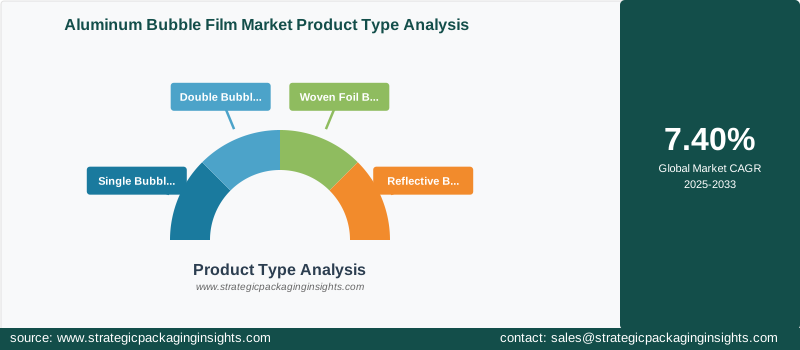
The demand for these product types is driven by the growing need for energy-efficient building materials and protective packaging solutions. Manufacturers are focusing on developing innovative products that offer improved performance and sustainability. The increasing adoption of aluminum bubble films in the construction and logistics sectors is expected to drive market growth. Additionally, advancements in manufacturing technologies are enabling the production of high-quality films at competitive prices, further boosting demand.
Application Analysis
The Aluminum Bubble Film market is segmented by application into building insulation, packaging protection, HVAC insulation, and cold chain packaging. Building insulation is the largest application segment, driven by the increasing demand for energy-efficient construction materials. Aluminum bubble films offer superior thermal insulation, making them ideal for reducing energy consumption in buildings. The packaging protection segment is also significant, as these films provide excellent cushioning and protection for goods during transit.
HVAC insulation is another important application, as aluminum bubble films help improve the energy efficiency of heating, ventilation, and air conditioning systems. The cold chain packaging segment is experiencing rapid growth, driven by the increasing demand for temperature-sensitive products such as pharmaceuticals and perishable foods. Aluminum bubble films provide effective thermal insulation, ensuring the safe transport of these products. The growing focus on sustainability and the need for eco-friendly packaging solutions are expected to drive demand for aluminum bubble films across these applications.
Thickness Analysis
The Aluminum Bubble Film market is segmented by thickness into thin gauge, medium gauge, heavy gauge, and multi-layer. Thin gauge films are widely used in applications where cost-effectiveness and flexibility are important, such as residential building insulation and lightweight packaging. Medium gauge films offer enhanced durability and insulation properties, making them suitable for commercial and industrial applications. Heavy gauge films are used in demanding environments where superior protection and insulation are required.
Multi-layer films are gaining popularity due to their ability to provide enhanced thermal insulation and protection. These films are used in applications requiring high-performance insulation, such as cold chain packaging and industrial insulation. The demand for different thicknesses is driven by the diverse needs of end-users across various industries. Manufacturers are focusing on developing innovative products that offer improved performance and sustainability, catering to the evolving demands of the market.
End Use Analysis
The Aluminum Bubble Film market is segmented by end use into construction, logistics, industrial packaging, and automotive. The construction sector is the largest end-use segment, driven by the increasing demand for energy-efficient building materials. Aluminum bubble films offer superior thermal insulation, making them ideal for reducing energy consumption in buildings. The logistics sector is also significant, as these films provide excellent cushioning and protection for goods during transit.
Industrial packaging is another important end-use segment, as aluminum bubble films offer superior protection and insulation for temperature-sensitive products. The automotive industry is increasingly adopting these films for their lightweight and insulating properties, which contribute to improved vehicle performance and fuel efficiency. The growing focus on sustainability and the need for eco-friendly packaging solutions are expected to drive demand for aluminum bubble films across these end-use segments.
Aluminum Bubble Film Market Segments
The Aluminum Bubble Film market has been segmented on the basis ofProduct Type
- Single Bubble Foil
- Double Bubble Foil
- Woven Foil Bubble Insulation
- Reflective Bubble Film
Application
- Building Insulation
- Packaging Protection
- HVAC Insulation
- Cold Chain Packaging
Thickness
- Thin Gauge
- Medium Gauge
- Heavy Gauge
- Multi-Layer
End Use
- Construction
- Logistics
- Industrial Packaging
- Automotive
Region
- Asia Pacific
- North America
- Latin America
- Europe
- Middle East & Africa




