


Aluminium Die Cut Lids Market Outlook
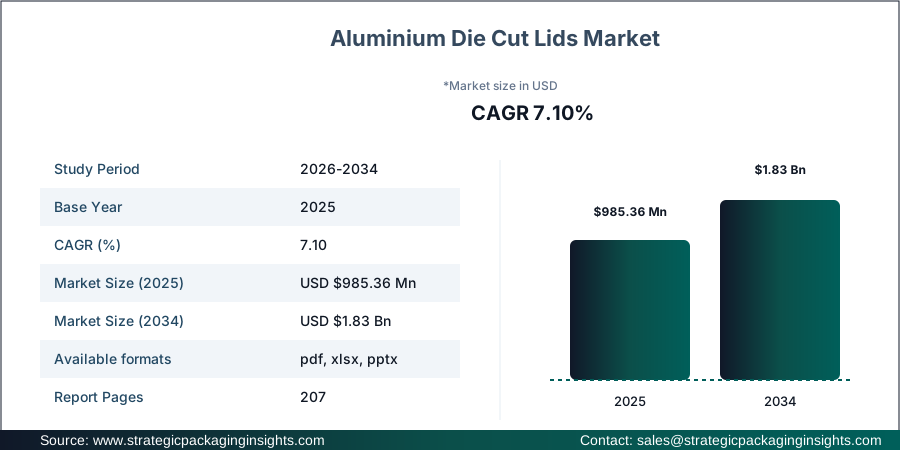
The Aluminium Die Cut Lids market was valued at $985.36 million in 2025 and is projected to reach $1.83 billion by 2034, growing at a CAGR of 7.10% during the forecast period 2026-2034. This market is witnessing significant growth due to the increasing demand for convenient and sustainable packaging solutions across various industries. The rise in consumer preference for packaged food and beverages, coupled with the growing pharmaceutical sector, is driving the demand for aluminium die cut lids. These lids offer excellent barrier properties, ensuring product freshness and extending shelf life, which is crucial for maintaining product quality in the food and beverage industry. Additionally, the trend towards eco-friendly packaging solutions is further propelling the market growth as aluminium is a recyclable material, aligning with global sustainability goals.
Despite the promising growth prospects, the Aluminium Die Cut Lids market faces certain challenges that could hinder its expansion. The fluctuating prices of raw materials, particularly aluminium, pose a significant restraint on market growth. The volatility in aluminium prices can impact the overall production cost, affecting the profit margins of manufacturers. Moreover, stringent regulations regarding food safety and packaging standards necessitate continuous innovation and compliance, which can be resource-intensive for companies. However, the market holds immense potential for growth, driven by technological advancements in packaging solutions and the increasing adoption of smart packaging technologies. The integration of QR codes and NFC tags in die cut lids for enhanced consumer engagement and product tracking is expected to create new opportunities for market players.
Report Scope
| Attributes | Details |
| Report Title | Aluminium Die Cut Lids Market Size, Future Growth and Forecast 2034 |
| Material Structure | Foil Lids, Laminated Lids, Printed Lids, Embossed Lids |
| Application | Dairy Products, Ready Meals, Beverages, Pharmaceuticals |
| Seal Type | Heat Seal, Peelable Seal, Easy-Open Seal, Hermetic Seal |
| End Use | Food Packaging, Healthcare Packaging, Industrial Packaging, Pet Food Packaging |
| Region | Asia Pacific, North America, Latin America, Europe, Middle East & Africa |
| Base Year | 2025 |
| Historic Period | 2018-2024 |
| Forecast Period | 2026-2034 |
| Number of Pages | 207 |
| Customization Available | Yes* |
Opportunities & Threats
The Aluminium Die Cut Lids market presents numerous opportunities for growth, primarily driven by the increasing demand for sustainable and convenient packaging solutions. As consumers become more environmentally conscious, there is a growing preference for recyclable materials, making aluminium an attractive choice for packaging. The recyclability of aluminium not only reduces environmental impact but also aligns with the sustainability goals of many companies, thereby driving the demand for aluminium die cut lids. Additionally, the rise in demand for ready-to-eat meals and packaged beverages is creating a significant opportunity for market expansion. The convenience offered by die cut lids in terms of easy opening and resealing is highly valued by consumers, further boosting market growth.
Another opportunity lies in the growing pharmaceutical industry, where the need for secure and tamper-evident packaging is paramount. Aluminium die cut lids provide excellent barrier properties, protecting pharmaceutical products from contamination and ensuring their integrity. This is particularly important in the context of increasing regulatory scrutiny and the need for compliance with stringent packaging standards. Furthermore, the development of innovative packaging solutions, such as embossed and printed lids, offers an opportunity for differentiation and brand enhancement, attracting more consumers and driving market growth.
However, the market also faces certain threats that could impede its growth. One of the primary threats is the volatility in aluminium prices, which can significantly impact production costs and profit margins for manufacturers. Additionally, the presence of alternative packaging materials, such as plastic and paper, poses a competitive threat to aluminium die cut lids. These materials are often perceived as more cost-effective, which can influence consumer preferences and affect market demand. Moreover, the stringent regulations governing food safety and packaging standards require continuous innovation and compliance, which can be resource-intensive for companies, posing a challenge to market growth.
Drivers & Challenges
The Aluminium Die Cut Lids market is primarily driven by the increasing demand for convenient and sustainable packaging solutions across various industries. The rise in consumer preference for packaged food and beverages, coupled with the growing pharmaceutical sector, is driving the demand for aluminium die cut lids. These lids offer excellent barrier properties, ensuring product freshness and extending shelf life, which is crucial for maintaining product quality in the food and beverage industry. Additionally, the trend towards eco-friendly packaging solutions is further propelling the market growth as aluminium is a recyclable material, aligning with global sustainability goals. The increasing adoption of smart packaging technologies, such as QR codes and NFC tags, is also driving market growth by enhancing consumer engagement and product tracking.
Another significant driver is the growing demand for ready-to-eat meals and packaged beverages, which is creating a significant opportunity for market expansion. The convenience offered by die cut lids in terms of easy opening and resealing is highly valued by consumers, further boosting market growth. The development of innovative packaging solutions, such as embossed and printed lids, offers an opportunity for differentiation and brand enhancement, attracting more consumers and driving market growth. Additionally, the growing pharmaceutical industry, where the need for secure and tamper-evident packaging is paramount, is driving the demand for aluminium die cut lids.
Despite the promising growth prospects, the Aluminium Die Cut Lids market faces certain challenges that could hinder its expansion. The fluctuating prices of raw materials, particularly aluminium, pose a significant restraint on market growth. The volatility in aluminium prices can impact the overall production cost, affecting the profit margins of manufacturers. Moreover, stringent regulations regarding food safety and packaging standards necessitate continuous innovation and compliance, which can be resource-intensive for companies. The presence of alternative packaging materials, such as plastic and paper, poses a competitive threat to aluminium die cut lids. These materials are often perceived as more cost-effective, which can influence consumer preferences and affect market demand.
Market Share Analysis
The Aluminium Die Cut Lids market is characterized by a competitive landscape with several key players vying for market share. Companies such as Constantia Flexibles, Amcor, Winpak, ProAmpac, Huhtamaki, Aluflexpack, TekniPlex, KM Packaging, Gopack, and Clifton Packaging are prominent players in this market. These companies are focusing on strategic initiatives such as mergers and acquisitions, partnerships, and product innovations to strengthen their market position and expand their product offerings. The competitive landscape is further intensified by the presence of regional players who are leveraging their local market knowledge and expertise to gain a competitive edge.
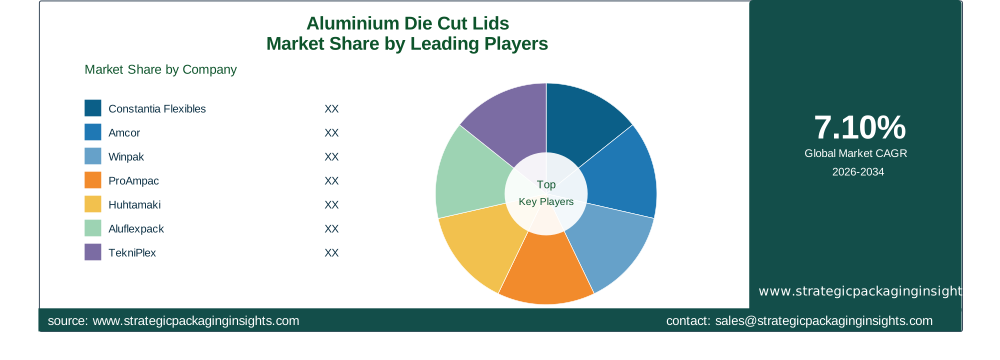
Constantia Flexibles is a leading player in the Aluminium Die Cut Lids market, known for its innovative packaging solutions and strong focus on sustainability. The company has a significant market share and is continuously investing in research and development to enhance its product portfolio. Amcor, another major player, is renowned for its extensive product range and global presence. The company is committed to sustainability and has set ambitious targets to increase the use of recycled materials in its products. Winpak, a key player in the North American market, is known for its high-quality packaging solutions and strong customer focus.
ProAmpac is a prominent player in the market, offering a wide range of flexible packaging solutions, including aluminium die cut lids. The company is focused on innovation and sustainability, with a strong emphasis on developing eco-friendly packaging solutions. Huhtamaki, a global leader in packaging, is known for its extensive product portfolio and strong focus on sustainability. The company is committed to reducing its environmental impact and has set ambitious targets to achieve this goal. Aluflexpack, a leading European player, is known for its high-quality packaging solutions and strong customer focus.
TekniPlex is a key player in the market, offering a wide range of packaging solutions, including aluminium die cut lids. The company is focused on innovation and sustainability, with a strong emphasis on developing eco-friendly packaging solutions. KM Packaging, a UK-based company, is known for its high-quality packaging solutions and strong customer focus. Gopack, a leading player in the Asian market, is known for its innovative packaging solutions and strong focus on sustainability. Clifton Packaging, a UK-based company, is known for its high-quality packaging solutions and strong customer focus.
Key Highlights
- The Aluminium Die Cut Lids market is projected to grow at a CAGR of 7.10% from 2026 to 2034.
- The market was valued at $985.36 million in 2025 and is expected to reach $1.83 billion by 2034.
- Key drivers include the increasing demand for sustainable packaging solutions and the rise in consumer preference for packaged food and beverages.
- Challenges include fluctuating aluminium prices and stringent regulations regarding food safety and packaging standards.
- Opportunities exist in the growing pharmaceutical industry and the development of innovative packaging solutions.
- Key players in the market include Constantia Flexibles, Amcor, Winpak, ProAmpac, and Huhtamaki.
- The market is characterized by a competitive landscape with several key players vying for market share.
- The trend towards eco-friendly packaging solutions is further propelling market growth.
- The increasing adoption of smart packaging technologies is enhancing consumer engagement and product tracking.
Top Countries Insights
In the Aluminium Die Cut Lids market, the United States stands out as a key player, with a market size of approximately $350 million and a CAGR of 6%. The country's robust food and beverage industry, coupled with the growing demand for convenient packaging solutions, is driving market growth. Additionally, the increasing focus on sustainability and the use of recyclable materials is further propelling the demand for aluminium die cut lids in the US.
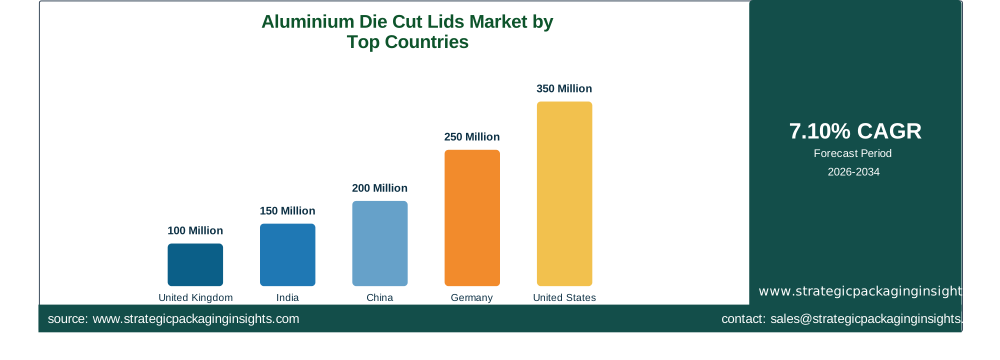
Germany is another significant market, with a market size of around $250 million and a CAGR of 5%. The country's strong emphasis on sustainability and environmental protection is driving the demand for eco-friendly packaging solutions, including aluminium die cut lids. The presence of a well-established food and beverage industry, along with the growing pharmaceutical sector, is further contributing to market growth in Germany.
China, with a market size of approximately $200 million and a CAGR of 8%, is a rapidly growing market for aluminium die cut lids. The country's expanding food and beverage industry, coupled with the increasing demand for packaged products, is driving market growth. Additionally, the government's focus on sustainability and the use of recyclable materials is further propelling the demand for aluminium die cut lids in China.
India, with a market size of around $150 million and a CAGR of 9%, is another key market for aluminium die cut lids. The country's growing middle-class population and increasing disposable income are driving the demand for packaged food and beverages, thereby boosting the market for aluminium die cut lids. Additionally, the government's focus on sustainability and the use of recyclable materials is further propelling market growth in India.
The United Kingdom, with a market size of approximately $100 million and a CAGR of 4%, is a mature market for aluminium die cut lids. The country's strong emphasis on sustainability and environmental protection is driving the demand for eco-friendly packaging solutions. Additionally, the presence of a well-established food and beverage industry, along with the growing pharmaceutical sector, is further contributing to market growth in the UK.
Aluminium Die Cut Lids Market Segments Insights

Material Structure Analysis
The material structure segment of the Aluminium Die Cut Lids market is categorized into foil lids, laminated lids, printed lids, and embossed lids. Foil lids are highly preferred due to their excellent barrier properties, which protect the contents from moisture, oxygen, and light, thereby extending the shelf life of products. Laminated lids, on the other hand, offer enhanced durability and are ideal for products that require a strong seal. Printed lids are gaining popularity as they offer an opportunity for branding and product differentiation, attracting more consumers. Embossed lids, with their unique texture, provide a premium look and feel, making them suitable for high-end products.
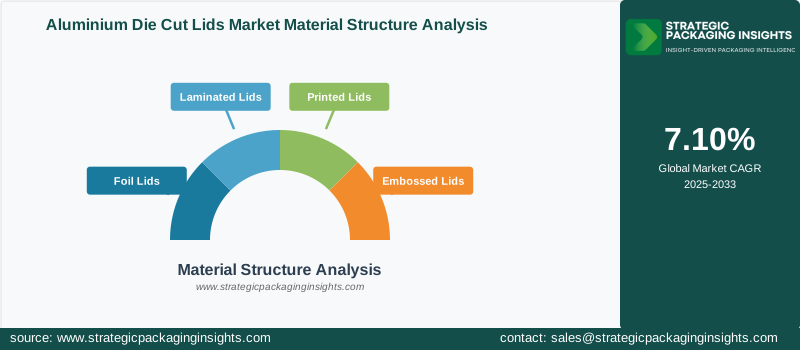
The demand for foil lids is driven by the growing food and beverage industry, where product freshness and shelf life are of utmost importance. Laminated lids are preferred in the pharmaceutical industry due to their strong seal and durability. Printed lids are increasingly being used in the dairy and beverage industries for branding purposes. Embossed lids are gaining traction in the premium segment, where product aesthetics play a crucial role in consumer decision-making. The competition in this segment is intense, with companies focusing on innovation and product differentiation to gain a competitive edge.
Application Analysis
The application segment of the Aluminium Die Cut Lids market includes dairy products, ready meals, beverages, and pharmaceuticals. The dairy products segment holds a significant share of the market, driven by the increasing demand for packaged dairy products such as yogurt and cheese. Ready meals are also witnessing a surge in demand due to the growing trend of convenience foods, which is driving the need for effective packaging solutions. The beverage industry is another major application area, where aluminium die cut lids are used for sealing various types of drinks, ensuring product freshness and quality.
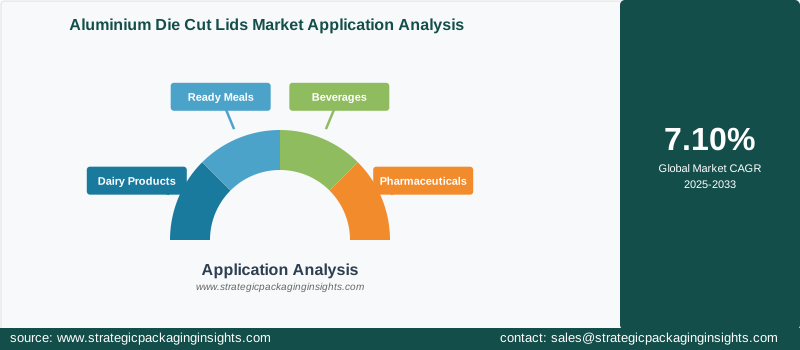
The pharmaceutical industry is a rapidly growing application segment, where the need for secure and tamper-evident packaging is paramount. Aluminium die cut lids provide excellent barrier properties, protecting pharmaceutical products from contamination and ensuring their integrity. The demand for aluminium die cut lids in the dairy and beverage industries is driven by the need for convenient and sustainable packaging solutions. The growing trend of ready-to-eat meals is further propelling the demand for aluminium die cut lids in the ready meals segment.
Seal Type Analysis
The seal type segment of the Aluminium Die Cut Lids market is divided into heat seal, peelable seal, easy-open seal, and hermetic seal. Heat seals are widely used due to their strong sealing properties, which ensure product safety and integrity. Peelable seals are gaining popularity as they offer convenience to consumers, allowing easy opening without compromising the seal's effectiveness. Easy-open seals are preferred in the food and beverage industry, where consumer convenience is a top priority. Hermetic seals are used in applications where airtight sealing is required, such as in the pharmaceutical industry.
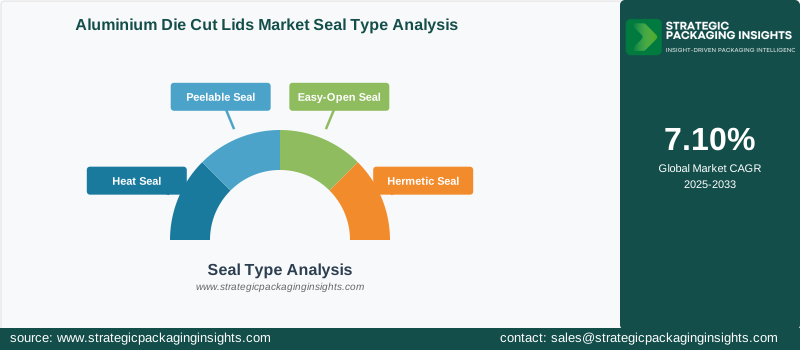
The demand for heat seals is driven by the need for secure packaging solutions that ensure product safety and integrity. Peelable seals are increasingly being used in the dairy and beverage industries for their convenience. Easy-open seals are gaining traction in the ready meals segment, where consumer convenience is a key factor. Hermetic seals are preferred in the pharmaceutical industry, where airtight sealing is crucial to protect products from contamination. The competition in this segment is intense, with companies focusing on innovation and product differentiation to gain a competitive edge.
End Use Analysis
The end use segment of the Aluminium Die Cut Lids market includes food packaging, healthcare packaging, industrial packaging, and pet food packaging. Food packaging holds a significant share of the market, driven by the increasing demand for packaged food products. Healthcare packaging is another major end use segment, where the need for secure and tamper-evident packaging is paramount. Industrial packaging is witnessing a surge in demand due to the growing need for effective packaging solutions in various industries. Pet food packaging is also gaining traction, driven by the increasing demand for convenient and sustainable packaging solutions.
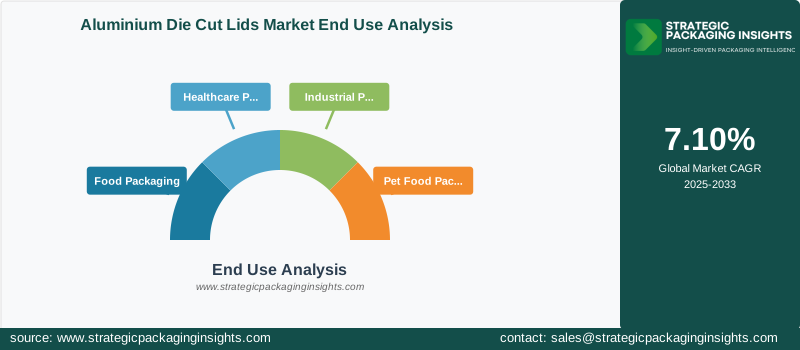
The demand for aluminium die cut lids in the food packaging segment is driven by the need for convenient and sustainable packaging solutions. Healthcare packaging is witnessing a surge in demand due to the growing pharmaceutical industry and the need for secure packaging solutions. Industrial packaging is gaining traction due to the increasing demand for effective packaging solutions in various industries. Pet food packaging is also witnessing a surge in demand, driven by the increasing demand for convenient and sustainable packaging solutions. The competition in this segment is intense, with companies focusing on innovation and product differentiation to gain a competitive edge.
Aluminium Die Cut Lids Market Segments
The Aluminium Die Cut Lids market has been segmented on the basis ofMaterial Structure
- Foil Lids
- Laminated Lids
- Printed Lids
- Embossed Lids
Application
- Dairy Products
- Ready Meals
- Beverages
- Pharmaceuticals
Seal Type
- Heat Seal
- Peelable Seal
- Easy-Open Seal
- Hermetic Seal
End Use
- Food Packaging
- Healthcare Packaging
- Industrial Packaging
- Pet Food Packaging
Region
- Asia Pacific
- North America
- Latin America
- Europe
- Middle East & Africa




