


Airless Pump Dispenser for Cosmetics Market Outlook
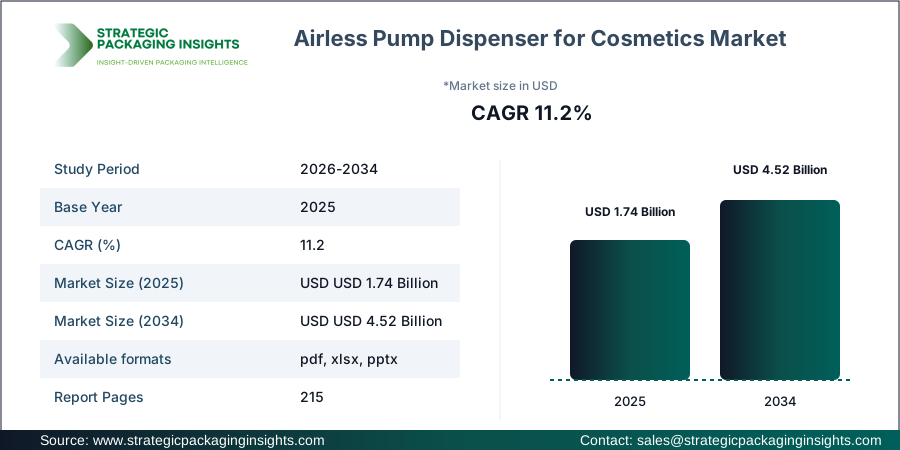
The Airless Pump Dispenser for Cosmetics market size was valued at USD 1.74 Billion in 2025 and is anticipated to reach USD 4.52 Billion by 2034, growing at a CAGR of 11.2% during the forecast period according to Strategic Packaging Insights. This growth is driven by increasing consumer demand for premium and luxury cosmetic products, which often require innovative packaging solutions like airless pump dispensers. Companies such as AptarGroup and Lumson S.p.A. are leading the charge in developing advanced airless packaging technologies that enhance product preservation and user experience. The market's expansion is further fueled by the rising awareness of product safety and hygiene, as airless dispensers minimize contamination risks.
One of the most impactful drivers of the airless pump dispenser market is the growing emphasis on sustainability and eco-friendly packaging solutions. According to industry reports, consumers are increasingly favoring brands that prioritize environmental responsibility, prompting companies to innovate with recyclable and bio-based materials. This trend is supported by government regulations aimed at reducing plastic waste and encouraging sustainable practices. As a result, companies like Quadpack and Silgan Dispensing are investing in research and development to create sustainable airless packaging options that meet both consumer expectations and regulatory requirements.
Report Scope
| Attributes | Details |
| Report Title | Airless Pump Dispenser for Cosmetics Market Size, Future Growth and Forecast 2034 |
| By Product Type | Airless Pump Bottles, Airless Pump Jars, Airless Tubes, Refillable Airless Dispensers |
| By Material | Plastic, Glass, Aluminum, Bio-Based Materials, Recycled Materials |
| By Application | Skincare, Haircare, Sun Care, Serums & Essences, Cosmeceuticals, Premium Beauty Products |
| By End User | Cosmetic Manufacturers, Personal Care Brands, Contract Packaging Companies, Luxury Beauty Brands, Private Label Manufacturers |
| Region | Asia Pacific, North America, Latin America, Europe, Middle East & Africa |
| Base Year | 2025 |
| Historic Period | 2018-2024 |
| Forecast Period | 2026-2034 |
| Number of Pages | 215 |
| Customization Available | Yes* |
Sustainability & Circular Economy Analysis
Sustainability initiatives and circular economy practices are significantly shaping the airless pump dispenser market. The integration of recyclable materials and reusable packaging solutions is becoming a standard practice among leading manufacturers. Companies are increasingly adopting lightweight packaging designs to reduce material usage and transportation costs, aligning with consumer preferences for eco-friendly products. This shift is driven by the growing demand for sustainable beauty products, which is influencing packaging design and manufacturing processes.
Eco-friendly material innovation is at the forefront of the airless pump dispenser market, with companies exploring bio-based and recycled materials to minimize environmental impact. Waste reduction strategies, such as extended producer responsibility (EPR), are being implemented to ensure that packaging waste is managed responsibly. These sustainability trends are influencing investment decisions, as companies prioritize eco-friendly packaging solutions to enhance their market competitiveness and comply with evolving packaging regulations.
Consumer sustainability preferences are driving the demand for airless pump dispensers made from environmentally friendly materials. Packaging regulations are becoming more stringent, requiring companies to adopt sustainable practices to remain compliant. As a result, manufacturers are focusing on reducing their carbon footprint and implementing ESG initiatives to meet consumer expectations and regulatory requirements. This focus on sustainability is not only enhancing brand reputation but also ensuring long-term market competitiveness in the airless pump dispenser industry.
Packaging Value Chain & Supply Chain Analysis
The packaging value chain for airless pump dispensers involves a complex ecosystem of raw material sourcing, packaging converters, and manufacturers. Efficient supply chain management is crucial for maintaining competitive advantage in this market. Companies like HCP Packaging and Albéa Group are optimizing their procurement strategies to ensure a steady supply of high-quality materials, such as plastic, glass, and aluminum, which are essential for producing durable and effective airless dispensers.
Supply chain efficiency is further enhanced by strategic partnerships and collaborations with logistics providers and distribution channels. These partnerships enable companies to streamline their operations and reduce lead times, ensuring timely delivery of products to brand owners and retailers. The availability of raw materials and production capabilities are critical factors influencing market performance, as they directly impact the ability to meet growing consumer demand for airless pump dispensers.
Localization and global sourcing strategies are being employed to enhance supply chain resilience and mitigate risks associated with geopolitical uncertainties and trade disruptions. Companies are investing in advanced packaging machinery to improve production efficiency and reduce costs. Recycling networks are also being integrated into the supply chain to support sustainability initiatives and promote circular economy practices. These efforts are essential for maintaining business competitiveness and meeting the evolving needs of the airless pump dispenser market.
Opportunities & Threats
The airless pump dispenser market presents numerous opportunities for growth, driven by the increasing demand for premium and luxury cosmetic products. As consumers become more conscious of product safety and hygiene, the demand for airless packaging solutions that minimize contamination risks is expected to rise. Companies can capitalize on this trend by developing innovative airless dispensers that enhance product preservation and user experience. Additionally, the growing emphasis on sustainability and eco-friendly packaging solutions presents opportunities for companies to differentiate themselves by offering recyclable and bio-based materials.
Another significant opportunity lies in the expansion of the cosmetics market in emerging economies. As disposable incomes rise and consumer preferences shift towards premium beauty products, the demand for airless pump dispensers is expected to increase. Companies can leverage this trend by expanding their presence in these markets and tailoring their products to meet local consumer preferences. Furthermore, advancements in packaging technology, such as smart packaging solutions, offer opportunities for companies to enhance product functionality and appeal to tech-savvy consumers.
Despite the promising growth prospects, the airless pump dispenser market faces several threats. One of the primary challenges is the increasing competition from alternative packaging solutions, such as traditional pump dispensers and squeeze tubes. These alternatives may offer cost advantages and wider availability, posing a threat to the adoption of airless pump dispensers. Additionally, fluctuations in raw material prices and supply chain disruptions can impact production costs and profitability. Companies must navigate these challenges by optimizing their supply chain strategies and investing in research and development to maintain their competitive edge.
Drivers & Challenges
The airless pump dispenser market is driven by several key factors, including the growing demand for premium and luxury cosmetic products. As consumers seek high-quality beauty products that offer enhanced functionality and user experience, the demand for innovative packaging solutions like airless pump dispensers is on the rise. Companies are responding to this demand by developing advanced airless packaging technologies that ensure product preservation and minimize contamination risks. Additionally, the increasing focus on sustainability and eco-friendly packaging solutions is driving market growth, as consumers prioritize brands that demonstrate environmental responsibility.
Another significant driver of the airless pump dispenser market is the expansion of the cosmetics industry in emerging economies. As disposable incomes rise and consumer preferences shift towards premium beauty products, the demand for airless pump dispensers is expected to increase. Companies can capitalize on this trend by expanding their presence in these markets and tailoring their products to meet local consumer preferences. Furthermore, advancements in packaging technology, such as smart packaging solutions, offer opportunities for companies to enhance product functionality and appeal to tech-savvy consumers.
Despite the promising growth prospects, the airless pump dispenser market faces several challenges. One of the primary challenges is the increasing competition from alternative packaging solutions, such as traditional pump dispensers and squeeze tubes. These alternatives may offer cost advantages and wider availability, posing a threat to the adoption of airless pump dispensers. Additionally, fluctuations in raw material prices and supply chain disruptions can impact production costs and profitability. Companies must navigate these challenges by optimizing their supply chain strategies and investing in research and development to maintain their competitive edge.
Market Share Analysis
The competitive landscape of the airless pump dispenser market is characterized by the presence of several key players, each striving to capture a significant share of the market. Companies like AptarGroup, Lumson S.p.A., and Quadpack are leading the market with their innovative packaging solutions and strong focus on sustainability. These companies are investing heavily in research and development to create advanced airless packaging technologies that meet the evolving needs of consumers and regulatory requirements.
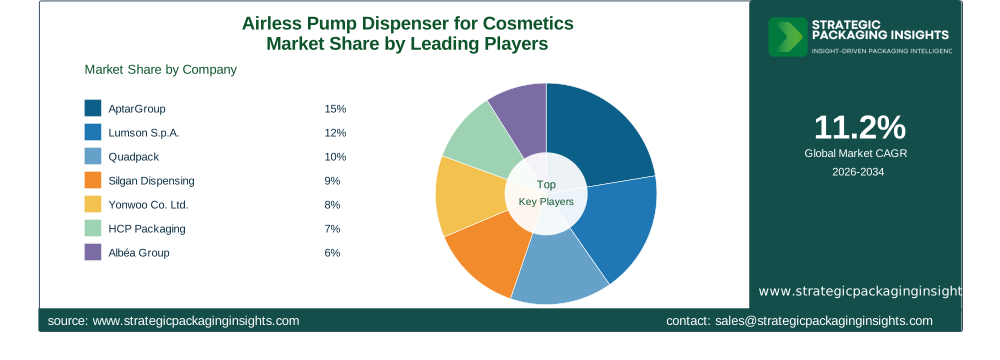
AptarGroup is a prominent player in the airless pump dispenser market, known for its innovative packaging solutions and commitment to sustainability. The company offers a wide range of airless dispensers that cater to various cosmetic applications, including skincare, haircare, and premium beauty products. Lumson S.p.A. is another key player, recognized for its expertise in developing high-quality airless packaging solutions that enhance product preservation and user experience. The company's focus on eco-friendly materials and sustainable practices has positioned it as a leader in the market.
Quadpack is a leading provider of airless pump dispensers, offering a diverse range of packaging solutions that cater to the needs of cosmetic manufacturers and personal care brands. The company's commitment to sustainability and innovation has enabled it to capture a significant share of the market. Silgan Dispensing is also a major player, known for its advanced packaging technologies and focus on customer satisfaction. The company's extensive product portfolio and strong distribution network have contributed to its success in the airless pump dispenser market.
Other notable companies in the market include Yonwoo Co. Ltd., HCP Packaging, and Albéa Group, each offering unique packaging solutions that cater to the diverse needs of the cosmetics industry. These companies are leveraging their expertise in packaging design and manufacturing to develop innovative airless dispensers that enhance product functionality and appeal to consumers. The competitive landscape is further enriched by the presence of companies like APC Packaging, Fusion Packaging, and Raepak Ltd., which are continuously innovating to meet the evolving demands of the market.
Key Highlights
- Market Size: USD 1.74 Billion in 2025, projected to reach USD 4.52 Billion by 2034.
- Growth Rate: Forecasted CAGR of 11.2% during the forecast period.
- Leading Companies: AptarGroup, Lumson S.p.A., Quadpack, and Silgan Dispensing.
- Key Segments: Airless Pump Bottles, Plastic Materials, Skincare Applications.
- Regional Growth: Asia Pacific expected to exhibit the highest growth rate.
- Sustainability Focus: Increasing demand for eco-friendly and recyclable packaging solutions.
- Technological Advancements: Innovations in smart packaging solutions driving market growth.
Airless Pump Dispenser for Cosmetics Market Segments Insights

By Product Type Analysis
The airless pump dispenser market is segmented by product type into airless pump bottles, airless pump jars, airless tubes, and refillable airless dispensers. Airless pump bottles are the most popular segment, driven by their widespread use in skincare and haircare applications. These bottles offer superior product preservation and user convenience, making them a preferred choice among consumers. Companies like AptarGroup and Lumson S.p.A. are leading the market with their innovative airless pump bottle designs that cater to the evolving needs of the cosmetics industry.
Airless pump jars are gaining traction in the market, particularly for premium beauty products and cosmeceuticals. These jars offer a luxurious packaging solution that enhances the overall product experience. The demand for airless tubes is also on the rise, driven by their versatility and ease of use. Refillable airless dispensers are emerging as a sustainable packaging solution, offering consumers the ability to reuse and refill their dispensers, reducing waste and promoting environmental responsibility.
By Material Analysis
The airless pump dispenser market is segmented by material into plastic, glass, aluminum, bio-based materials, and recycled materials. Plastic is the most commonly used material, offering durability and cost-effectiveness. However, the growing emphasis on sustainability is driving the demand for eco-friendly materials such as bio-based and recycled materials. Companies are investing in research and development to create innovative packaging solutions that minimize environmental impact and meet consumer expectations for sustainable products.
Glass is a popular choice for premium beauty products, offering a high-end look and feel that appeals to luxury consumers. Aluminum is also gaining popularity, particularly for its lightweight and recyclable properties. The use of bio-based materials is on the rise, driven by the increasing demand for sustainable packaging solutions. Companies are exploring new materials and technologies to create airless dispensers that are both functional and environmentally friendly.
By Application Analysis
The airless pump dispenser market is segmented by application into skincare, haircare, sun care, serums & essences, cosmeceuticals, and premium beauty products. Skincare is the largest application segment, driven by the growing demand for high-quality skincare products that offer enhanced functionality and user experience. Companies are developing innovative airless packaging solutions that cater to the specific needs of the skincare industry, ensuring product preservation and minimizing contamination risks.
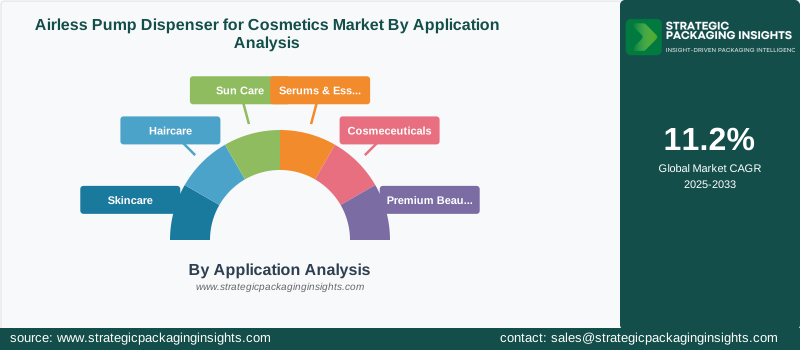
Haircare is another significant application segment, with airless pump dispensers offering a convenient and hygienic packaging solution for haircare products. The demand for sun care products is also on the rise, driven by increasing consumer awareness of the importance of sun protection. Airless dispensers are ideal for sun care products, offering precise dosing and minimizing product waste. The demand for serums & essences, cosmeceuticals, and premium beauty products is also contributing to the growth of the airless pump dispenser market.
By End User Analysis
The airless pump dispenser market is segmented by end user into cosmetic manufacturers, personal care brands, contract packaging companies, luxury beauty brands, and private label manufacturers. Cosmetic manufacturers are the largest end user segment, driven by the increasing demand for innovative packaging solutions that enhance product functionality and appeal to consumers. Companies are partnering with packaging manufacturers to develop customized airless dispensers that meet their specific needs and requirements.
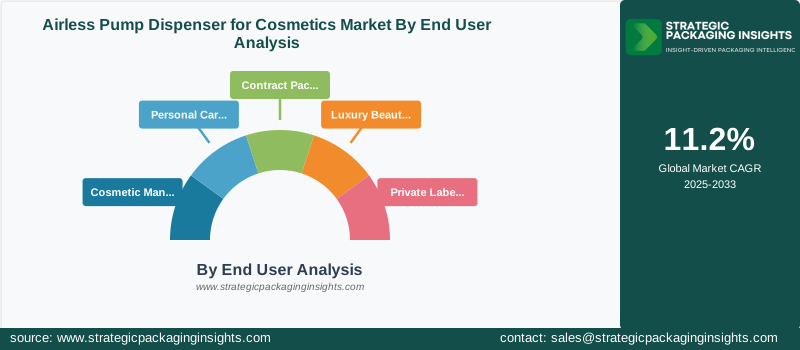
Personal care brands are also significant end users, with airless pump dispensers offering a convenient and hygienic packaging solution for a wide range of personal care products. Contract packaging companies are leveraging their expertise in packaging design and manufacturing to develop innovative airless dispensers that cater to the diverse needs of the cosmetics industry. Luxury beauty brands are focusing on premium packaging solutions that enhance the overall product experience, while private label manufacturers are offering cost-effective airless packaging solutions to meet the growing demand for private label products.
Airless Pump Dispenser for Cosmetics Market Segments
The Airless Pump Dispenser for Cosmetics market has been segmented on the basis ofBy Product Type
- Airless Pump Bottles
- Airless Pump Jars
- Airless Tubes
- Refillable Airless Dispensers
By Material
- Plastic
- Glass
- Aluminum
- Bio-Based Materials
- Recycled Materials
By Application
- Skincare
- Haircare
- Sun Care
- Serums & Essences
- Cosmeceuticals
- Premium Beauty Products
By End User
- Cosmetic Manufacturers
- Personal Care Brands
- Contract Packaging Companies
- Luxury Beauty Brands
- Private Label Manufacturers
Region
- Asia Pacific
- North America
- Latin America
- Europe
- Middle East & Africa




