


Air Bubble Bags Market Outlook
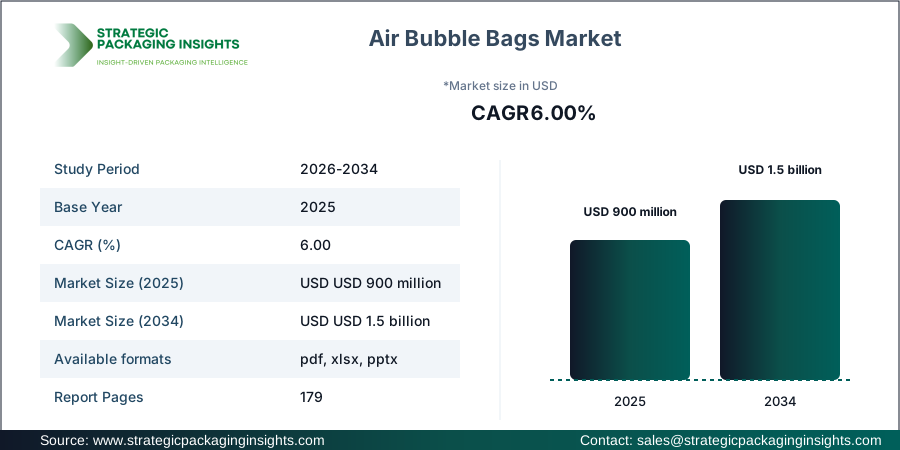
The Air Bubble Bags market size was valued at USD 900 million in 2025 and is anticipated to reach USD 1.5 billion by 2034, growing at a CAGR of 6.00% during the forecast period according to Strategic Packaging Insights. The market is witnessing significant growth due to the increasing demand for protective packaging solutions across various industries. Sealed Air, a prominent player in the market, is leveraging its innovative product offerings to cater to the growing needs of e-commerce and electronics sectors. The rise in online shopping and the need for safe transportation of goods are driving the demand for air bubble bags, which offer excellent cushioning and protection.
One of the most impactful drivers of the Air Bubble Bags market is the surge in e-commerce activities globally. According to a report by the U.S. Census Bureau, e-commerce sales in the United States alone reached $870 billion in 2021, marking a significant increase from previous years. This trend is expected to continue, fueling the demand for efficient and reliable packaging solutions like air bubble bags. Companies like Pregis are capitalizing on this trend by developing advanced bubble bags that offer enhanced protection and are environmentally friendly. The focus on sustainability and the need for lightweight packaging solutions are further propelling the market growth.
Report Scope
| Attributes | Details |
| Report Title | Air Bubble Bags Market Size, Future Growth and Forecast 2034 |
| By Type | Standard Bubble Bags, Self-Seal Bubble Bags, Anti-Static Bubble Bags, Metallic / Foil Bubble Bags, Kraft-Faced Bubble Bags |
| By Bubble Size | Small (Below 10 mm), Medium, Large |
| By End Use | E-commerce Shipping, Electronics, Cosmetics & Fragile Goods, Auto Parts, Books & Media |
| By Region | North America (U.S., Canada, Mexico), Europe (Germany, UK, France, Italy, Spain, Rest of Europe), Asia Pacific (China, India, Japan, South Korea, Australia, Rest of Asia Pacific), Latin America (Brazil, Argentina, Rest of Latin America), Middle East & Africa (GCC Countries, South Africa, Rest of MEA) |
| Base Year | 2025 |
| Historic Period | 2018-2024 |
| Forecast Period | 2026-2034 |
| Number of Pages | 179 |
| Customization Available | Yes* |
Sustainability & Circular Economy Analysis
Sustainability initiatives are reshaping the Air Bubble Bags market as companies strive to reduce their environmental impact. The adoption of recyclable materials and eco-friendly innovations is becoming a standard practice. For instance, manufacturers are increasingly using biodegradable plastics and recycled materials to produce air bubble bags, aligning with consumer preferences for sustainable products. This shift is not only reducing waste but also enhancing brand reputation and customer loyalty.
The circular economy is influencing packaging design and manufacturing processes, encouraging companies to develop reusable and recyclable packaging solutions. Extended Producer Responsibility (EPR) regulations are pushing manufacturers to take responsibility for the entire lifecycle of their products, including disposal and recycling. This has led to increased investment in R&D to create innovative packaging solutions that meet regulatory requirements and consumer expectations.
As sustainability becomes a key competitive factor, companies are focusing on reducing their carbon footprint and implementing waste reduction strategies. ESG initiatives are driving investment decisions, with companies prioritizing sustainable practices to attract environmentally conscious investors. This trend is expected to continue, influencing supply chain strategies and long-term market competitiveness. The emphasis on sustainability is not only benefiting the environment but also providing a competitive edge to companies that embrace these practices.
Packaging Value Chain & Supply Chain Analysis
The packaging value chain for air bubble bags involves several key components, including raw material sourcing, manufacturing, and distribution. Raw materials such as polyethylene are sourced from suppliers and converted into bubble bags by manufacturers like Smurfit Westrock. These manufacturers play a crucial role in ensuring the quality and durability of the packaging products, which are then distributed through various channels to reach end-users.
Supply chain efficiency is critical in the Air Bubble Bags market, as it directly impacts production capabilities and market performance. Companies like Veritiv are focusing on optimizing their logistics and distribution networks to ensure timely delivery of products. Strategic partnerships with logistics providers and retailers are enhancing supply chain resilience and enabling companies to meet the growing demand for air bubble bags across different regions.
Global sourcing and localization strategies are also influencing the market dynamics. While some companies are expanding their operations globally to tap into emerging markets, others are focusing on local production to reduce transportation costs and improve supply chain efficiency. Inventory management and procurement strategies are being optimized to ensure a steady supply of raw materials and finished products, further enhancing business competitiveness in the market.
Opportunities & Threats
The Air Bubble Bags market presents several opportunities for growth, driven by the increasing demand for protective packaging solutions in the e-commerce and electronics sectors. The rise in online shopping and the need for safe transportation of goods are creating a significant demand for air bubble bags. Companies can capitalize on this trend by developing innovative products that offer enhanced protection and are environmentally friendly. The focus on sustainability and the need for lightweight packaging solutions are also creating opportunities for companies to differentiate themselves in the market.
Another opportunity lies in the expansion of the market in emerging economies. As e-commerce continues to grow in regions like Asia Pacific and Latin America, the demand for air bubble bags is expected to increase. Companies can tap into these markets by establishing local production facilities and distribution networks. Additionally, the increasing focus on sustainability and the adoption of circular economy practices are creating opportunities for companies to develop eco-friendly packaging solutions that meet regulatory requirements and consumer expectations.
However, the market also faces certain threats, such as the volatility in raw material prices and the increasing competition from alternative packaging solutions. The rising cost of polyethylene, a key raw material used in the production of air bubble bags, can impact profit margins and pricing strategies. Additionally, the growing popularity of alternative packaging solutions, such as paper-based and biodegradable options, poses a threat to the traditional air bubble bags market. Companies need to continuously innovate and adapt to changing market dynamics to remain competitive.
Drivers & Challenges
The primary driver of the Air Bubble Bags market is the increasing demand for protective packaging solutions across various industries. The rise in e-commerce activities and the need for safe transportation of goods are fueling the demand for air bubble bags. Companies like Sealed Air are leveraging their innovative product offerings to cater to the growing needs of the e-commerce and electronics sectors. The focus on sustainability and the need for lightweight packaging solutions are also driving market growth.
Another significant driver is the growing awareness of the environmental impact of packaging waste. Consumers are increasingly demanding eco-friendly packaging solutions, prompting companies to develop recyclable and biodegradable air bubble bags. This trend is not only reducing waste but also enhancing brand reputation and customer loyalty. The adoption of circular economy practices and the implementation of Extended Producer Responsibility (EPR) regulations are further driving the market growth.
Despite the positive growth prospects, the Air Bubble Bags market faces several challenges. One of the main challenges is the volatility in raw material prices, which can impact profit margins and pricing strategies. The rising cost of polyethylene, a key raw material used in the production of air bubble bags, poses a significant challenge for manufacturers. Additionally, the increasing competition from alternative packaging solutions, such as paper-based and biodegradable options, is putting pressure on traditional air bubble bags manufacturers to innovate and adapt to changing market dynamics.
Market Share Analysis
The Air Bubble Bags market is characterized by a competitive landscape with several key players vying for market share. Companies like Sealed Air, Pregis, and Smurfit Westrock are leading the market with their innovative product offerings and strong distribution networks. These companies are focusing on expanding their product portfolios and enhancing their production capabilities to meet the growing demand for air bubble bags.
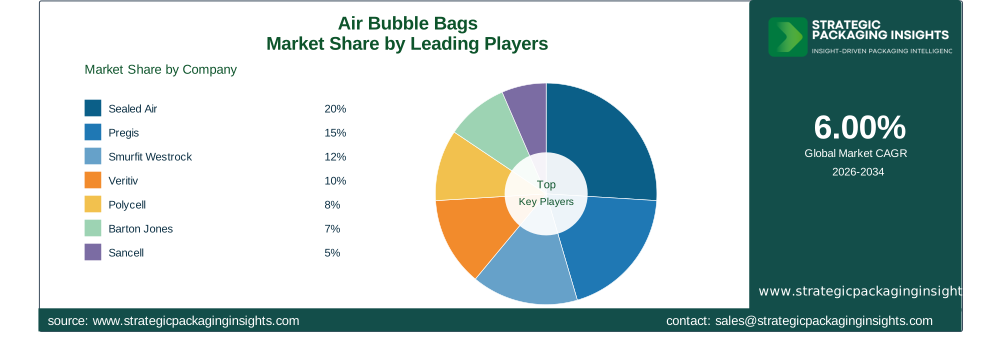
Sealed Air is a prominent player in the market, known for its advanced packaging solutions and commitment to sustainability. The company is leveraging its expertise in protective packaging to develop innovative air bubble bags that offer enhanced protection and are environmentally friendly. Pregis is another key player, focusing on developing eco-friendly packaging solutions that meet regulatory requirements and consumer expectations.
Smurfit Westrock is also a major player in the market, known for its high-quality packaging products and strong distribution network. The company is focusing on expanding its operations globally to tap into emerging markets and meet the growing demand for air bubble bags. Veritiv, Polycell, and Barton Jones are other notable players in the market, known for their innovative product offerings and strong market presence.
Overall, the competitive landscape of the Air Bubble Bags market is characterized by a focus on innovation, sustainability, and strategic partnerships. Companies are investing in R&D to develop advanced packaging solutions that meet the evolving needs of consumers and regulatory requirements. The emphasis on sustainability and the adoption of circular economy practices are providing a competitive edge to companies that embrace these trends.
Key Highlights
- Market Size: The Air Bubble Bags market was valued at USD 900 million in 2025 and is projected to reach USD 1.5 billion by 2034.
- Growth Rate: The market is expected to grow at a CAGR of 6.00% during the forecast period.
- Leading Companies: Key players include Sealed Air, Pregis, and Smurfit Westrock.
- Growing Segments: E-commerce Shipping and Electronics are driving demand.
- Regional Insights: Asia Pacific is expected to witness significant growth.
- Sustainability Focus: Increasing demand for eco-friendly packaging solutions.
- Innovation: Companies are investing in R&D to develop advanced packaging solutions.
Air Bubble Bags Market Segments Insights

By Type Analysis
The Air Bubble Bags market is segmented by type into Standard Bubble Bags, Self-Seal Bubble Bags, Anti-Static Bubble Bags, Metallic / Foil Bubble Bags, and Kraft-Faced Bubble Bags. Standard Bubble Bags are widely used due to their cost-effectiveness and versatility, making them a popular choice for various applications. Self-Seal Bubble Bags offer convenience and efficiency, particularly in e-commerce shipping, where quick and secure packaging is essential. Anti-Static Bubble Bags are gaining traction in the electronics sector, providing protection against static electricity and ensuring the safe transportation of sensitive components.
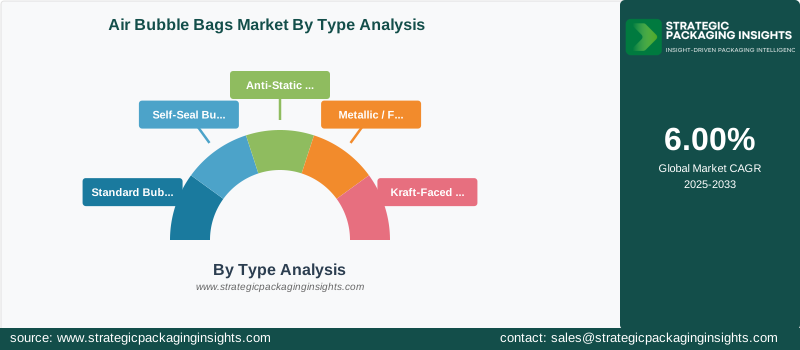
Metallic / Foil Bubble Bags are preferred for their enhanced protective properties, offering superior insulation and cushioning for fragile goods. Kraft-Faced Bubble Bags are gaining popularity due to their eco-friendly nature, aligning with the growing demand for sustainable packaging solutions. Companies are focusing on developing innovative products within these segments to cater to the diverse needs of consumers and industries. The emphasis on sustainability and the need for lightweight packaging solutions are driving the demand for eco-friendly and recyclable bubble bags.
By Bubble Size Analysis
The market is also segmented by bubble size into Small (Below 10 mm), Medium, and Large. Small bubble bags are commonly used for packaging delicate items, providing excellent cushioning and protection. Medium bubble bags are versatile and suitable for a wide range of applications, including e-commerce shipping and electronics. Large bubble bags offer superior protection for bulky and fragile items, making them ideal for auto parts and other heavy goods.
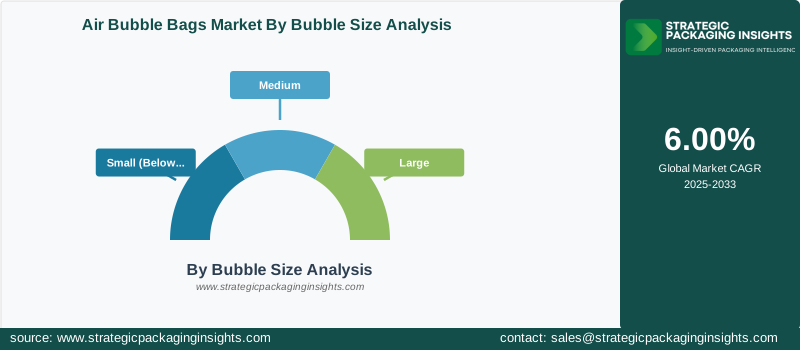
The demand for different bubble sizes is driven by the specific requirements of various industries and applications. Companies are focusing on developing bubble bags with varying bubble sizes to cater to the diverse needs of consumers. The emphasis on customization and the need for efficient packaging solutions are driving the demand for bubble bags with different bubble sizes. The growing focus on sustainability and the adoption of eco-friendly materials are also influencing the development of bubble bags with varying bubble sizes.
By End Use Analysis
The Air Bubble Bags market is segmented by end use into E-commerce Shipping, Electronics, Cosmetics & Fragile Goods, Auto Parts, and Books & Media. E-commerce Shipping is a major driver of the market, with the rise in online shopping fueling the demand for protective packaging solutions. Electronics is another key segment, with the need for safe transportation of sensitive components driving the demand for anti-static bubble bags.
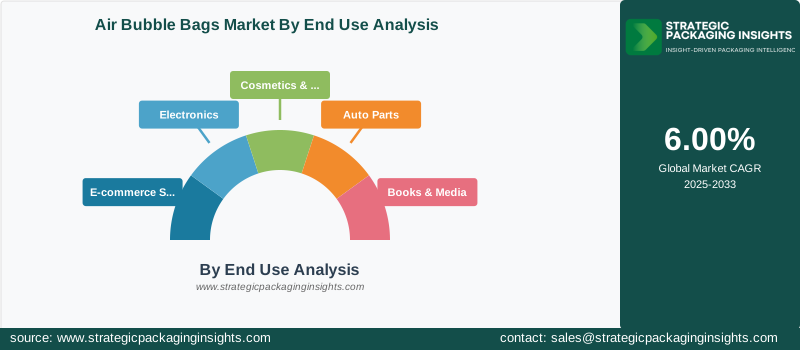
Cosmetics & Fragile Goods require specialized packaging solutions to ensure the safe transportation of delicate items. Auto Parts and Books & Media are also significant segments, with the need for efficient and reliable packaging solutions driving the demand for air bubble bags. Companies are focusing on developing innovative products within these segments to cater to the diverse needs of consumers and industries. The emphasis on sustainability and the need for lightweight packaging solutions are driving the demand for eco-friendly and recyclable bubble bags.
Air Bubble Bags Market Segments
The Air Bubble Bags market has been segmented on the basis ofBy Type
- Standard Bubble Bags
- Self-Seal Bubble Bags
- Anti-Static Bubble Bags
- Metallic / Foil Bubble Bags
- Kraft-Faced Bubble Bags
By Bubble Size
- Small (Below 10 mm)
- Medium
- Large
By End Use
- E-commerce Shipping
- Electronics
- Cosmetics & Fragile Goods
- Auto Parts
- Books & Media
By Region
- North America (U.S., Canada, Mexico)
- Europe (Germany, UK, France, Italy, Spain, Rest of Europe)
- Asia Pacific (China, India, Japan, South Korea, Australia, Rest of Asia Pacific)
- Latin America (Brazil, Argentina, Rest of Latin America)
- Middle East & Africa (GCC Countries, South Africa, Rest of MEA)




