


Air Bottle Rinser Market Outlook
The Air Bottle Rinser market was valued at $312.60 million in 2024 and is projected to reach $510.46 million by 2033, growing at a CAGR of 5.60% during the forecast period 2025-2033. This growth is driven by increasing demand for efficient and automated packaging solutions across various industries, including beverages, pharmaceuticals, and personal care. The market is witnessing a shift towards automation, with automatic air bottle rinsers gaining significant traction due to their efficiency and ability to handle high volumes. Additionally, the rising focus on hygiene and contamination-free packaging is further propelling the demand for advanced rinsing solutions.
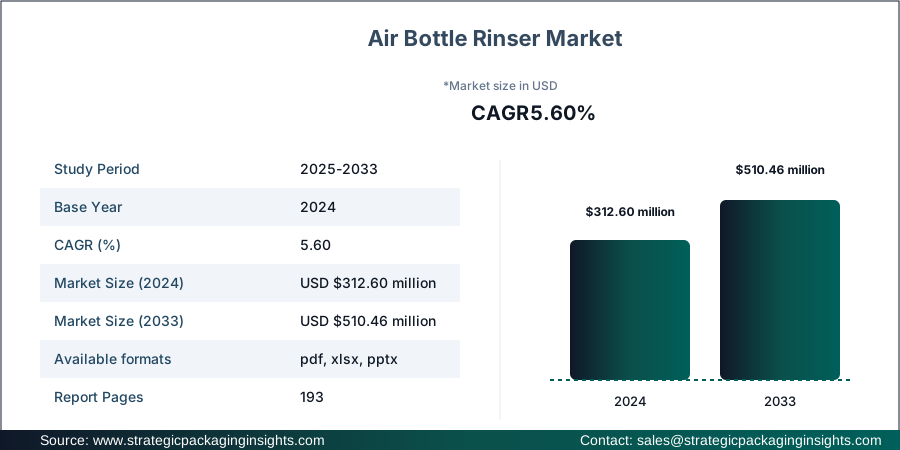
Despite the promising growth prospects, the Air Bottle Rinser market faces certain challenges. Regulatory constraints related to environmental concerns and the need for sustainable packaging solutions are some of the key restraining factors. However, the market holds significant growth potential, driven by technological advancements and the increasing adoption of eco-friendly packaging practices. The development of innovative rinsing technologies that minimize water usage and enhance operational efficiency is expected to create lucrative opportunities for market players in the coming years.
Report Scope
| Attributes | Details |
| Report Title | Air Bottle Rinser Market Size, Future Growth and Forecast 2033 |
| Machine Type | Manual, Semi-Automatic, Automatic, Others |
| Container Type | PET Bottles, Glass Bottles, Cans, Others |
| Application | Beverages, Pharma, Personal Care, Others |
| End Use | Packaging Plants, Contract Fillers, FMCG, Others |
| Region | Asia Pacific, North America, Latin America, Europe, Middle East & Africa |
| Base Year | 2024 |
| Historic Period | 2017-2023 |
| Forecast Period | 2025-2033 |
| Number of Pages | 142 |
| Customization Available | Yes* |
Opportunities & Threats
The Air Bottle Rinser market presents numerous opportunities for growth, primarily driven by the increasing demand for automated and efficient packaging solutions. As industries such as beverages, pharmaceuticals, and personal care continue to expand, the need for high-speed and contamination-free rinsing solutions is becoming more pronounced. This trend is particularly evident in emerging markets, where rapid industrialization and urbanization are driving the demand for packaged goods. Additionally, the growing focus on sustainability and eco-friendly packaging practices is creating opportunities for the development of innovative rinsing technologies that minimize water usage and reduce environmental impact.
Another significant opportunity lies in the technological advancements in rinsing equipment. The integration of IoT and AI technologies in air bottle rinsers is enhancing their operational efficiency and enabling real-time monitoring and control. This is particularly beneficial for large-scale operations, where precision and efficiency are critical. Moreover, the increasing adoption of smart manufacturing practices is expected to drive the demand for advanced rinsing solutions, providing a significant boost to the market.
However, the market is not without its threats. One of the primary challenges is the stringent regulatory environment concerning environmental sustainability and waste management. Manufacturers are under pressure to develop solutions that comply with these regulations, which can increase production costs and impact profitability. Additionally, the high initial investment required for advanced rinsing equipment can be a barrier for small and medium-sized enterprises, limiting market growth. Furthermore, the ongoing economic uncertainties and supply chain disruptions pose significant threats to the market's stability and growth prospects.
Drivers & Challenges
The Air Bottle Rinser market is primarily driven by the increasing demand for efficient and automated packaging solutions across various industries. The beverage industry, in particular, is a major driver, as it requires high-speed and contamination-free rinsing solutions to meet the growing consumer demand for packaged drinks. Additionally, the pharmaceutical and personal care industries are also contributing to market growth, as they require stringent hygiene standards and efficient packaging solutions. The rising focus on sustainability and eco-friendly packaging practices is further driving the demand for advanced rinsing technologies that minimize water usage and reduce environmental impact.
Technological advancements in rinsing equipment are another significant driver of market growth. The integration of IoT and AI technologies in air bottle rinsers is enhancing their operational efficiency and enabling real-time monitoring and control. This is particularly beneficial for large-scale operations, where precision and efficiency are critical. Moreover, the increasing adoption of smart manufacturing practices is expected to drive the demand for advanced rinsing solutions, providing a significant boost to the market.
Despite the promising growth prospects, the Air Bottle Rinser market faces several challenges. One of the primary challenges is the stringent regulatory environment concerning environmental sustainability and waste management. Manufacturers are under pressure to develop solutions that comply with these regulations, which can increase production costs and impact profitability. Additionally, the high initial investment required for advanced rinsing equipment can be a barrier for small and medium-sized enterprises, limiting market growth. Furthermore, the ongoing economic uncertainties and supply chain disruptions pose significant threats to the market's stability and growth prospects.
Market Share Analysis
The Air Bottle Rinser market is characterized by a competitive landscape with several key players vying for market share. Companies such as Krones, Sidel, KHS, GEA, IC Filling Systems, E-PAK Machinery, Packfeeder, Syntegon, Coesia, and Comac are some of the prominent players in the market. These companies are focusing on product innovation, strategic partnerships, and mergers and acquisitions to strengthen their market position and expand their product offerings. The competitive rivalry in the market is intense, with players constantly striving to gain a competitive edge through technological advancements and cost-effective solutions.
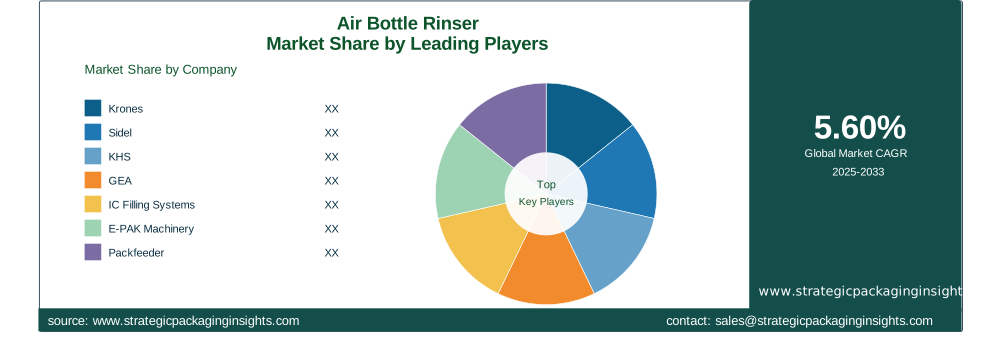
Krones is a leading player in the Air Bottle Rinser market, known for its innovative and efficient rinsing solutions. The company has a strong presence in the global market and is continuously investing in research and development to enhance its product portfolio. Sidel, another major player, is renowned for its advanced packaging solutions and has a significant market share in the air bottle rinser segment. The company focuses on sustainability and eco-friendly practices, which align with the growing demand for sustainable packaging solutions.
KHS is a key player in the market, offering a wide range of rinsing solutions for various industries. The company is known for its high-quality products and customer-centric approach, which has helped it maintain a strong market position. GEA, a global leader in process technology, also holds a significant share in the market. The company's focus on innovation and technological advancements has enabled it to offer cutting-edge rinsing solutions that cater to the evolving needs of its customers.
IC Filling Systems, E-PAK Machinery, and Packfeeder are other notable players in the market, each with a unique product offering and market strategy. These companies are focusing on expanding their product portfolios and enhancing their distribution networks to reach a wider customer base. Syntegon, Coesia, and Comac are also key players in the market, known for their advanced rinsing technologies and commitment to sustainability. Overall, the competitive landscape of the Air Bottle Rinser market is dynamic, with players constantly innovating and adapting to changing market trends and customer demands.
Key Highlights
- The Air Bottle Rinser market is projected to grow from $312.60 million in 2024 to $510.46 million by 2033, at a CAGR of 5.60%.
- Increasing demand for automated and efficient packaging solutions is driving market growth.
- Technological advancements in rinsing equipment, such as IoT and AI integration, are enhancing operational efficiency.
- Stringent regulatory environment concerning environmental sustainability poses challenges for market players.
- High initial investment required for advanced rinsing equipment can be a barrier for small and medium-sized enterprises.
- Key players in the market include Krones, Sidel, KHS, GEA, IC Filling Systems, E-PAK Machinery, Packfeeder, Syntegon, Coesia, and Comac.
- The market is witnessing a shift towards eco-friendly and sustainable packaging practices.
- Emerging markets offer significant growth opportunities due to rapid industrialization and urbanization.
- Ongoing economic uncertainties and supply chain disruptions pose threats to market stability.
Top Countries Insights
In the Air Bottle Rinser market, the United States holds a significant share, driven by the robust demand from the beverage and pharmaceutical industries. The market size in the U.S. is substantial, with a CAGR of 5%, supported by technological advancements and the adoption of automated rinsing solutions. The country's focus on sustainability and eco-friendly practices further propels market growth, although regulatory challenges related to environmental standards remain a concern.
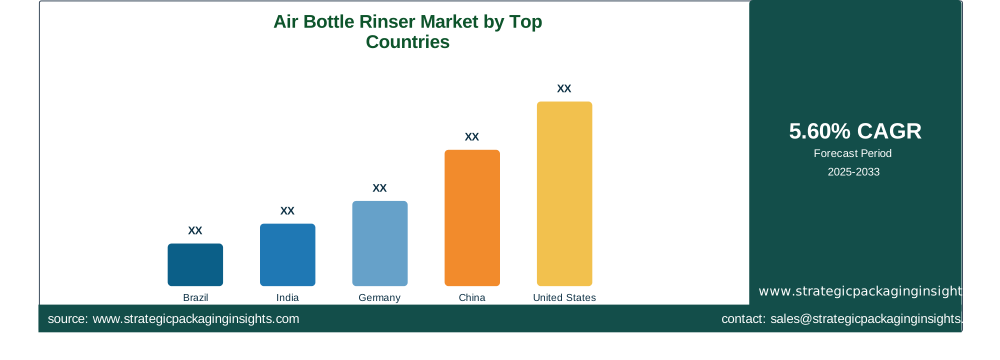
China is another key player in the Air Bottle Rinser market, with a rapidly growing market size and a CAGR of 7%. The country's booming beverage industry and increasing demand for packaged goods are major growth drivers. Additionally, China's focus on industrial automation and smart manufacturing practices is boosting the adoption of advanced rinsing technologies. However, the market faces challenges related to regulatory compliance and environmental sustainability.
Germany is a leading market in Europe, with a strong presence of key players and a CAGR of 6%. The country's emphasis on innovation and technological advancements in packaging solutions is driving market growth. Germany's stringent environmental regulations and focus on sustainability are also influencing the market dynamics, creating opportunities for eco-friendly rinsing solutions.
India is an emerging market with significant growth potential, driven by rapid industrialization and urbanization. The market size is expanding, with a CAGR of 8%, supported by the increasing demand for packaged beverages and personal care products. However, challenges related to infrastructure and regulatory compliance pose hurdles for market growth.
Brazil is a key market in Latin America, with a growing demand for air bottle rinsers in the beverage and FMCG industries. The market size is increasing, with a CAGR of 6%, driven by the rising consumer demand for packaged goods. However, economic uncertainties and supply chain disruptions pose challenges for market stability and growth.
Air Bottle Rinser Market Segments Insights

Machine Type Analysis
The Air Bottle Rinser market is segmented by machine type into manual, semi-automatic, automatic, and others. The automatic segment is expected to witness significant growth during the forecast period, driven by the increasing demand for high-speed and efficient rinsing solutions. Automatic air bottle rinsers offer several advantages, including reduced labor costs, enhanced operational efficiency, and the ability to handle high volumes, making them ideal for large-scale operations. The growing focus on automation and smart manufacturing practices is further propelling the demand for automatic rinsers. However, the high initial investment required for these machines can be a barrier for small and medium-sized enterprises.
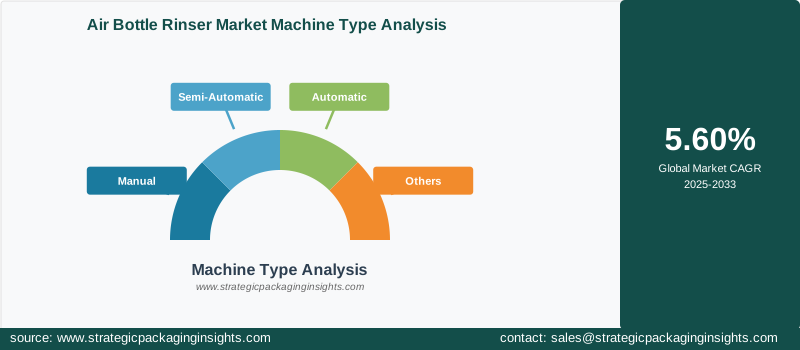
The semi-automatic segment is also expected to grow, particularly in emerging markets where cost considerations are critical. These machines offer a balance between efficiency and affordability, making them suitable for small to medium-sized operations. The manual segment, while declining in developed markets, continues to hold relevance in regions with lower labor costs and smaller-scale operations. Overall, the machine type segment is witnessing a shift towards automation, driven by the need for efficiency and cost-effectiveness in packaging operations.
Container Type Analysis
The container type segment of the Air Bottle Rinser market includes PET bottles, glass bottles, cans, and others. PET bottles are the most widely used container type, driven by their lightweight, durability, and cost-effectiveness. The increasing demand for bottled beverages and personal care products is fueling the growth of this segment. Additionally, the recyclability of PET bottles aligns with the growing focus on sustainability and eco-friendly packaging practices, further boosting their demand.
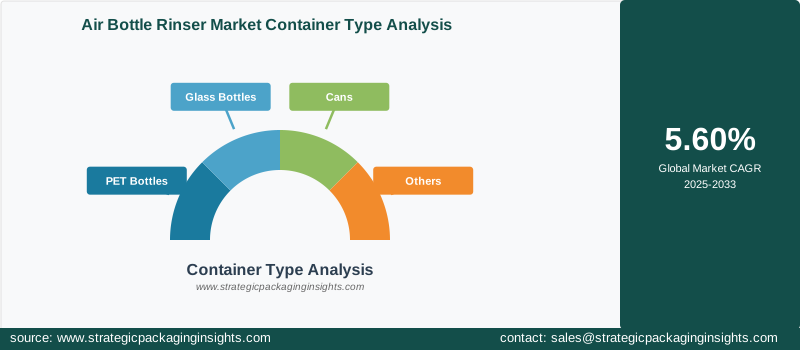
Glass bottles, while less prevalent than PET bottles, continue to hold a significant share in the market, particularly in the premium beverage and pharmaceutical industries. The demand for glass bottles is driven by their perceived quality and ability to preserve the taste and integrity of the contents. However, the higher cost and fragility of glass bottles pose challenges for their widespread adoption. The cans segment is also witnessing growth, driven by the increasing demand for canned beverages and the convenience they offer. Overall, the container type segment is characterized by a diverse range of options, each catering to specific industry needs and consumer preferences.
Application Analysis
The Air Bottle Rinser market is segmented by application into beverages, pharma, personal care, and others. The beverage industry is the largest application segment, driven by the increasing demand for packaged drinks and the need for high-speed and contamination-free rinsing solutions. The growing consumer preference for bottled beverages, including water, soft drinks, and alcoholic beverages, is fueling the demand for air bottle rinsers in this segment.
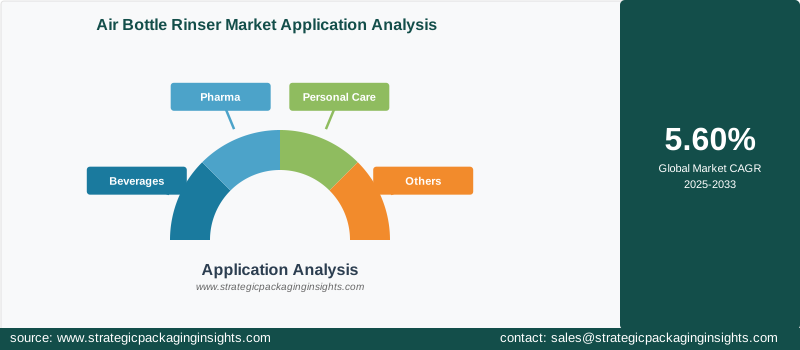
The pharmaceutical industry is another significant application segment, requiring stringent hygiene standards and efficient packaging solutions. The demand for air bottle rinsers in this segment is driven by the need for contamination-free packaging and compliance with regulatory standards. The personal care industry is also contributing to market growth, with the increasing demand for packaged personal care products driving the need for efficient rinsing solutions. Overall, the application segment is characterized by diverse industry needs, each requiring specific rinsing solutions to meet their unique requirements.
End Use Analysis
The end-use segment of the Air Bottle Rinser market includes packaging plants, contract fillers, FMCG, and others. Packaging plants are the largest end-use segment, driven by the need for efficient and high-speed rinsing solutions to meet the growing demand for packaged goods. The increasing focus on automation and smart manufacturing practices is further propelling the demand for advanced rinsing solutions in this segment.
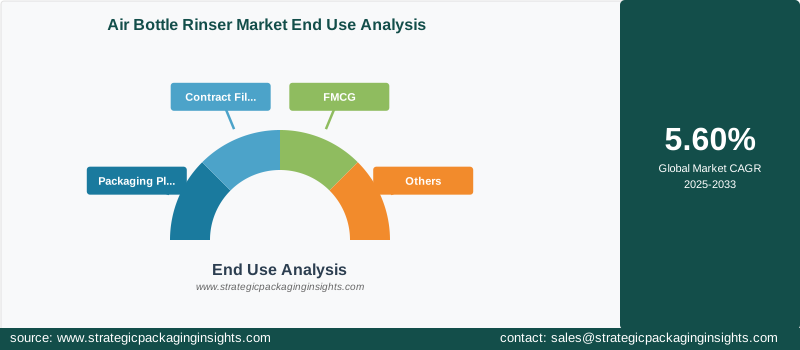
Contract fillers are another significant end-use segment, requiring flexible and efficient rinsing solutions to cater to diverse client needs. The demand for air bottle rinsers in this segment is driven by the need for cost-effective and versatile solutions that can handle a wide range of container types and sizes. The FMCG industry is also contributing to market growth, with the increasing demand for packaged consumer goods driving the need for efficient rinsing solutions. Overall, the end-use segment is characterized by diverse industry needs, each requiring specific rinsing solutions to meet their unique requirements.
Air Bottle Rinser Market Segments
The Air Bottle Rinser market has been segmented on the basis ofMachine Type
- Manual
- Semi-Automatic
- Automatic
- Others
Container Type
- PET Bottles
- Glass Bottles
- Cans
- Others
Application
- Beverages
- Pharma
- Personal Care
- Others
End Use
- Packaging Plants
- Contract Fillers
- FMCG
- Others
Region
- Asia Pacific
- North America
- Latin America
- Europe
- Middle East & Africa




