


Agriculture Chemical Packaging Market Outlook
The Agriculture Chemical Packaging market size was valued at USD $16.13 Billion in 2025 and is anticipated to reach USD $29.15 Billion by 2035, growing at a CAGR of 6.1% during the forecast period according to Strategic Packaging Insights.
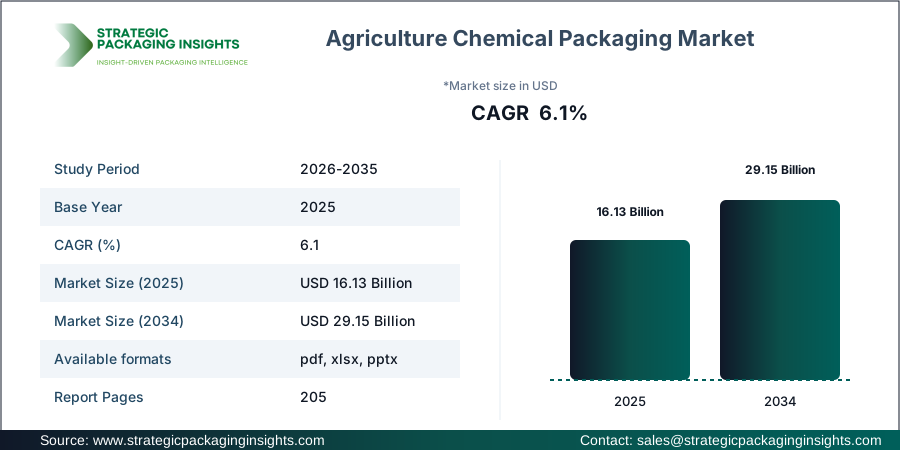
The increasing demand for sustainable and eco-friendly packaging solutions is a significant driver in the Agriculture Chemical Packaging market. With growing environmental concerns and regulatory pressures, companies are focusing on developing biodegradable and recyclable packaging materials. This trend is supported by initiatives from organizations like the European Commission and the U.S. EPA, which are pushing for stricter packaging waste regulations and promoting the use of sustainable materials.
Report Scope
| Attributes | Details |
| Report Title | Agriculture Chemical Packaging Market Projected to Scale to 29.15 Billion by 2035, Assesses Strategic Packaging Insights |
| by application | Pesticide Packaging, Fertilizer Packaging, Herbicide Packaging, Insecticide Packaging, Fungicide Packaging, Seed Treatment Chemical Packaging, Plant Growth Regulator Packaging, Adjuvant and Surfactant Packaging, Water-Soluble Chemical Packaging, Bio-based Agrochemical Packaging |
| by product | Bottles and Containers, Drums and Barrels, Intermediate Bulk Containers (IBCs), Pouches and Sachets, Bags and Sacks, Cans and Jerrycans, Cartridges and Tubes, Aerosol Containers, Flexible Packaging Films, Eco-friendly and Biodegradable Packaging |
| by material | Plastic, Paper and Paperboard, Metal, Glass, Composite Materials |
| by packaging function | Leak-Proof Packaging, Tamper-Evident Packaging, Moisture-Resistant Packaging, Chemical-Resistant Packaging, Child-Resistant Packaging, Sustainable Packaging |
| by capacity | Small, Medium, Large, Bulk |
| by end use | Open-Field Farming, Greenhouse Farming, Horticulture and Floriculture, Forestry, Agricultural Cooperatives |
| by region | North America, Europe, Asia-Pacific, Latin America, Middle East and Africa |
| Base Year | 2025 |
| Historic Period | 2018-2024 |
| Forecast Period | 2026-2035 |
| Number of Pages | 205 |
| Customization Available | Yes* |
Market Trends Analysis
One of the major trends in the Agriculture Chemical Packaging market is the shift towards sustainable packaging solutions. Companies are increasingly adopting biodegradable and recyclable materials to meet regulatory requirements and consumer demand for environmentally friendly products. This trend is expected to drive innovation in material science and packaging design, leading to the development of new products that offer improved performance and sustainability.
Another significant trend is the increasing use of digital technologies in packaging. Smart packaging solutions, such as QR codes and RFID tags, are being integrated into agriculture chemical packaging to enhance traceability and provide real-time information to consumers. This trend is expected to improve supply chain efficiency and enable better inventory management, ultimately benefiting both manufacturers and end-users.
Industry Transformation Analysis
The Agriculture Chemical Packaging industry is undergoing significant transformation, driven by advancements in manufacturing technologies and changing consumer preferences. The adoption of automation and digitalization in packaging processes is enhancing operational efficiency and reducing production costs. This transformation is enabling companies to offer more customized and flexible packaging solutions to meet diverse customer needs.
Additionally, the industry is witnessing a shift towards localized production and supply chain networks. With increasing transportation costs and supply chain disruptions, companies are focusing on establishing regional manufacturing facilities to ensure a steady supply of packaging materials. This localization strategy is expected to enhance supply chain resilience and reduce lead times, providing a competitive advantage to companies in the market.
Trends & Disruptions Impacting Customers' Customers
Downstream customers in the agriculture sector are increasingly demanding packaging solutions that offer enhanced safety and sustainability. The need for leak-proof, tamper-evident, and child-resistant packaging is becoming more critical as consumers prioritize safety and environmental impact. Additionally, there is a growing preference for packaging that provides extended shelf life and maintains the quality of agricultural chemicals.
These changing customer requirements are influencing the Agriculture Chemical Packaging market by driving demand for innovative packaging solutions. Companies are investing in research and development to create packaging that meets these evolving needs, leading to increased competition and opportunities for growth. As a result, suppliers are focusing on developing advanced materials and technologies to cater to the diverse demands of their customers.
Agriculture Chemical Packaging Market Ecosystem
The Agriculture Chemical Packaging market ecosystem involves a complex network of suppliers, manufacturers, and distributors. Raw materials such as plastic, paper, metal, and glass are procured from upstream suppliers and processed into packaging materials through resin or substrate production. These materials are then converted into various packaging formats, including bottles, drums, and pouches, through converting processes.
Printing and lamination are critical stages in the ecosystem, where labels and protective coatings are applied to packaging materials. The filled packaging containers are then distributed to end-users through logistics networks. Recycling plays a crucial role in the ecosystem, as it involves the end-of-life processing and recycling of packaging materials to ensure sustainability and compliance with environmental regulations.
Analyst Perspective
Analyst Perspective: The Agriculture Chemical Packaging market is poised for significant growth, driven by increasing demand for sustainable and innovative packaging solutions.
The most important structural change in the market is the shift towards eco-friendly materials and digital technologies. This change is expected to enhance product differentiation and create new opportunities for companies to capture market share.
Companies, investors, and suppliers should closely monitor advancements in material science and digital technologies, as these developments will shape the future of the market. Staying ahead of these trends will be crucial for maintaining a competitive edge and capitalizing on growth opportunities.
Opportunities & Threats
The Agriculture Chemical Packaging market presents significant opportunities for growth, driven by the increasing demand for sustainable packaging solutions. Companies that invest in developing eco-friendly materials and technologies are likely to gain a competitive advantage and capture a larger market share. Additionally, the growing adoption of digital technologies in packaging offers opportunities for innovation and improved supply chain efficiency.
Emerging markets, particularly in Asia Pacific, present lucrative opportunities for expansion. The region's increasing agricultural activities and demand for advanced packaging solutions are expected to drive market growth. Companies that establish a strong presence in these markets can benefit from the rising demand and capitalize on the growth potential.
However, the market also faces several threats, including raw material volatility and regulatory uncertainty. Fluctuations in the prices of raw materials such as plastic and metal can impact production costs and profit margins. Additionally, evolving regulations related to packaging waste and sustainability can pose challenges for companies in terms of compliance and adaptation.
Competition in the market is intensifying, with companies striving to differentiate their products through innovation and sustainability. This competitive landscape can lead to pricing pressures and the need for continuous investment in research and development. Companies must navigate these challenges effectively to maintain their market position and achieve long-term success.
Drivers & Challenges
The Agriculture Chemical Packaging market is driven by several key factors, including the increasing demand for sustainable packaging solutions and the growing agricultural sector. As environmental concerns continue to rise, companies are focusing on developing eco-friendly packaging materials that meet regulatory requirements and consumer preferences. This demand for sustainable packaging is expected to drive market growth and innovation in material science.
Another significant driver is the increasing adoption of digital technologies in packaging. Smart packaging solutions, such as QR codes and RFID tags, are being integrated into agriculture chemical packaging to enhance traceability and provide real-time information to consumers. This trend is expected to improve supply chain efficiency and enable better inventory management, ultimately benefiting both manufacturers and end-users.
Despite the growth opportunities, the market faces several challenges, including raw material volatility and regulatory uncertainty. Fluctuations in the prices of raw materials such as plastic and metal can impact production costs and profit margins. Additionally, evolving regulations related to packaging waste and sustainability can pose challenges for companies in terms of compliance and adaptation. Companies must navigate these challenges effectively to maintain their market position and achieve long-term success.
Packaging Market Economics
The economics of Agriculture Chemical Packaging are influenced by several factors, including raw material costs, conversion costs, and energy expenses. The prices of raw materials such as plastic, paper, and metal play a significant role in determining the overall cost of packaging production. Fluctuations in these prices can impact profit margins and influence pricing strategies.
Conversion costs, including printing, lamination, and tooling, also contribute to the overall economics of packaging. Efficient production processes and advanced technologies can help reduce these costs and improve profitability. Additionally, energy costs associated with manufacturing and transportation can affect the economics of packaging, particularly in regions with high energy prices.
Packaging Value Chain & Cost Analysis
The value chain of Agriculture Chemical Packaging involves several tiers, including resin synthesis, film extrusion, and converting. Resin synthesis and additives production form the foundation of the value chain, providing the necessary materials for packaging production. Film extrusion and substrate production are critical stages where raw materials are transformed into packaging formats.
Converting, printing, and lamination are essential processes that add value to the packaging by enhancing its functionality and appearance. These processes require specialized equipment and expertise to ensure high-quality output. Downstream activities, such as co-packing and distribution, play a crucial role in delivering the final packaged products to end-users.
Unit Economics & Substrate Cost Analysis
The unit economics of Agriculture Chemical Packaging are influenced by various factors, including raw material costs, energy expenses, and labor costs. The cost of raw materials, such as plastic and metal, is a significant component of the overall unit cost. Efficient procurement strategies and supplier relationships can help mitigate the impact of raw material price fluctuations.
Energy expenses, particularly in regions with high energy prices, can also affect unit economics. Companies that invest in energy-efficient technologies and processes can reduce these costs and improve profitability. Labor costs, including wages and benefits, are another important consideration in unit economics, as they contribute to the overall production cost.
Packaging Regulatory & Sustainability Analysis
The Agriculture Chemical Packaging market is subject to various regulatory requirements and sustainability initiatives. Regulations related to packaging waste, recyclability, and environmental impact are becoming increasingly stringent, particularly in regions such as Europe and North America. Compliance with these regulations is essential for companies to maintain market access and avoid penalties.
Sustainability initiatives, such as the European Commission's Circular Economy Action Plan and the U.S. EPA's Sustainable Materials Management Program, are driving the adoption of eco-friendly packaging solutions. Companies are focusing on developing biodegradable and recyclable materials to meet these sustainability goals and enhance their brand reputation.
Strategic Mergers, Acquisitions & Capacity Expansions
Recent strategic developments in the Agriculture Chemical Packaging market include mergers, acquisitions, and capacity expansions. Companies are pursuing these strategies to enhance their market position, expand their product offerings, and increase their production capacity. For example, Greif Inc. recently acquired a packaging company to strengthen its presence in the agricultural sector and expand its product portfolio.
Capacity expansions are also a key focus for companies looking to meet the growing demand for agriculture chemical packaging. Investments in new manufacturing facilities and advanced technologies are enabling companies to increase their production capacity and improve operational efficiency. These strategic developments are expected to drive market growth and create new opportunities for companies in the industry.
Strategic Action Directives
Brand Packaging Engineers & Sustainability Directors: Focus on material selection and recyclability to meet sustainability goals and regulatory requirements. Consider integrating PCR materials to enhance eco-friendliness.
Converter Operations & Extrusion Leads: Optimize line speed and tooling to improve efficiency and reduce scrap. Invest in advanced technologies to enhance production capabilities and meet customer demands.
Procurement & Material Sourcing Managers: Diversify supplier base and establish long-term contracts to mitigate raw material price volatility. Monitor regulatory changes to ensure compliance and minimize EPR exposure.
Investors: Monitor capacity expansions and technology investments to identify growth opportunities. Evaluate market concentration and competitive dynamics to assess potential risks and returns.
Market Share Analysis
The Agriculture Chemical Packaging market is characterized by a competitive landscape with several key players vying for market share. Companies such as Greif Inc., Mauser Packaging Solutions, and Amcor plc are prominent players in the market, offering a wide range of packaging solutions for agricultural chemicals. These companies have a strong presence in multiple regions and are known for their innovative products and technologies.
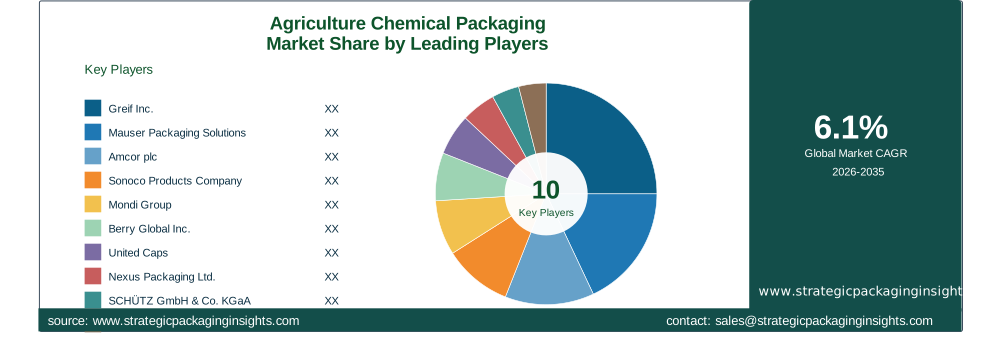
Greif Inc. is a leading player in the market, known for its extensive product portfolio and global reach. The company offers a range of packaging solutions, including drums, IBCs, and flexible packaging, catering to the diverse needs of the agriculture sector. Greif's focus on sustainability and innovation has helped it maintain a competitive edge in the market.
Mauser Packaging Solutions is another key player, offering a comprehensive range of packaging products for agricultural chemicals. The company's focus on quality and customer satisfaction has enabled it to establish a strong presence in the market. Mauser's strategic acquisitions and capacity expansions have further strengthened its market position.
Amcor plc is a global leader in packaging solutions, known for its innovative products and commitment to sustainability. The company's extensive product portfolio includes flexible packaging, rigid containers, and specialty cartons, catering to various industries, including agriculture. Amcor's focus on research and development has enabled it to introduce new products and technologies, enhancing its competitive position in the market.
Key Highlights
- Largest Region: North America
- Fastest-Growing Region: Asia Pacific
- Largest Segment: Pesticide Packaging
- Fastest-Growing Segment: Bio-based Agrochemical Packaging
- Base-year market size: USD 16.13 Billion
- Forecast-year market size: USD 29.15 Billion
- CAGR: 6.1%
- Important application: Sustainable Packaging
- Major end-use industry: Open-Field Farming
- Major market driver: Demand for eco-friendly packaging solutions
Regional Insights
The Agriculture Chemical Packaging market is witnessing significant growth across various regions, with North America being the largest market and Asia Pacific emerging as the fastest-growing region. The demand for sustainable packaging solutions and advanced agricultural practices is driving market growth in these regions.
North America
North America is the largest market for Agriculture Chemical Packaging, driven by the presence of major agricultural chemical manufacturers and a strong focus on sustainability. The region's advanced agricultural practices and regulatory support for eco-friendly packaging solutions are contributing to market growth.
The demand for innovative packaging solutions that offer enhanced safety and sustainability is increasing in North America. Companies are focusing on developing packaging materials that meet regulatory requirements and consumer preferences, driving innovation and competition in the market.
Europe
Europe is a significant market for Agriculture Chemical Packaging, characterized by stringent regulations and a strong emphasis on sustainability. The European Commission's initiatives to promote circular economy and reduce packaging waste are driving the adoption of eco-friendly packaging solutions in the region.
The demand for biodegradable and recyclable packaging materials is increasing in Europe, as consumers and regulatory bodies prioritize environmental impact. Companies are investing in research and development to create innovative packaging solutions that meet these sustainability goals.
Asia Pacific
Asia Pacific is the fastest-growing region in the Agriculture Chemical Packaging market, driven by increasing agricultural activities and demand for advanced packaging solutions. The region's growing population and rising food demand are contributing to the expansion of the agricultural sector, creating opportunities for packaging manufacturers.
The demand for sustainable and cost-effective packaging solutions is increasing in Asia Pacific, as companies focus on meeting regulatory requirements and consumer preferences. The region's emerging markets present significant growth opportunities for companies looking to expand their presence.
Latin America
Latin America is experiencing steady growth in the Agriculture Chemical Packaging market, driven by the region's expanding agricultural sector and increasing demand for sustainable packaging solutions. The region's favorable climate and abundant natural resources support agricultural activities, creating opportunities for packaging manufacturers.
The demand for packaging solutions that offer enhanced safety and sustainability is increasing in Latin America, as consumers and regulatory bodies prioritize environmental impact. Companies are focusing on developing innovative packaging materials that meet these evolving needs.
Middle East & Africa
The Middle East & Africa region is witnessing moderate growth in the Agriculture Chemical Packaging market, driven by the region's agricultural activities and demand for advanced packaging solutions. The region's focus on improving agricultural productivity and sustainability is contributing to market growth.
The demand for packaging solutions that offer enhanced safety and sustainability is increasing in the Middle East & Africa, as companies focus on meeting regulatory requirements and consumer preferences. The region's emerging markets present opportunities for companies looking to expand their presence.
Agriculture Chemical Packaging Market Segments Insights

by application Analysis
The Agriculture Chemical Packaging market is segmented by application, with pesticide packaging being the largest segment. The demand for pesticide packaging is driven by the increasing use of pesticides in agriculture to enhance crop yield and protect against pests and diseases. Companies are focusing on developing packaging solutions that offer enhanced safety and sustainability, meeting regulatory requirements and consumer preferences.
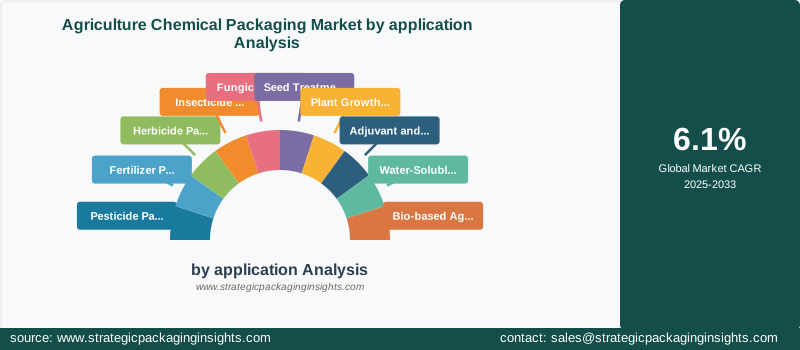
Bio-based agrochemical packaging is the fastest-growing segment, driven by the increasing demand for sustainable and eco-friendly packaging solutions. Companies are investing in research and development to create innovative packaging materials that meet these sustainability goals and enhance their brand reputation. The growing awareness of environmental impact and regulatory pressures are expected to drive the adoption of bio-based packaging solutions in the market.
by product Analysis
The Agriculture Chemical Packaging market is segmented by product, with bottles and containers being the most widely used packaging format. The demand for bottles and containers is driven by their versatility and ability to provide leak-proof and tamper-evident packaging solutions. Companies are focusing on developing innovative designs and materials to enhance the functionality and sustainability of these packaging formats.
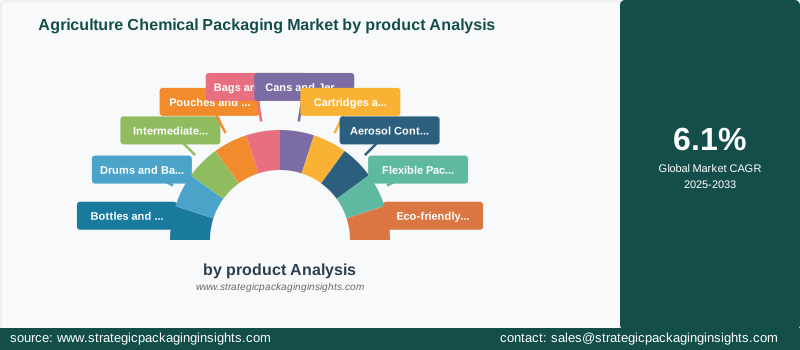
Eco-friendly and biodegradable packaging is gaining traction in the market, driven by the increasing demand for sustainable packaging solutions. Companies are investing in research and development to create packaging materials that are biodegradable and recyclable, meeting regulatory requirements and consumer preferences. The growing awareness of environmental impact and regulatory pressures are expected to drive the adoption of eco-friendly packaging solutions in the market.
by material Analysis
The Agriculture Chemical Packaging market is segmented by material, with plastic being the most widely used material. The demand for plastic packaging is driven by its versatility, durability, and cost-effectiveness. Companies are focusing on developing innovative plastic packaging solutions that offer enhanced safety and sustainability, meeting regulatory requirements and consumer preferences.
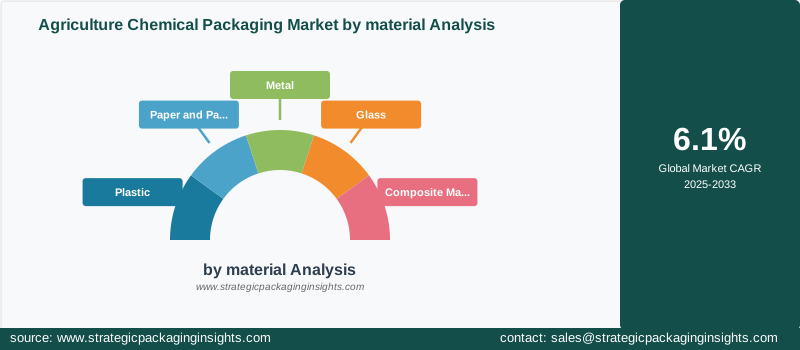
Composite materials are gaining traction in the market, driven by the increasing demand for sustainable and eco-friendly packaging solutions. Companies are investing in research and development to create innovative composite materials that offer improved performance and sustainability. The growing awareness of environmental impact and regulatory pressures are expected to drive the adoption of composite materials in the market.
by packaging function Analysis
The Agriculture Chemical Packaging market is segmented by packaging function, with leak-proof packaging being the most widely used function. The demand for leak-proof packaging is driven by the need to ensure the safety and integrity of agricultural chemicals during transportation and storage. Companies are focusing on developing innovative packaging solutions that offer enhanced leak-proof capabilities, meeting regulatory requirements and consumer preferences.
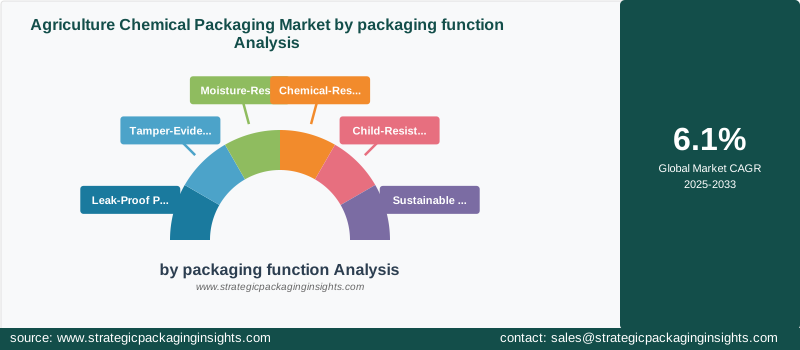
Sustainable packaging is gaining traction in the market, driven by the increasing demand for eco-friendly packaging solutions. Companies are investing in research and development to create packaging materials that are biodegradable and recyclable, meeting regulatory requirements and consumer preferences. The growing awareness of environmental impact and regulatory pressures are expected to drive the adoption of sustainable packaging solutions in the market.
by capacity Analysis
The Agriculture Chemical Packaging market is segmented by capacity, with small and medium-sized packaging being the most widely used formats. The demand for small and medium-sized packaging is driven by the need for convenient and cost-effective packaging solutions for agricultural chemicals. Companies are focusing on developing innovative designs and materials to enhance the functionality and sustainability of these packaging formats.
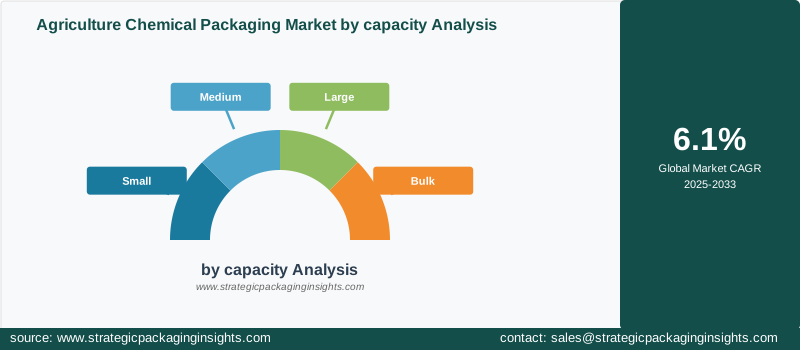
Bulk packaging is gaining traction in the market, driven by the increasing demand for cost-effective and efficient packaging solutions for large quantities of agricultural chemicals. Companies are investing in research and development to create innovative bulk packaging solutions that offer enhanced safety and sustainability, meeting regulatory requirements and consumer preferences.
by end use Analysis
The Agriculture Chemical Packaging market is segmented by end use, with open-field farming being the largest segment. The demand for packaging solutions in open-field farming is driven by the need to protect agricultural chemicals from environmental factors and ensure their safe and effective application. Companies are focusing on developing innovative packaging solutions that offer enhanced safety and sustainability, meeting regulatory requirements and consumer preferences.
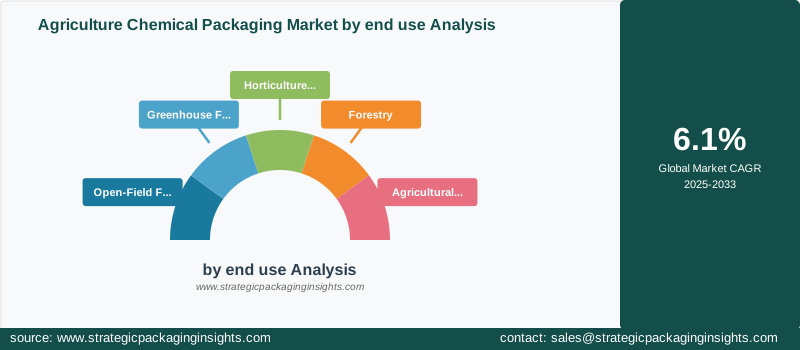
Greenhouse farming is gaining traction in the market, driven by the increasing demand for advanced packaging solutions that offer enhanced safety and sustainability. Companies are investing in research and development to create innovative packaging materials that meet the specific needs of greenhouse farming, enhancing their brand reputation and market position.
Agriculture Chemical Packaging Market Segments
The Agriculture Chemical Packaging market has been segmented on the basis ofby application
- Pesticide Packaging
- Fertilizer Packaging
- Herbicide Packaging
- Insecticide Packaging
- Fungicide Packaging
- Seed Treatment Chemical Packaging
- Plant Growth Regulator Packaging
- Adjuvant and Surfactant Packaging
- Water-Soluble Chemical Packaging
- Bio-based Agrochemical Packaging
by product
- Bottles and Containers
- Drums and Barrels
- Intermediate Bulk Containers (IBCs)
- Pouches and Sachets
- Bags and Sacks
- Cans and Jerrycans
- Cartridges and Tubes
- Aerosol Containers
- Flexible Packaging Films
- Eco-friendly and Biodegradable Packaging
by material
- Plastic
- Paper and Paperboard
- Metal
- Glass
- Composite Materials
by packaging function
- Leak-Proof Packaging
- Tamper-Evident Packaging
- Moisture-Resistant Packaging
- Chemical-Resistant Packaging
- Child-Resistant Packaging
- Sustainable Packaging
by capacity
- Small
- Medium
- Large
- Bulk
by end use
- Open-Field Farming
- Greenhouse Farming
- Horticulture and Floriculture
- Forestry
- Agricultural Cooperatives
by region
- North America
- Europe
- Asia-Pacific
- Latin America
- Middle East and Africa




