


Aerosol Valve Market Outlook
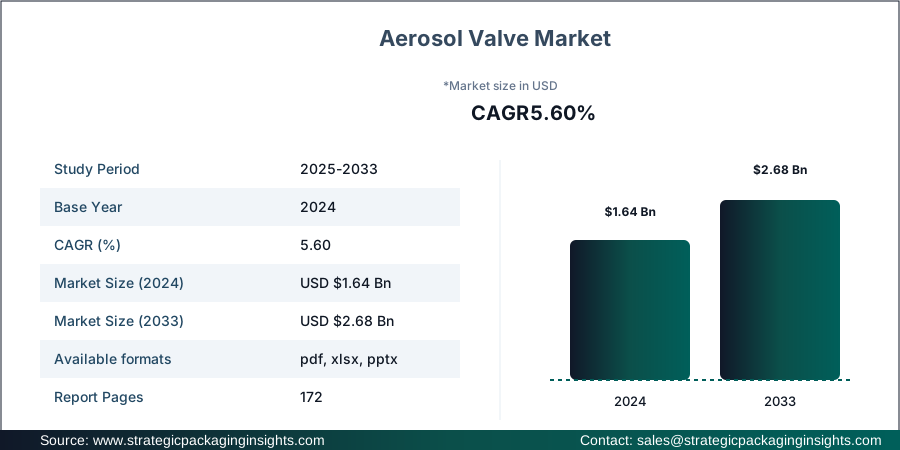
The aerosol valve market was valued at $1.64 billion in 2024 and is projected to reach $2.68 billion by 2033, growing at a CAGR of 5.60% during the forecast period 2025-2033. This growth is driven by increasing demand for convenient and efficient packaging solutions across various industries such as personal care, household, and pharmaceuticals. The rising consumer preference for aerosol products due to their ease of use and effectiveness is further propelling market expansion. Additionally, technological advancements in aerosol valve designs, which enhance product dispensing and reduce wastage, are contributing to the market's positive trajectory.
However, the market faces certain challenges, including stringent environmental regulations regarding the use of propellants in aerosol products. These regulations are pushing manufacturers to innovate and develop eco-friendly alternatives, which could potentially increase production costs. Despite these challenges, the market holds significant growth potential, particularly in emerging economies where urbanization and rising disposable incomes are boosting the demand for aerosol products. The increasing focus on sustainable packaging solutions is also expected to create new opportunities for market players in the coming years.
Report Scope
| Attributes | Details |
| Report Title | Aerosol Valve Market Size, Future Growth and Forecast 2033 |
| Product Type | Continuous, Metered, Bag-on-Valve, Others |
| Material | Steel, Aluminum, Plastic, Others |
| Application | Personal Care, Household, Pharma, Automotive |
| End Use | Brand Owners, Contract Fillers, Industrial, Others |
| Region | Asia Pacific, North America, Latin America, Europe, Middle East & Africa |
| Base Year | 2024 |
| Historic Period | 2017-2023 |
| Forecast Period | 2025-2033 |
| Number of Pages | 172 |
| Customization Available | Yes* |
Opportunities & Threats
The aerosol valve market presents numerous opportunities, particularly in the realm of sustainable and eco-friendly packaging solutions. As environmental concerns continue to rise, there is a growing demand for aerosol products that minimize environmental impact. This has led to increased research and development efforts aimed at creating valves that are compatible with eco-friendly propellants and recyclable materials. Companies that can successfully innovate in this area are likely to gain a competitive edge and capture a larger market share. Additionally, the expanding middle-class population in emerging markets is driving demand for personal care and household products, further boosting the need for aerosol valves.
Another significant opportunity lies in the diversification of application areas for aerosol valves. While traditionally used in personal care and household products, aerosol valves are increasingly being adopted in the pharmaceutical and automotive industries. In pharmaceuticals, aerosol valves are used in inhalers and other medical devices, while in the automotive sector, they are used in products such as spray paints and lubricants. This diversification is opening up new revenue streams for manufacturers and is expected to contribute to market growth over the forecast period.
On the flip side, the aerosol valve market faces threats from regulatory challenges and the volatility of raw material prices. Stringent regulations regarding the use of certain propellants and materials in aerosol products can pose significant hurdles for manufacturers. Compliance with these regulations often requires substantial investment in research and development, which can strain resources, particularly for smaller companies. Additionally, fluctuations in the prices of raw materials such as aluminum and steel can impact production costs and profit margins, posing a threat to market stability.
Drivers & Challenges
One of the primary drivers of the aerosol valve market is the increasing consumer preference for convenient and efficient packaging solutions. Aerosol products offer ease of use, precise application, and enhanced product preservation, making them highly popular among consumers. This trend is particularly evident in the personal care and household sectors, where products such as deodorants, hair sprays, and cleaning agents are commonly packaged in aerosol form. The growing demand for these products is directly contributing to the expansion of the aerosol valve market.
Technological advancements in aerosol valve designs are also driving market growth. Innovations such as metered valves, which allow for precise dispensing of product quantities, and bag-on-valve systems, which improve product shelf life and reduce wastage, are gaining traction. These advancements not only enhance the functionality of aerosol products but also align with consumer demands for sustainability and efficiency. As manufacturers continue to invest in research and development, the introduction of new and improved valve designs is expected to further propel market growth.
Despite these drivers, the aerosol valve market faces challenges related to environmental regulations and the need for sustainable solutions. Governments worldwide are implementing stricter regulations on the use of certain propellants and materials in aerosol products to reduce environmental impact. This has prompted manufacturers to explore alternative propellants and recyclable materials, which can increase production costs and require significant investment in research and development. Additionally, the volatility of raw material prices, particularly for metals like aluminum and steel, can impact profit margins and pose challenges for market players.
Market Share Analysis
The aerosol valve market is characterized by a competitive landscape with several key players vying for market share. Companies such as AptarGroup, Precision Valve, LINDAL Group, and Coster Group are among the leading players in the market, each holding a significant share. These companies have established themselves through a combination of product innovation, strategic partnerships, and a strong global presence. AptarGroup, for instance, is known for its extensive range of dispensing solutions and its focus on sustainability, which has helped it maintain a competitive edge.

Precision Valve, another major player, is recognized for its expertise in aerosol valve technology and its commitment to quality and innovation. The company has a strong presence in both developed and emerging markets, allowing it to capitalize on growth opportunities across regions. Similarly, LINDAL Group is a prominent player known for its innovative valve designs and its focus on customer-centric solutions. The company's emphasis on research and development has enabled it to introduce cutting-edge products that meet evolving consumer demands.
Coster Group, with its extensive product portfolio and global distribution network, is also a key player in the aerosol valve market. The company has a strong focus on sustainability and has been actively involved in developing eco-friendly solutions. Summit Packaging Systems, Mitani Valve, and Clayton Corporation are other notable players, each contributing to the competitive dynamics of the market. These companies are continuously investing in research and development to enhance their product offerings and expand their market presence.
Newman-Green, Salvalco, and YingBo are also significant contributors to the market, each with its unique strengths and capabilities. Newman-Green is known for its innovative valve solutions and its focus on customer satisfaction. Salvalco, on the other hand, is recognized for its commitment to sustainability and its efforts to develop environmentally friendly aerosol solutions. YingBo, with its strong manufacturing capabilities and focus on quality, is well-positioned to capture growth opportunities in the market. Overall, the competitive landscape of the aerosol valve market is dynamic, with companies continuously striving to innovate and differentiate themselves to gain a competitive advantage.
Key Highlights
- The aerosol valve market is projected to grow from $1.64 billion in 2024 to $2.68 billion by 2033, at a CAGR of 5.60%.
- Increasing demand for convenient and efficient packaging solutions is driving market growth.
- Technological advancements in valve designs are enhancing product functionality and sustainability.
- Stringent environmental regulations are pushing manufacturers to develop eco-friendly solutions.
- The market is witnessing diversification in application areas, including pharmaceuticals and automotive.
- Emerging economies present significant growth opportunities due to rising disposable incomes.
- Fluctuations in raw material prices pose challenges to market stability.
Top Countries Insights
In the aerosol valve market, the United States stands out as a key player, with a market size of approximately $500 million and a CAGR of 4%. The country's robust consumer base and high demand for personal care and household products drive market growth. Additionally, the presence of major manufacturers and a strong focus on innovation contribute to the market's expansion. However, regulatory challenges related to environmental concerns remain a significant hurdle for market players.
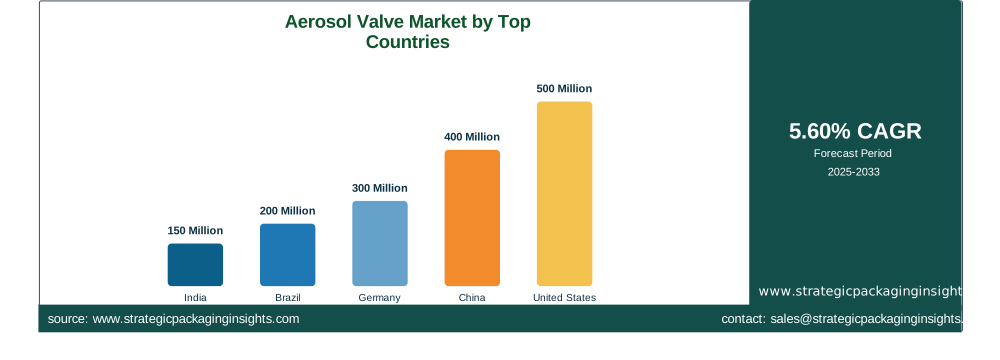
China, with its rapidly growing economy and increasing urbanization, is another major market for aerosol valves, valued at around $400 million with a CAGR of 6%. The country's expanding middle class and rising disposable incomes are driving demand for aerosol products, particularly in the personal care and household sectors. Government initiatives to promote sustainable packaging solutions are also expected to boost market growth in the coming years.
Germany, a leading market in Europe, has a market size of approximately $300 million and a CAGR of 5%. The country's strong industrial base and focus on innovation make it a key player in the aerosol valve market. The demand for eco-friendly packaging solutions is particularly high in Germany, driven by stringent environmental regulations and consumer preferences for sustainable products.
In Brazil, the aerosol valve market is valued at around $200 million, with a CAGR of 7%. The country's growing population and increasing urbanization are driving demand for personal care and household products, boosting the need for aerosol valves. However, economic challenges and regulatory hurdles pose significant threats to market growth.
India, with a market size of approximately $150 million and a CAGR of 8%, is emerging as a significant player in the aerosol valve market. The country's expanding middle class and rising consumer awareness of personal care and hygiene products are driving market growth. Government initiatives to promote manufacturing and innovation are also expected to support the market's expansion in the coming years.
Aerosol Valve Market Segments Insights

Product Type Analysis
The aerosol valve market is segmented by product type into continuous, metered, bag-on-valve, and others. Continuous valves are widely used due to their ability to provide a consistent spray, making them ideal for personal care and household products. The demand for continuous valves is driven by their ease of use and effectiveness in delivering a uniform product application. Metered valves, on the other hand, are gaining popularity in the pharmaceutical sector, where precise dosing is crucial. These valves allow for controlled dispensing, making them suitable for medical applications such as inhalers.

Bag-on-valve systems are increasingly being adopted due to their environmental benefits and ability to preserve product integrity. These systems separate the product from the propellant, reducing the risk of contamination and extending shelf life. The growing focus on sustainability and product safety is driving the adoption of bag-on-valve systems across various industries. Other types of valves, including specialty valves for niche applications, also contribute to the market's diversity, catering to specific consumer needs and preferences.
Material Analysis
The material segment of the aerosol valve market includes steel, aluminum, plastic, and others. Aluminum is the most commonly used material due to its lightweight, corrosion-resistant properties, and recyclability. The demand for aluminum valves is driven by the increasing focus on sustainable packaging solutions and the need for lightweight materials that reduce transportation costs. Steel valves, while less common, are used in applications requiring higher durability and strength, such as industrial and automotive products.
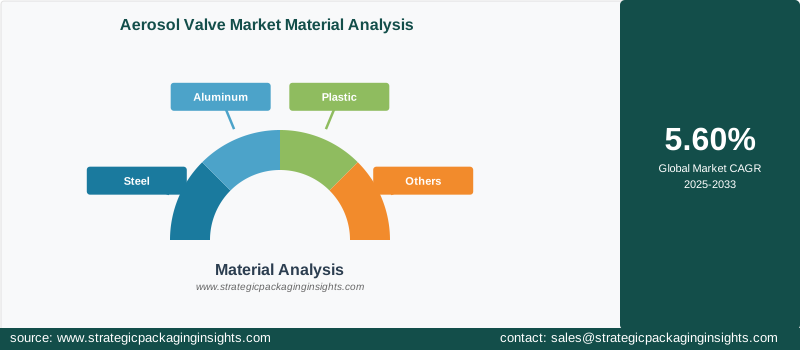
Plastic valves are gaining traction due to their cost-effectiveness and versatility. They are widely used in personal care and household products, where cost considerations are paramount. However, the environmental impact of plastic is a growing concern, prompting manufacturers to explore biodegradable and recyclable alternatives. Other materials, including specialty alloys and composites, are used in niche applications where specific performance characteristics are required, further diversifying the market.
Application Analysis
The aerosol valve market is segmented by application into personal care, household, pharma, and automotive. Personal care products, including deodorants, hair sprays, and skincare products, represent the largest application segment, driven by increasing consumer demand for convenient and effective packaging solutions. The household segment, which includes cleaning agents and air fresheners, is also a significant contributor to market growth, supported by rising consumer awareness of hygiene and cleanliness.

In the pharmaceutical sector, aerosol valves are used in medical devices such as inhalers, where precise dosing and product integrity are critical. The growing prevalence of respiratory diseases and the increasing adoption of inhalation therapies are driving demand for aerosol valves in this segment. The automotive sector, while smaller, is witnessing growth due to the use of aerosol valves in products such as spray paints and lubricants, where precise application and product preservation are essential.
End Use Analysis
The end-use segment of the aerosol valve market includes brand owners, contract fillers, industrial, and others. Brand owners, including major consumer goods companies, represent the largest end-use segment, driven by the need for innovative and sustainable packaging solutions that enhance brand value and consumer appeal. Contract fillers, which provide filling and packaging services to brand owners, are also significant contributors to market growth, supported by the increasing outsourcing of packaging operations.

The industrial segment, which includes applications in automotive, construction, and manufacturing, is witnessing growth due to the demand for durable and efficient packaging solutions. Other end-use segments, including niche applications in sectors such as agriculture and food, also contribute to the market's diversity, catering to specific industry needs and consumer preferences. Overall, the end-use segment is characterized by a diverse range of applications, each with unique requirements and growth drivers.
Aerosol Valve Market Segments
The Aerosol Valve market has been segmented on the basis ofProduct Type
- Continuous
- Metered
- Bag-on-Valve
- Others
Material
- Steel
- Aluminum
- Plastic
- Others
Application
- Personal Care
- Household
- Pharma
- Automotive
End Use
- Brand Owners
- Contract Fillers
- Industrial
- Others
Region
- Asia Pacific
- North America
- Latin America
- Europe
- Middle East & Africa




