


Aerosol Spray Dispenser Market Outlook
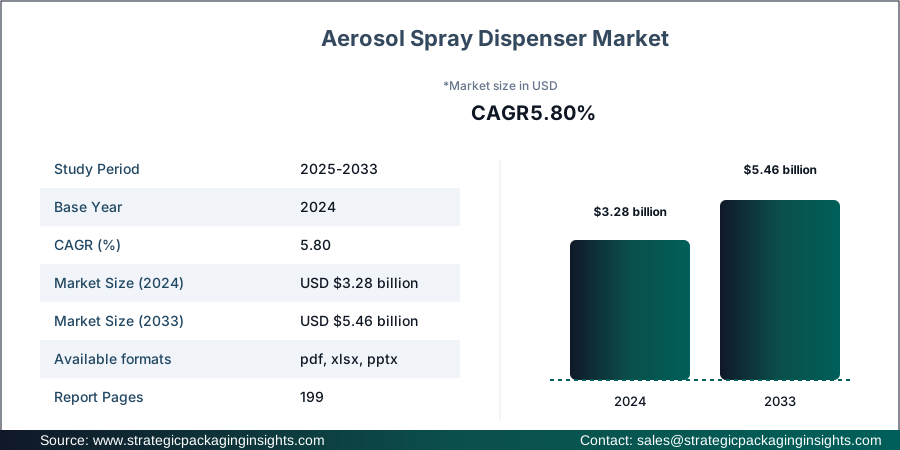
The aerosol spray dispenser market was valued at $3.28 billion in 2024 and is projected to reach $5.46 billion by 2033, growing at a CAGR of 5.80% during the forecast period 2025-2033. This market is witnessing significant growth due to the increasing demand for convenient and efficient dispensing solutions across various applications. The rise in consumer preference for personal care and hygiene products, coupled with the growing awareness of air care and surface care, is driving the demand for aerosol spray dispensers. Additionally, advancements in technology and design innovations are enhancing the functionality and appeal of these dispensers, further propelling market growth.
Despite the promising growth prospects, the aerosol spray dispenser market faces certain challenges. Regulatory restrictions related to environmental concerns and the use of volatile organic compounds (VOCs) in aerosol products pose significant restraints. However, the market holds substantial growth potential as manufacturers are increasingly focusing on developing eco-friendly and sustainable aerosol solutions. The shift towards biodegradable and recyclable materials in dispenser production is expected to mitigate environmental concerns and open new avenues for market expansion. Moreover, the increasing penetration of aerosol dispensers in emerging markets presents lucrative opportunities for industry players to capitalize on.
Report Scope
| Attributes | Details |
| Report Title | Aerosol Spray Dispenser Market Size, Future Growth and Forecast 2033 |
| Product Type | Manual, Metered, Automatic, Others |
| Application | Personal Care, Air Care, Surface Care, Others |
| End Use | Residential, Commercial, Institutional, Others |
| Channel | OEM, Aftermarket, Retail, Others |
| Region | Asia Pacific, North America, Latin America, Europe, Middle East & Africa |
| Base Year | 2024 |
| Historic Period | 2017-2023 |
| Forecast Period | 2025-2033 |
| Number of Pages | 199 |
| Customization Available | Yes* |
Opportunities & Threats
The aerosol spray dispenser market is ripe with opportunities, particularly in the realm of personal care and hygiene. With the growing emphasis on personal grooming and hygiene, there is a rising demand for innovative and user-friendly dispensing solutions. This trend is particularly pronounced in the personal care segment, where consumers are increasingly seeking products that offer convenience and ease of use. Additionally, the expanding middle-class population in emerging economies is driving the demand for premium personal care products, further boosting the market for aerosol spray dispensers. Manufacturers are capitalizing on this trend by introducing advanced dispensing technologies that enhance user experience and product efficacy.
Another significant opportunity lies in the development of eco-friendly and sustainable aerosol solutions. As environmental concerns continue to gain prominence, there is a growing demand for products that minimize environmental impact. This has led to increased research and development efforts aimed at creating biodegradable and recyclable aerosol dispensers. Companies that invest in sustainable product development are likely to gain a competitive edge and capture a larger market share. Furthermore, the integration of smart technologies in aerosol dispensers, such as sensor-based automatic dispensing, presents a promising avenue for innovation and differentiation in the market.
However, the market is not without its threats. Regulatory restrictions related to the use of VOCs in aerosol products pose a significant challenge for manufacturers. Stringent environmental regulations and the need to comply with safety standards can increase production costs and limit market growth. Additionally, the volatility in raw material prices and supply chain disruptions can impact the profitability of market players. To mitigate these threats, companies are focusing on developing alternative formulations and exploring cost-effective production methods. Collaborations with regulatory bodies and industry associations can also help in navigating the complex regulatory landscape and ensuring compliance.
Drivers & Challenges
The aerosol spray dispenser market is driven by several key factors, including the increasing demand for convenient and efficient dispensing solutions. The growing consumer preference for personal care and hygiene products is a major driver, as aerosol dispensers offer a convenient and hygienic way to apply products. Additionally, the rising awareness of air care and surface care is fueling the demand for aerosol dispensers in these applications. The versatility and ease of use of aerosol dispensers make them an attractive choice for consumers, further driving market growth. Moreover, advancements in technology and design innovations are enhancing the functionality and appeal of aerosol dispensers, contributing to their widespread adoption.
Another significant driver is the expanding middle-class population in emerging economies, which is driving the demand for premium personal care products. As disposable incomes rise, consumers are increasingly willing to spend on high-quality personal care products that offer convenience and efficacy. This trend is particularly pronounced in regions such as Asia Pacific and Latin America, where the middle-class population is rapidly growing. Manufacturers are capitalizing on this trend by introducing innovative aerosol dispensing solutions that cater to the evolving needs and preferences of consumers. Furthermore, the increasing penetration of aerosol dispensers in emerging markets presents lucrative opportunities for industry players to expand their market presence.
Despite the promising growth prospects, the aerosol spray dispenser market faces certain challenges. Regulatory restrictions related to environmental concerns and the use of VOCs in aerosol products pose significant challenges for manufacturers. Compliance with stringent environmental regulations can increase production costs and limit market growth. Additionally, the volatility in raw material prices and supply chain disruptions can impact the profitability of market players. To overcome these challenges, companies are focusing on developing eco-friendly and sustainable aerosol solutions. The shift towards biodegradable and recyclable materials in dispenser production is expected to mitigate environmental concerns and open new avenues for market expansion.
Market Share Analysis
The aerosol spray dispenser market is characterized by a competitive landscape with several key players vying for market share. AptarGroup, a leading provider of dispensing solutions, holds a significant share in the market due to its extensive product portfolio and strong distribution network. The company's focus on innovation and sustainability has enabled it to maintain a competitive edge in the market. Reckitt, another major player, is known for its strong brand presence and diverse product offerings in the personal care and hygiene segments. The company's commitment to sustainability and eco-friendly solutions has further strengthened its position in the market.

SC Johnson, a global leader in household and personal care products, is also a prominent player in the aerosol spray dispenser market. The company's focus on product innovation and consumer-centric solutions has contributed to its strong market presence. Procter & Gamble, a renowned consumer goods company, is leveraging its extensive distribution network and brand equity to capture a significant share of the market. The company's emphasis on sustainability and environmentally friendly products aligns with the growing consumer demand for eco-conscious solutions.
Nice-Pak, a leading manufacturer of wet wipes and dispensing solutions, is expanding its presence in the aerosol spray dispenser market through strategic partnerships and product innovations. Rubbermaid Commercial, known for its durable and reliable dispensing solutions, is also a key player in the market. The company's focus on quality and customer satisfaction has enabled it to maintain a strong market position. Coster Group, LINDAL Group, Silgan Dispensing, and Berry Global are other notable players in the market, each contributing to the competitive landscape through their unique product offerings and strategic initiatives.
Key Highlights
- The aerosol spray dispenser market is projected to grow at a CAGR of 5.80% from 2025 to 2033.
- Increasing demand for personal care and hygiene products is driving market growth.
- Advancements in technology and design innovations are enhancing the functionality of aerosol dispensers.
- Regulatory restrictions related to VOCs pose challenges for market players.
- Eco-friendly and sustainable aerosol solutions are gaining traction in the market.
- The expanding middle-class population in emerging economies is boosting demand for premium products.
- Key players in the market include AptarGroup, Reckitt, SC Johnson, and Procter & Gamble.
Top Countries Insights
In the aerosol spray dispenser market, the United States holds a significant share, with a market size of approximately $1.2 billion and a CAGR of 4%. The country's strong consumer base and high demand for personal care and hygiene products are key growth drivers. Additionally, the presence of major market players and a well-established distribution network contribute to the market's growth. However, regulatory restrictions related to VOCs and environmental concerns pose challenges for manufacturers operating in the U.S. market.
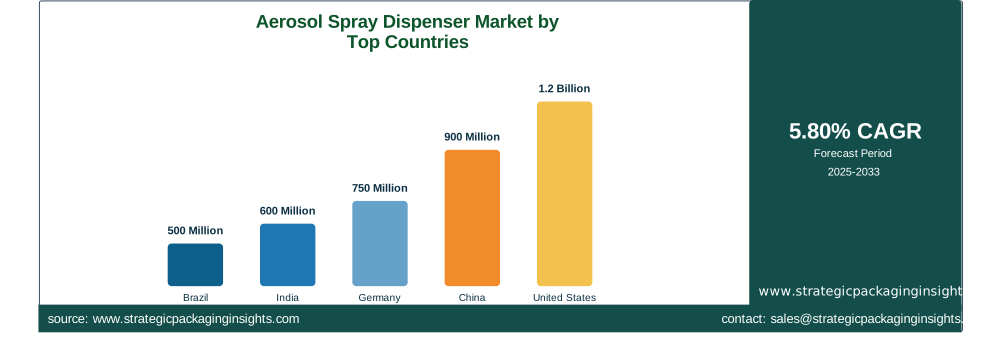
China is another prominent market for aerosol spray dispensers, with a market size of around $900 million and a CAGR of 7%. The country's rapidly growing middle-class population and increasing disposable incomes are driving the demand for premium personal care products. Moreover, the government's focus on environmental sustainability and the promotion of eco-friendly products are encouraging manufacturers to develop innovative and sustainable aerosol solutions. However, the market faces challenges related to regulatory compliance and the volatility of raw material prices.
Germany, with a market size of approximately $750 million and a CAGR of 5%, is a key market for aerosol spray dispensers in Europe. The country's strong emphasis on sustainability and environmental protection is driving the demand for eco-friendly aerosol solutions. Additionally, the presence of leading market players and a robust manufacturing sector contribute to the market's growth. However, stringent environmental regulations and the need for compliance pose challenges for manufacturers operating in the German market.
India, with a market size of around $600 million and a CAGR of 8%, is an emerging market for aerosol spray dispensers. The country's growing middle-class population and increasing awareness of personal care and hygiene are driving the demand for aerosol dispensers. Moreover, the government's initiatives to promote domestic manufacturing and reduce import dependency are encouraging market growth. However, challenges related to infrastructure development and regulatory compliance need to be addressed to fully capitalize on the market's potential.
Brazil, with a market size of approximately $500 million and a CAGR of 6%, is a significant market for aerosol spray dispensers in Latin America. The country's expanding consumer base and increasing demand for personal care products are key growth drivers. Additionally, the presence of major market players and a growing focus on sustainability are contributing to the market's growth. However, economic instability and regulatory challenges pose risks for manufacturers operating in the Brazilian market.
Aerosol Spray Dispenser Market Segments Insights

Product Type Analysis
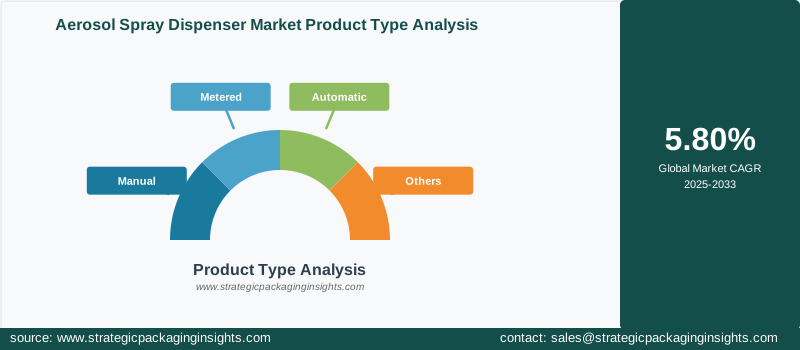
The aerosol spray dispenser market is segmented by product type into manual, metered, automatic, and others. Manual dispensers are widely used due to their simplicity and cost-effectiveness. They are particularly popular in residential and small-scale commercial applications where ease of use and affordability are key considerations. Metered dispensers, on the other hand, offer precise control over the amount of product dispensed, making them ideal for applications where dosage accuracy is critical. Automatic dispensers are gaining traction due to their convenience and hygienic benefits, especially in high-traffic areas such as public restrooms and commercial spaces. The growing demand for touchless solutions in the wake of the COVID-19 pandemic has further accelerated the adoption of automatic dispensers.
Innovation and technological advancements are driving the development of new and improved aerosol spray dispensers. Manufacturers are focusing on enhancing the functionality and user experience of their products by incorporating features such as adjustable spray patterns, ergonomic designs, and smart technologies. The integration of sensors and IoT capabilities in automatic dispensers is enabling remote monitoring and control, offering added convenience and efficiency. Additionally, the shift towards eco-friendly and sustainable materials in dispenser production is gaining momentum, as consumers and regulatory bodies increasingly prioritize environmental sustainability.
Application Analysis
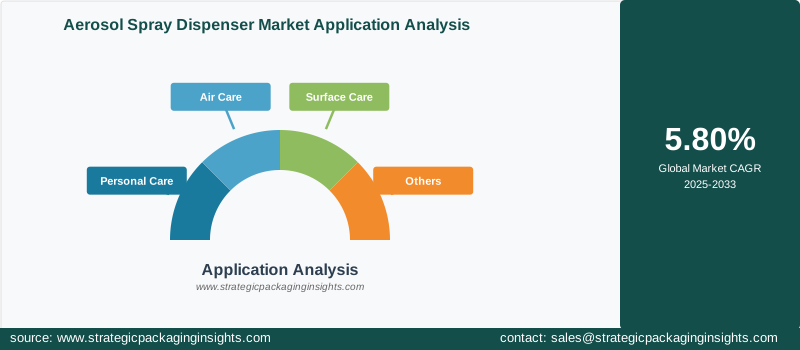
The application segment of the aerosol spray dispenser market includes personal care, air care, surface care, and others. Personal care is the largest application segment, driven by the increasing demand for grooming and hygiene products. Aerosol dispensers are widely used for products such as deodorants, hair sprays, and skincare items, offering convenience and ease of use. The air care segment is also experiencing significant growth, as consumers seek effective solutions for odor control and air freshening. Surface care applications are gaining traction, particularly in commercial and institutional settings, where hygiene and cleanliness are paramount.
The growing awareness of health and hygiene, coupled with the rising disposable incomes of consumers, is driving the demand for aerosol dispensers across various applications. Manufacturers are responding to this demand by developing innovative products that cater to the evolving needs and preferences of consumers. The trend towards natural and organic products is also influencing the development of aerosol dispensers, as consumers increasingly seek products that are free from harmful chemicals and environmentally friendly. Additionally, the increasing penetration of aerosol dispensers in emerging markets presents significant growth opportunities for industry players.
End Use Analysis
The end-use segment of the aerosol spray dispenser market is categorized into residential, commercial, institutional, and others. The residential segment is the largest end-use category, driven by the widespread use of aerosol dispensers in households for personal care, air care, and surface care applications. The convenience and ease of use offered by aerosol dispensers make them a popular choice among consumers for everyday use. The commercial segment is also experiencing significant growth, as businesses and public facilities increasingly adopt aerosol dispensers for hygiene and sanitation purposes.
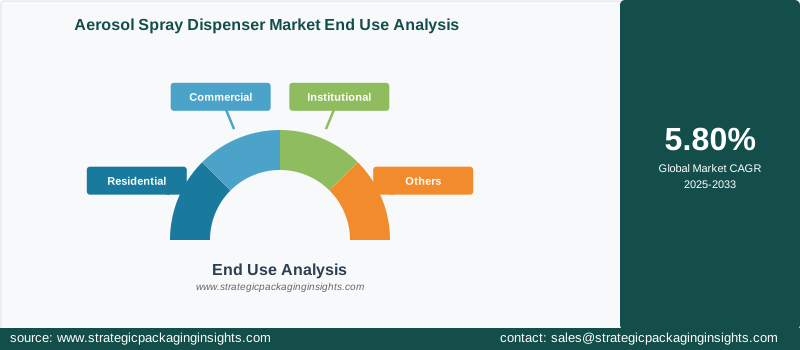
Institutional applications, such as in healthcare and educational facilities, are gaining traction due to the growing emphasis on hygiene and cleanliness. The COVID-19 pandemic has further highlighted the importance of maintaining high hygiene standards in public spaces, driving the demand for aerosol dispensers in institutional settings. Manufacturers are focusing on developing products that cater to the specific needs of different end-use segments, offering customized solutions that enhance user experience and product efficacy. The trend towards smart and connected dispensers is also gaining momentum, as businesses and institutions seek to improve operational efficiency and reduce maintenance costs.
Channel Analysis
The distribution channel segment of the aerosol spray dispenser market includes OEM, aftermarket, retail, and others. OEMs are a significant channel, as they provide customized solutions to meet the specific requirements of different industries and applications. The aftermarket segment is also growing, driven by the increasing demand for replacement parts and accessories for aerosol dispensers. Retail channels, including online and offline stores, play a crucial role in the distribution of aerosol dispensers, offering consumers a wide range of products to choose from.
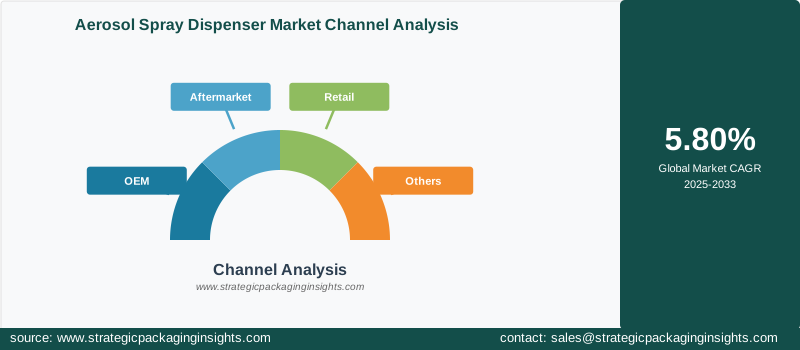
The growing popularity of e-commerce platforms is transforming the retail landscape, providing consumers with convenient access to a diverse range of aerosol dispensers. Manufacturers are leveraging online channels to reach a broader audience and enhance their market presence. The trend towards direct-to-consumer sales is also gaining traction, as companies seek to establish a direct connection with consumers and offer personalized solutions. Additionally, strategic partnerships and collaborations with distributors and retailers are helping manufacturers expand their distribution networks and reach new markets.
Aerosol Spray Dispenser Market Segments
The Aerosol Spray Dispenser market has been segmented on the basis ofProduct Type
- Manual
- Metered
- Automatic
- Others
Application
- Personal Care
- Air Care
- Surface Care
- Others
End Use
- Residential
- Commercial
- Institutional
- Others
Channel
- OEM
- Aftermarket
- Retail
- Others
Region
- Asia Pacific
- North America
- Latin America
- Europe
- Middle East & Africa




