


Aerosol Spray Cans Market Outlook
The aerosol spray cans market was valued at $3.48 billion in 2024 and is projected to reach $5.78 billion by 2033, growing at a CAGR of 5.80% during the forecast period 2025-2033. This market is witnessing significant growth due to the increasing demand for convenient and efficient packaging solutions across various industries. The versatility of aerosol spray cans in delivering a wide range of products, from personal care items to industrial chemicals, is a key driver of market expansion. Additionally, advancements in can design and materials are enhancing the appeal of aerosol packaging, further boosting market growth.
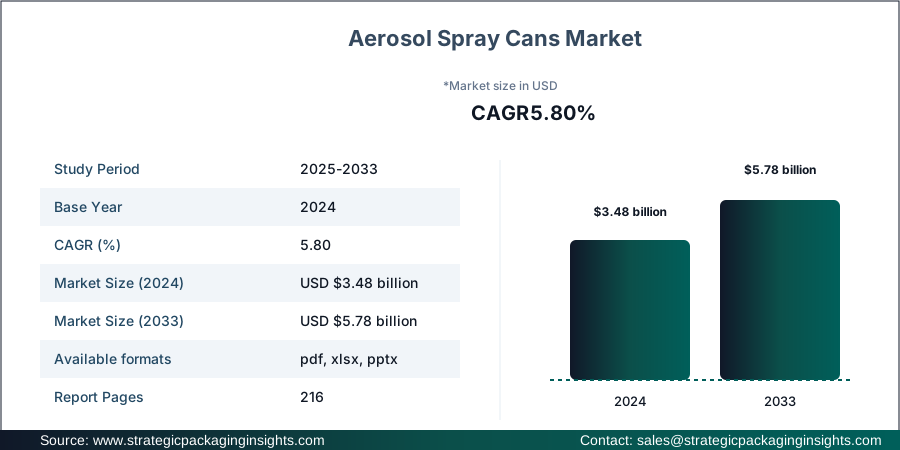
However, the market faces challenges such as stringent environmental regulations and the need for sustainable packaging solutions. The growing awareness of environmental issues is pushing manufacturers to innovate and develop eco-friendly aerosol cans, which could potentially increase production costs. Despite these challenges, the market holds substantial growth potential, driven by the rising demand for personal care and household products, particularly in emerging economies. The increasing urbanization and changing consumer lifestyles are also contributing to the market's expansion, as aerosol spray cans offer convenience and ease of use.
Report Scope
| Attributes | Details |
| Report Title | Aerosol Spray Cans Market Size, Future Growth and Forecast 2033 |
| Can Type | Standard, Shaped, Necked-In, Others |
| Material | Aluminum, Steel, Others |
| Application | Deodorants, Paints, Household, Food |
| End Use | Consumer Goods, Industrial, Automotive, Others |
| Region | Asia Pacific, North America, Latin America, Europe, Middle East & Africa |
| Base Year | 2024 |
| Historic Period | 2017-2023 |
| Forecast Period | 2025-2033 |
| Number of Pages | 216 |
| Customization Available | Yes* |
Opportunities & Threats
The aerosol spray cans market presents numerous opportunities for growth, particularly in the realm of sustainable packaging solutions. As consumers become more environmentally conscious, there is a growing demand for eco-friendly aerosol cans made from recyclable materials. This shift in consumer preference is encouraging manufacturers to invest in research and development to create innovative, sustainable packaging options. Additionally, the expanding middle-class population in emerging economies is driving the demand for personal care and household products, further boosting the market for aerosol spray cans.
Another significant opportunity lies in the diversification of applications for aerosol spray cans. Beyond traditional uses in personal care and household products, there is a growing demand for aerosol packaging in the food and beverage industry, as well as in the automotive and industrial sectors. This diversification is opening new avenues for market growth, as manufacturers explore innovative ways to package a wide range of products using aerosol technology. The development of advanced dispensing systems and improved can designs is also enhancing the functionality and appeal of aerosol spray cans, creating additional growth opportunities.
Despite the promising opportunities, the aerosol spray cans market faces certain threats that could hinder its growth. One of the primary challenges is the increasing regulatory pressure to reduce the environmental impact of aerosol products. Governments and regulatory bodies worldwide are implementing stricter regulations on the use of volatile organic compounds (VOCs) and other harmful substances in aerosol products. This regulatory environment is pushing manufacturers to adopt more sustainable practices, which could increase production costs and impact profit margins. Additionally, the rising competition from alternative packaging solutions, such as pump sprays and squeeze bottles, poses a threat to the market's growth.
Drivers & Challenges
The aerosol spray cans market is driven by several key factors, including the growing demand for convenient and efficient packaging solutions. The versatility of aerosol spray cans in delivering a wide range of products, from personal care items to industrial chemicals, is a major driver of market growth. Consumers appreciate the ease of use and precise application offered by aerosol packaging, which is particularly important in the personal care and household sectors. Additionally, the increasing urbanization and changing consumer lifestyles are contributing to the market's expansion, as aerosol spray cans offer convenience and ease of use.
Another significant driver of the aerosol spray cans market is the continuous innovation in can design and materials. Manufacturers are investing in research and development to create advanced dispensing systems and improved can designs that enhance the functionality and appeal of aerosol spray cans. These innovations are not only improving the performance of aerosol products but also addressing environmental concerns by developing more sustainable packaging solutions. The growing demand for eco-friendly aerosol cans made from recyclable materials is further driving market growth, as consumers become more environmentally conscious.
Despite the positive drivers, the aerosol spray cans market faces several challenges that could impact its growth. One of the primary challenges is the increasing regulatory pressure to reduce the environmental impact of aerosol products. Governments and regulatory bodies worldwide are implementing stricter regulations on the use of volatile organic compounds (VOCs) and other harmful substances in aerosol products. This regulatory environment is pushing manufacturers to adopt more sustainable practices, which could increase production costs and impact profit margins. Additionally, the rising competition from alternative packaging solutions, such as pump sprays and squeeze bottles, poses a threat to the market's growth.
Market Share Analysis
The aerosol spray cans market is characterized by a competitive landscape with several key players dominating the industry. Companies such as Ball Corporation, Crown Holdings, Trivium Packaging, and Ardagh Metal Packaging hold significant market shares due to their extensive product portfolios and strong distribution networks. These companies are continuously investing in research and development to innovate and expand their product offerings, which helps them maintain a competitive edge in the market. Additionally, strategic partnerships and acquisitions are common strategies employed by these companies to strengthen their market position and expand their global reach.

Ball Corporation is a leading player in the aerosol spray cans market, known for its innovative packaging solutions and commitment to sustainability. The company has a strong presence in North America and Europe, with a focus on developing eco-friendly aerosol cans made from recyclable materials. Crown Holdings is another major player, offering a wide range of aerosol packaging solutions for various industries, including personal care, household, and automotive. The company's extensive distribution network and focus on customer satisfaction have helped it maintain a strong market position.
Trivium Packaging is a global leader in metal packaging, with a significant presence in the aerosol spray cans market. The company is known for its innovative designs and commitment to sustainability, offering a range of eco-friendly aerosol cans made from recycled materials. Ardagh Metal Packaging is another key player, providing a diverse range of aerosol packaging solutions for various applications. The company's focus on innovation and customer-centric approach has helped it maintain a competitive edge in the market.
Other notable companies in the aerosol spray cans market include CCL Container, Tubex, Massilly, Nampak, Colep Packaging, and Casablanca Industries. These companies are continuously investing in research and development to create advanced dispensing systems and improved can designs that enhance the functionality and appeal of aerosol spray cans. Additionally, strategic partnerships and acquisitions are common strategies employed by these companies to strengthen their market position and expand their global reach.
Key Highlights
- The aerosol spray cans market is projected to grow at a CAGR of 5.80% from 2025 to 2033.
- Increasing demand for eco-friendly aerosol cans made from recyclable materials is driving market growth.
- Advancements in can design and materials are enhancing the appeal of aerosol packaging.
- Rising demand for personal care and household products is boosting the market for aerosol spray cans.
- Stringent environmental regulations are pushing manufacturers to innovate and develop sustainable packaging solutions.
- The expanding middle-class population in emerging economies is driving the demand for aerosol spray cans.
- Growing competition from alternative packaging solutions poses a threat to the market's growth.
Top Countries Insights
In the aerosol spray cans market, the United States holds a significant share, with a market size of approximately $1.2 billion and a CAGR of 4%. The country's strong demand for personal care and household products, coupled with a well-established manufacturing sector, drives market growth. Additionally, the presence of major players such as Ball Corporation and Crown Holdings further strengthens the market. However, stringent environmental regulations and the need for sustainable packaging solutions pose challenges for manufacturers.
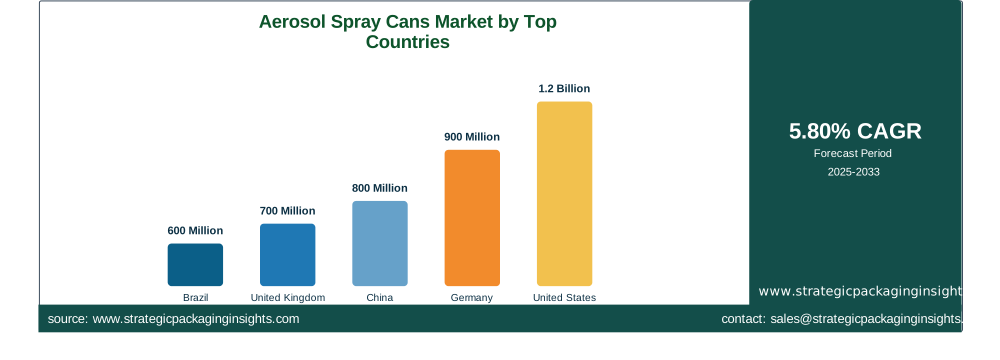
Germany is another key market for aerosol spray cans, with a market size of around $900 million and a CAGR of 5%. The country's strong automotive and industrial sectors drive the demand for aerosol packaging solutions. Additionally, Germany's focus on sustainability and innovation in packaging materials supports market growth. However, the increasing regulatory pressure to reduce the environmental impact of aerosol products presents challenges for manufacturers.
China is experiencing rapid growth in the aerosol spray cans market, with a market size of approximately $800 million and a CAGR of 7%. The country's expanding middle-class population and increasing urbanization drive the demand for personal care and household products, boosting the market for aerosol spray cans. Additionally, China's focus on developing eco-friendly packaging solutions supports market growth. However, the rising competition from alternative packaging solutions poses a threat to the market's growth.
The United Kingdom holds a significant share in the aerosol spray cans market, with a market size of around $700 million and a CAGR of 3%. The country's strong demand for personal care and household products, coupled with a well-established manufacturing sector, drives market growth. Additionally, the presence of major players such as Trivium Packaging and Ardagh Metal Packaging further strengthens the market. However, stringent environmental regulations and the need for sustainable packaging solutions pose challenges for manufacturers.
Brazil is another key market for aerosol spray cans, with a market size of approximately $600 million and a CAGR of 6%. The country's expanding middle-class population and increasing urbanization drive the demand for personal care and household products, boosting the market for aerosol spray cans. Additionally, Brazil's focus on developing eco-friendly packaging solutions supports market growth. However, the rising competition from alternative packaging solutions poses a threat to the market's growth.
Aerosol Spray Cans Market Segments Insights

Can Type Analysis
The aerosol spray cans market is segmented by can type into standard, shaped, necked-in, and others. Standard cans dominate the market due to their widespread use across various applications, including personal care, household, and industrial products. These cans offer a cost-effective and efficient packaging solution, making them a popular choice among manufacturers. Shaped cans, on the other hand, are gaining traction due to their aesthetic appeal and ability to differentiate products on retail shelves. The demand for necked-in cans is also rising, particularly in the personal care and cosmetics industry, where precision and control in product dispensing are crucial.

Manufacturers are continuously innovating in can design to enhance the functionality and appeal of aerosol spray cans. The development of advanced dispensing systems and improved can designs is driving market growth, as consumers seek convenient and efficient packaging solutions. Additionally, the growing demand for eco-friendly aerosol cans made from recyclable materials is encouraging manufacturers to invest in research and development to create sustainable packaging options. This trend is particularly evident in the shaped and necked-in can segments, where manufacturers are exploring innovative ways to reduce the environmental impact of aerosol packaging.
Material Analysis
The aerosol spray cans market is segmented by material into aluminum, steel, and others. Aluminum cans hold a significant share of the market due to their lightweight, corrosion-resistant properties, and recyclability. These characteristics make aluminum cans an attractive option for manufacturers seeking sustainable packaging solutions. Steel cans, on the other hand, are favored for their durability and strength, making them suitable for packaging industrial and automotive products. The demand for other materials, such as plastic and glass, is limited due to their environmental impact and higher production costs.

Manufacturers are focusing on developing eco-friendly aerosol cans made from recyclable materials to address the growing consumer demand for sustainable packaging solutions. This trend is driving innovation in material selection and can design, as companies seek to reduce the environmental impact of aerosol packaging. Additionally, the increasing regulatory pressure to reduce the use of volatile organic compounds (VOCs) and other harmful substances in aerosol products is pushing manufacturers to adopt more sustainable practices. This regulatory environment is encouraging the development of advanced materials and technologies that enhance the performance and sustainability of aerosol spray cans.
Application Analysis
The aerosol spray cans market is segmented by application into deodorants, paints, household, and food. Deodorants represent a significant share of the market, driven by the growing demand for personal care products and the convenience offered by aerosol packaging. The paints segment is also experiencing growth, as aerosol spray cans provide an efficient and precise application method for various painting projects. The household segment is driven by the increasing demand for cleaning and maintenance products, while the food segment is gaining traction due to the growing popularity of aerosol packaging for culinary applications.

Manufacturers are continuously innovating in product formulation and can design to enhance the functionality and appeal of aerosol spray cans across various applications. The development of advanced dispensing systems and improved can designs is driving market growth, as consumers seek convenient and efficient packaging solutions. Additionally, the growing demand for eco-friendly aerosol cans made from recyclable materials is encouraging manufacturers to invest in research and development to create sustainable packaging options. This trend is particularly evident in the deodorants and household segments, where manufacturers are exploring innovative ways to reduce the environmental impact of aerosol packaging.
End Use Analysis
The aerosol spray cans market is segmented by end use into consumer goods, industrial, automotive, and others. Consumer goods represent a significant share of the market, driven by the growing demand for personal care and household products. The industrial segment is also experiencing growth, as aerosol spray cans provide an efficient and precise application method for various industrial products. The automotive segment is driven by the increasing demand for aerosol packaging solutions for automotive maintenance and repair products.

Manufacturers are focusing on developing eco-friendly aerosol cans made from recyclable materials to address the growing consumer demand for sustainable packaging solutions. This trend is driving innovation in can design and material selection, as companies seek to reduce the environmental impact of aerosol packaging. Additionally, the increasing regulatory pressure to reduce the use of volatile organic compounds (VOCs) and other harmful substances in aerosol products is pushing manufacturers to adopt more sustainable practices. This regulatory environment is encouraging the development of advanced materials and technologies that enhance the performance and sustainability of aerosol spray cans.
Aerosol Spray Cans Market Segments
The Aerosol Spray Cans market has been segmented on the basis ofCan Type
- Standard
- Shaped
- Necked-In
- Others
Material
- Aluminum
- Steel
- Others
Application
- Deodorants
- Paints
- Household
- Food
End Use
- Consumer Goods
- Industrial
- Automotive
- Others
Region
- Asia Pacific
- North America
- Latin America
- Europe
- Middle East & Africa




