


Aerosol Cap Market Outlook
The aerosol cap market was valued at $462.45 million in 2025 and is projected to reach $638.26 million by 2034, growing at a CAGR of 3.6% during the forecast period 2026-2034. This growth is primarily driven by the increasing demand for aerosol products across various industries such as personal care, household, automotive, and industrial applications. The versatility and convenience offered by aerosol packaging have made it a preferred choice among consumers, thereby boosting the demand for aerosol caps. Additionally, advancements in material technology and design innovations are further propelling the market growth, as manufacturers strive to offer more sustainable and user-friendly solutions.
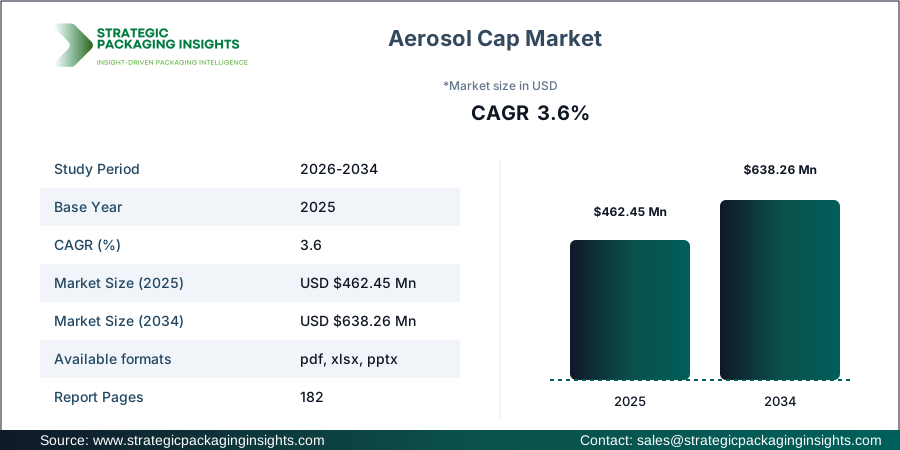
However, the market faces certain restraints, including stringent environmental regulations and the rising concerns over plastic waste. These factors are pushing manufacturers to explore eco-friendly alternatives and invest in research and development to create biodegradable and recyclable aerosol caps. Despite these challenges, the market holds significant growth potential, particularly in emerging economies where the demand for consumer goods is on the rise. The increasing focus on sustainability and the development of innovative packaging solutions are expected to create new opportunities for market players in the coming years.
Report Scope
| Attributes | Details |
| Report Title | Aerosol Cap Market Size, Future Growth and Forecast 2034 |
| Product Type | Standard Aerosol Caps, Actuator Caps, Overcaps |
| Material Type | PP, PE, Metal |
| Application | Personal Care, Household, Automotive, Industrial |
| End Use | FMCG, Cosmetics, Paints, Chemicals |
| Region | Asia Pacific, North America, Latin America, Europe, Middle East & Africa |
| Base Year | 2025 |
| Historic Period | 2018-2024 |
| Forecast Period | 2026-2034 |
| Number of Pages | 182 |
| Customization Available | Yes* |
Opportunities & Threats
The aerosol cap market presents numerous opportunities, particularly with the growing trend towards sustainable and eco-friendly packaging solutions. As consumers become more environmentally conscious, there is a rising demand for aerosol caps made from biodegradable and recyclable materials. This shift in consumer preference is encouraging manufacturers to innovate and develop new products that meet these sustainability criteria. Additionally, the expansion of the e-commerce sector is providing a significant boost to the market, as online retailing increases the demand for convenient and durable packaging solutions. The growing middle-class population in emerging economies is also contributing to the market's expansion, as disposable incomes rise and consumer spending on personal care and household products increases.
Another opportunity lies in the technological advancements in aerosol cap design and manufacturing processes. Companies are investing in research and development to create more efficient and cost-effective production methods, which can lead to reduced material usage and lower production costs. This not only benefits manufacturers by improving their profit margins but also allows them to offer competitive pricing to consumers. Furthermore, the increasing focus on product differentiation and customization is driving the demand for innovative aerosol cap designs that enhance the overall consumer experience.
Despite these opportunities, the aerosol cap market faces certain threats, primarily from the stringent environmental regulations imposed by governments worldwide. These regulations aim to reduce plastic waste and promote the use of sustainable materials, which can pose challenges for manufacturers relying heavily on traditional plastic materials. Additionally, the volatility in raw material prices, particularly for plastics and metals, can impact production costs and profit margins. The competitive landscape of the market also presents a threat, as numerous players vie for market share, leading to price wars and increased pressure on companies to innovate continuously.
Drivers & Challenges
One of the primary drivers of the aerosol cap market is the increasing demand for personal care and household products. As consumers seek convenience and ease of use, aerosol packaging has become a popular choice, driving the demand for aerosol caps. The growing awareness of hygiene and cleanliness, particularly in the wake of the COVID-19 pandemic, has further fueled the demand for aerosol-based disinfectants and cleaning products, thereby boosting the market. Additionally, the automotive and industrial sectors are contributing to the market growth, as aerosol products are widely used for lubrication, painting, and maintenance applications.
Another significant driver is the innovation in material technology and design. Manufacturers are continuously exploring new materials and design concepts to enhance the functionality and aesthetics of aerosol caps. The development of lightweight, durable, and environmentally friendly materials is gaining traction, as companies aim to reduce their carbon footprint and meet regulatory requirements. The increasing focus on product differentiation and branding is also driving the demand for customized and aesthetically appealing aerosol caps that enhance the overall consumer experience.
However, the aerosol cap market faces several challenges, including the environmental impact of plastic waste and the stringent regulations governing its use. The growing concerns over plastic pollution have led to increased scrutiny of packaging materials, prompting manufacturers to seek sustainable alternatives. The high cost of developing and implementing eco-friendly solutions can be a barrier for some companies, particularly small and medium-sized enterprises. Additionally, the volatility in raw material prices and supply chain disruptions can pose challenges for manufacturers, affecting production costs and timelines.
Market Share Analysis
The aerosol cap market is characterized by a competitive landscape with several key players vying for market share. AptarGroup, Berry Global, Lindal Group, Silgan Dispensing, and Precision Valve Corporation are some of the leading companies in the market, each holding a significant share. These companies are known for their extensive product portfolios, strong distribution networks, and continuous innovation in product design and materials. They are actively investing in research and development to create sustainable and innovative solutions that meet the evolving needs of consumers and regulatory requirements.

AptarGroup is a prominent player in the aerosol cap market, known for its innovative dispensing solutions and commitment to sustainability. The company focuses on developing eco-friendly products and has a strong presence in the personal care and household segments. Berry Global is another major player, offering a wide range of packaging solutions, including aerosol caps. The company's emphasis on sustainability and innovation has helped it maintain a competitive edge in the market.
Lindal Group is recognized for its expertise in aerosol technology and its focus on providing customized solutions to meet specific customer requirements. The company's strong emphasis on research and development has enabled it to introduce innovative products that cater to the diverse needs of the market. Silgan Dispensing is known for its comprehensive range of dispensing solutions, including aerosol caps, and its commitment to sustainability and innovation.
Precision Valve Corporation, Coster Group, Summit Packaging, Mitani Valve, Clayton Corporation, and Weener Plastics are also key players in the market, each contributing to the competitive landscape with their unique offerings and strategic initiatives. These companies are focused on expanding their product portfolios, enhancing their production capabilities, and strengthening their distribution networks to capture a larger share of the market. The competitive dynamics of the aerosol cap market are driven by the continuous pursuit of innovation, sustainability, and customer satisfaction.
Key Highlights
- The aerosol cap market is projected to grow from $462.45 million in 2025 to $638.26 million by 2034, at a CAGR of 3.6%.
- Increasing demand for personal care and household products is a major driver of market growth.
- Technological advancements in material and design are enhancing product functionality and sustainability.
- Stringent environmental regulations are pushing manufacturers towards eco-friendly solutions.
- The competitive landscape is characterized by continuous innovation and strategic partnerships.
- Emerging economies present significant growth opportunities due to rising disposable incomes.
- Customization and product differentiation are key trends driving consumer demand.
- Volatility in raw material prices poses a challenge for manufacturers.
- Expansion of e-commerce is boosting demand for convenient and durable packaging solutions.
- Focus on sustainability is leading to the development of biodegradable and recyclable aerosol caps.
Top Countries Insights
In the aerosol cap market, the United States holds a significant share, driven by the high demand for personal care and household products. The market size in the U.S. is substantial, with a CAGR of 4%, supported by the presence of major manufacturers and a strong focus on innovation and sustainability. Government regulations promoting eco-friendly packaging solutions further drive the market growth.

China is another key player in the aerosol cap market, with a growing market size and a CAGR of 5%. The rapid industrialization and urbanization in the country have led to increased demand for consumer goods, including aerosol products. The government's initiatives to promote sustainable packaging and reduce plastic waste are also contributing to market growth.
Germany, with its strong manufacturing base and emphasis on quality and innovation, is a leading market for aerosol caps in Europe. The market in Germany is growing at a CAGR of 3%, driven by the demand for high-quality packaging solutions in the personal care and automotive sectors. The country's stringent environmental regulations are encouraging manufacturers to adopt sustainable practices.
India is emerging as a lucrative market for aerosol caps, with a CAGR of 6%. The rising disposable incomes and changing consumer lifestyles are driving the demand for personal care and household products, thereby boosting the market. The government's focus on promoting domestic manufacturing and sustainable packaging solutions is also supporting market growth.
Brazil is a key market in Latin America, with a growing demand for aerosol products in the personal care and household segments. The market in Brazil is expanding at a CAGR of 4%, driven by the increasing consumer awareness of hygiene and cleanliness. The government's initiatives to promote sustainable packaging and reduce plastic waste are further propelling the market growth.
Aerosol Cap Market Segments Insights

Product Type Analysis
The aerosol cap market is segmented by product type into standard aerosol caps, actuator caps, and overcaps. Standard aerosol caps are the most widely used, owing to their cost-effectiveness and versatility across various applications. These caps are favored in the personal care and household sectors due to their ease of use and compatibility with a wide range of aerosol products. Actuator caps, on the other hand, are gaining popularity for their enhanced functionality and user-friendly design, making them ideal for specialized applications in the automotive and industrial sectors. Overcaps provide additional protection and aesthetic appeal, making them a preferred choice for premium products in the cosmetics and FMCG industries.

The demand for actuator caps is expected to grow significantly during the forecast period, driven by the increasing focus on product differentiation and consumer convenience. Manufacturers are investing in research and development to create innovative actuator designs that enhance the overall user experience. The trend towards customization and branding is also driving the demand for overcaps, as companies seek to create visually appealing packaging that stands out on retail shelves. The competitive landscape in this segment is characterized by continuous innovation and the introduction of new materials and designs to meet evolving consumer preferences.
Material Type Analysis
By material type, the aerosol cap market is segmented into PP, PE, and metal. Polypropylene (PP) is the most commonly used material due to its durability, lightweight nature, and cost-effectiveness. It is widely used in the production of standard aerosol caps and actuator caps, particularly in the personal care and household sectors. Polyethylene (PE) is also popular for its flexibility and resistance to chemicals, making it suitable for applications in the automotive and industrial sectors. Metal caps, although less common, are preferred for their strength and premium appearance, often used in high-end products in the cosmetics and FMCG industries.

The trend towards sustainable packaging is driving the demand for recyclable and biodegradable materials in the aerosol cap market. Manufacturers are exploring new material technologies to create eco-friendly solutions that meet regulatory requirements and consumer expectations. The development of bio-based plastics and the use of recycled materials are gaining traction, as companies aim to reduce their environmental impact and appeal to environmentally conscious consumers. The competitive landscape in this segment is marked by the continuous pursuit of innovation and sustainability, with companies investing in research and development to create new material solutions.
Application Analysis
The aerosol cap market is segmented by application into personal care, household, automotive, and industrial. The personal care segment holds the largest share, driven by the high demand for aerosol products such as deodorants, hair sprays, and shaving foams. The convenience and ease of use offered by aerosol packaging make it a popular choice among consumers, particularly in the personal care sector. The household segment is also significant, with aerosol products widely used for cleaning, disinfecting, and air freshening applications.

The automotive and industrial segments are experiencing steady growth, driven by the increasing use of aerosol products for lubrication, painting, and maintenance applications. The demand for specialized aerosol caps that offer enhanced functionality and durability is rising in these sectors, as manufacturers seek to meet the specific needs of industrial and automotive applications. The competitive landscape in this segment is characterized by the introduction of innovative products and the development of customized solutions to cater to diverse consumer requirements.
End Use Analysis
By end use, the aerosol cap market is segmented into FMCG, cosmetics, paints, and chemicals. The FMCG sector holds a significant share, driven by the high demand for aerosol products in the personal care and household segments. The convenience and versatility of aerosol packaging make it a preferred choice for FMCG companies, as they seek to offer consumers easy-to-use and effective products. The cosmetics sector is also a major contributor to the market, with aerosol caps used in a wide range of beauty and personal care products.

The paints and chemicals sectors are experiencing steady growth, driven by the increasing use of aerosol products for industrial and automotive applications. The demand for specialized aerosol caps that offer enhanced functionality and durability is rising in these sectors, as manufacturers seek to meet the specific needs of industrial and automotive applications. The competitive landscape in this segment is characterized by the introduction of innovative products and the development of customized solutions to cater to diverse consumer requirements.
Aerosol Cap Market Segments
The Aerosol Cap market has been segmented on the basis ofProduct Type
- Standard Aerosol Caps
- Actuator Caps
- Overcaps
Material Type
- PP
- PE
- Metal
Application
- Personal Care
- Household
- Automotive
- Industrial
End Use
- FMCG
- Cosmetics
- Paints
- Chemicals
Region
- Asia Pacific
- North America
- Latin America
- Europe
- Middle East & Africa




