


4-wheeled Container Market Outlook
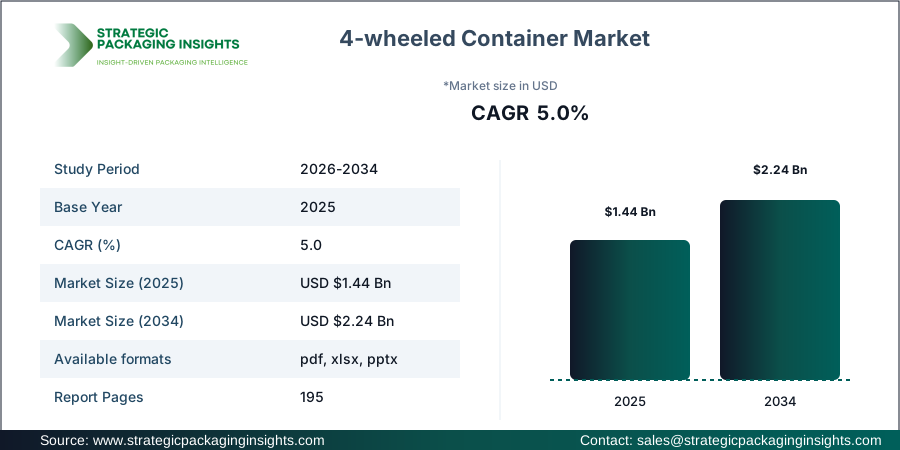
The 4-wheeled Container market size was valued at USD 1.44 billion in 2025 and is anticipated to reach USD 2.24 billion by 2034, growing at a CAGR of 5.0% during the forecast period according to Strategic Packaging Insights. The market is witnessing significant growth due to the increasing demand for efficient waste management solutions and the rising adoption of logistics containers across various industries. Companies like SSI Schaefer and Rubbermaid are leading the charge by innovating in container design and material usage, which is driving the market forward. The demand for durable and versatile containers is further fueled by the expanding logistics and municipal sectors, which require robust solutions for waste and material handling.
One of the most impactful drivers of the 4-wheeled Container market is the growing emphasis on sustainability and environmental regulations. Governments worldwide are implementing stringent waste management policies, which are encouraging the adoption of reusable and recyclable containers. This trend is supported by the increasing consumer awareness regarding environmental conservation, which is pushing companies to innovate in eco-friendly materials and designs. The focus on reducing carbon footprints and enhancing the lifecycle of containers is expected to propel market growth, with companies like ORBIS and Schoeller Allibert leading the way in sustainable container solutions.
Report Scope
| Attributes | Details |
| Report Title | 4-wheeled Container Market Size, Future Growth and Forecast 2034 |
| Material Type | Plastic, Steel, Aluminum, Composite |
| Product Type | Waste Containers, Logistics Containers, Laundry Containers, Storage Containers |
| Capacity | Below 250 Liters, 250–750 Liters, Above 750 Liters |
| End Use | Logistics, Municipal, Healthcare, Hospitality |
| Region | Asia Pacific, North America, Latin America, Europe, Middle East & Africa |
| Base Year | 2025 |
| Historic Period | 2018-2024 |
| Forecast Period | 2026-2034 |
| Number of Pages | 195 |
| Customization Available | Yes* |
Sustainability & Circular Economy Analysis
Sustainability initiatives are profoundly influencing the 4-wheeled Container market, as companies strive to align with circular economy principles. The use of recyclable materials and the development of reusable packaging solutions are becoming standard practices. This shift is driven by consumer demand for eco-friendly products and regulatory pressures to minimize environmental impact. Companies are investing in lightweight packaging innovations to reduce material usage and transportation costs, thereby lowering their carbon footprint. These efforts not only enhance brand reputation but also ensure compliance with evolving packaging regulations.
The integration of eco-friendly material innovations is reshaping packaging design and manufacturing processes. Companies are exploring biodegradable and compostable materials to meet consumer sustainability preferences. This trend is influencing investment decisions, as businesses prioritize sustainable practices to gain a competitive edge. Extended Producer Responsibility (EPR) schemes are also encouraging manufacturers to take accountability for the entire lifecycle of their products, promoting waste reduction strategies and recycling networks.
As sustainability trends continue to evolve, they are impacting supply chain strategies and long-term market competitiveness. Companies are adopting ESG initiatives to enhance their sustainability credentials, which is becoming a key differentiator in the market. The focus on reducing carbon emissions and optimizing resource efficiency is driving innovation in packaging solutions. This shift towards sustainable practices is expected to create new opportunities for growth and collaboration among packaging manufacturers, brand owners, and policymakers.
Packaging Value Chain & Supply Chain Analysis
The packaging value chain for 4-wheeled containers involves a complex ecosystem of raw material sourcing, manufacturing, and distribution. Raw material availability, particularly for plastics and metals, plays a crucial role in determining production capabilities and cost structures. Packaging converters and manufacturers like IPL Plastics and Craemer are pivotal in transforming raw materials into finished products, ensuring quality and compliance with industry standards. The efficiency of this process is critical for maintaining competitive pricing and meeting customer demand.
Logistics and distribution channels are integral components of the supply chain, influencing the market's overall performance. Efficient transportation and inventory management strategies are essential for minimizing costs and ensuring timely delivery of products. Companies are increasingly focusing on supply chain resilience and localization to mitigate risks associated with global sourcing. Strategic partnerships with logistics providers and retailers are enhancing distribution networks, enabling companies to expand their market reach and improve customer service.
Recycling networks and procurement strategies are becoming increasingly important as sustainability becomes a priority for the industry. Companies are investing in recycling infrastructure to support circular economy practices and reduce waste. This focus on sustainability is driving collaboration across the value chain, with stakeholders working together to develop innovative solutions that meet regulatory requirements and consumer expectations. The integration of sustainable practices into the supply chain is expected to enhance market competitiveness and drive long-term growth.
Opportunities & Threats
The 4-wheeled Container market presents numerous opportunities for growth, driven by the increasing demand for efficient waste management solutions and the expansion of the logistics sector. The rise of e-commerce and the need for effective material handling solutions are creating new avenues for market expansion. Companies can capitalize on these opportunities by developing innovative container designs that cater to specific industry needs, such as stackable and collapsible containers for space optimization. Additionally, the growing emphasis on sustainability is opening up opportunities for companies to differentiate themselves through eco-friendly product offerings.
Another significant opportunity lies in the adoption of smart container technologies. The integration of IoT and RFID technologies into 4-wheeled containers can enhance tracking and monitoring capabilities, providing real-time data on container usage and location. This technological advancement can improve operational efficiency and reduce costs, making it an attractive proposition for companies looking to optimize their supply chain operations. By investing in smart container solutions, companies can gain a competitive edge and meet the evolving needs of their customers.
Despite the promising opportunities, the market faces several threats that could hinder growth. One of the primary challenges is the volatility in raw material prices, particularly for plastics and metals, which can impact production costs and profit margins. Additionally, stringent environmental regulations and compliance requirements can pose challenges for companies, necessitating significant investments in sustainable practices and technologies. The competitive landscape is also intensifying, with new entrants and existing players vying for market share, which could lead to pricing pressures and reduced profitability.
Drivers & Challenges
The primary drivers of the 4-wheeled Container market include the increasing demand for efficient waste management solutions and the expansion of the logistics sector. The growing emphasis on sustainability and environmental conservation is also driving market growth, as companies seek to align with circular economy principles and reduce their carbon footprint. The rise of e-commerce and the need for effective material handling solutions are further fueling demand for 4-wheeled containers, as businesses look to optimize their supply chain operations and improve efficiency.
Technological advancements are playing a crucial role in driving market growth, with companies investing in smart container solutions that enhance tracking and monitoring capabilities. The integration of IoT and RFID technologies into containers is providing real-time data on usage and location, enabling companies to optimize their operations and reduce costs. This technological innovation is expected to create new opportunities for growth and differentiation in the market, as companies seek to meet the evolving needs of their customers.
However, the market also faces several challenges that could impact growth. One of the primary challenges is the volatility in raw material prices, which can affect production costs and profit margins. Additionally, stringent environmental regulations and compliance requirements can pose challenges for companies, necessitating significant investments in sustainable practices and technologies. The competitive landscape is also intensifying, with new entrants and existing players vying for market share, which could lead to pricing pressures and reduced profitability.
Market Share Analysis
The 4-wheeled Container market is characterized by a competitive landscape with several key players vying for market share. Companies like SSI Schaefer, Rubbermaid, and ORBIS are leading the market with their innovative product offerings and strong brand presence. These companies are focusing on expanding their product portfolios and enhancing their distribution networks to gain a competitive edge. The market is also witnessing the entry of new players, which is intensifying competition and driving companies to innovate and differentiate their offerings.
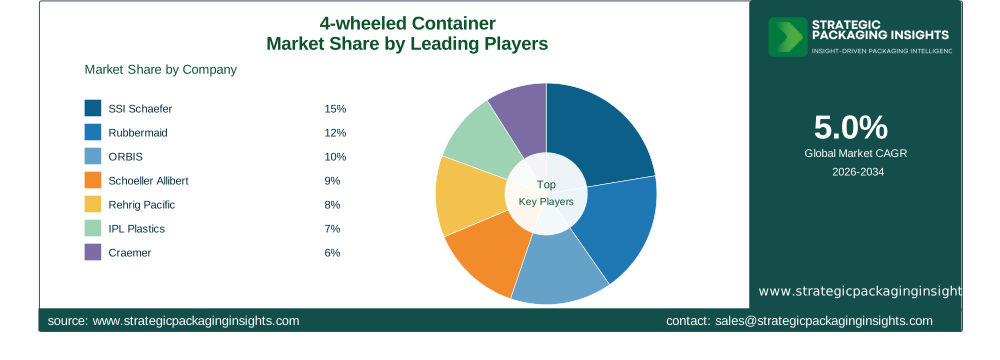
SSI Schaefer is a prominent player in the market, known for its high-quality container solutions and strong focus on sustainability. The company is investing in eco-friendly materials and designs to meet the growing demand for sustainable packaging solutions. Rubbermaid, another key player, is renowned for its durable and versatile container offerings, catering to a wide range of industries. The company's strong distribution network and brand reputation are key factors contributing to its market leadership.
ORBIS is a leading provider of reusable packaging solutions, with a strong focus on innovation and sustainability. The company's extensive product portfolio and commitment to reducing environmental impact have positioned it as a key player in the market. Schoeller Allibert is another major player, known for its innovative container designs and strong emphasis on customer satisfaction. The company's strategic partnerships and global presence are key factors driving its market success.
Rehrig Pacific, IPL Plastics, and Craemer are also significant players in the market, each with their unique strengths and offerings. Rehrig Pacific is known for its innovative container solutions and strong focus on customer service, while IPL Plastics is recognized for its extensive product range and commitment to sustainability. Craemer, on the other hand, is renowned for its high-quality container solutions and strong emphasis on innovation and technology.
Key Highlights
- Market Size: The 4-wheeled Container market was valued at USD 1.44 billion in 2025 and is projected to reach USD 2.24 billion by 2034.
- Growth Rate: The market is expected to grow at a CAGR of 5.0% during the forecast period.
- Leading Companies: Key players include SSI Schaefer, Rubbermaid, ORBIS, and Schoeller Allibert.
- Material Innovation: Increasing use of eco-friendly and recyclable materials in container manufacturing.
- Technological Advancements: Integration of IoT and RFID technologies in container solutions.
- Regional Growth: Asia Pacific is expected to witness significant growth due to expanding logistics and municipal sectors.
- Sustainability Focus: Growing emphasis on sustainable practices and circular economy principles.
4-wheeled Container Market Segments Insights

Material Type Analysis
The 4-wheeled Container market is segmented by material type into plastic, steel, aluminum, and composite materials. Plastic containers dominate the market due to their lightweight, durability, and cost-effectiveness. They are widely used in various industries, including logistics and municipal waste management, due to their versatility and ease of handling. However, the increasing focus on sustainability is driving demand for recyclable and eco-friendly materials, leading to innovations in composite materials that offer similar benefits with reduced environmental impact.
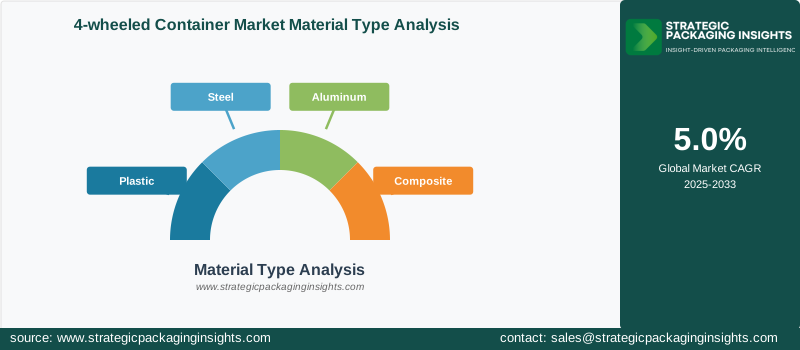
Steel and aluminum containers are preferred for applications requiring high strength and durability, such as in industrial and heavy-duty logistics. These materials offer superior load-bearing capacity and resistance to harsh environmental conditions, making them ideal for long-term use. The demand for steel and aluminum containers is expected to grow as industries seek robust solutions for material handling and storage. Composite materials are gaining traction due to their lightweight and high-strength properties, offering a sustainable alternative to traditional materials.
Product Type Analysis
The market is further segmented by product type into waste containers, logistics containers, laundry containers, and storage containers. Waste containers hold a significant share of the market, driven by the increasing need for efficient waste management solutions in urban areas. The rise of smart cities and stringent waste management regulations are further boosting demand for innovative waste container solutions that enhance collection and disposal efficiency.
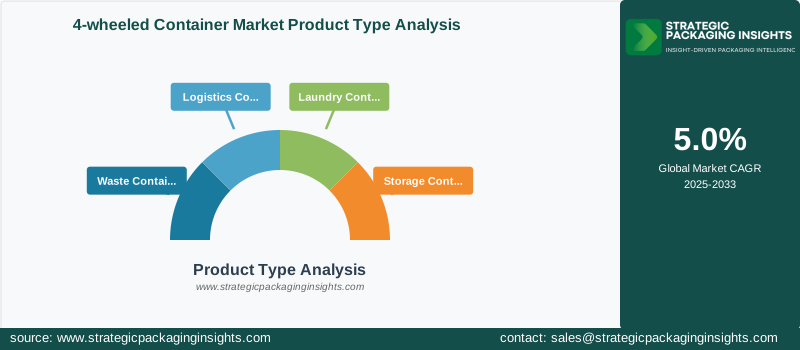
Logistics containers are witnessing growing demand due to the expansion of the e-commerce sector and the need for effective material handling solutions. These containers are designed to optimize space and improve transportation efficiency, making them essential for supply chain operations. Laundry and storage containers are also experiencing steady growth, driven by the hospitality and healthcare sectors' need for efficient storage and handling solutions.
Capacity Analysis
The 4-wheeled Container market is segmented by capacity into below 250 liters, 250-750 liters, and above 750 liters. Containers with a capacity of 250-750 liters are the most popular, offering a balance between size and functionality. These containers are widely used in municipal waste management and logistics applications, providing ample space for material handling while remaining easy to maneuver.
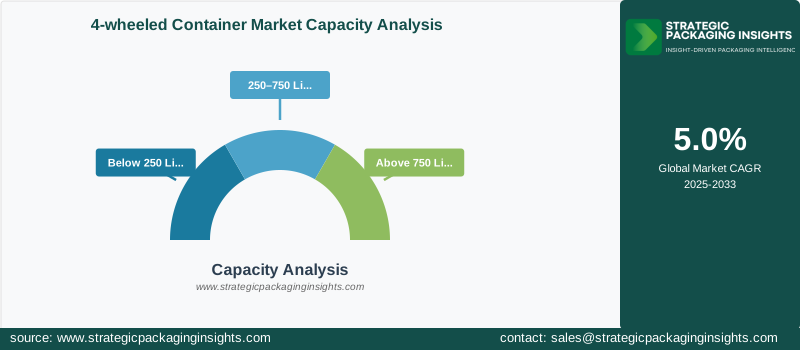
Containers with a capacity below 250 liters are preferred for applications requiring compact and portable solutions, such as in healthcare and hospitality settings. These containers offer convenience and ease of use, making them ideal for environments with limited space. Containers with a capacity above 750 liters are used in industrial and large-scale logistics applications, where high-volume storage and transportation are required.
End Use Analysis
The market is segmented by end use into logistics, municipal, healthcare, and hospitality sectors. The logistics sector is a major driver of market growth, with the increasing demand for efficient material handling solutions in the e-commerce and retail industries. The need for durable and versatile containers is driving innovation in container design and material usage, with companies focusing on developing solutions that enhance operational efficiency.
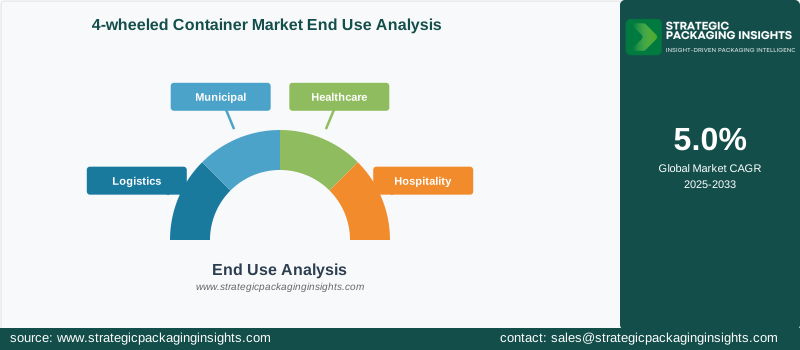
The municipal sector is also a significant contributor to market growth, driven by the need for effective waste management solutions in urban areas. The rise of smart cities and stringent waste management regulations are boosting demand for innovative container solutions that enhance collection and disposal efficiency. The healthcare and hospitality sectors are experiencing steady growth, driven by the need for efficient storage and handling solutions in these industries.
4-wheeled Container Market Segments
The 4-wheeled Container market has been segmented on the basis ofMaterial Type
- Plastic
- Steel
- Aluminum
- Composite
Product Type
- Waste Containers
- Logistics Containers
- Laundry Containers
- Storage Containers
Capacity
- Below 250 Liters
- 250–750 Liters
- Above 750 Liters
End Use
- Logistics
- Municipal
- Healthcare
- Hospitality
Region
- Asia Pacific
- North America
- Latin America
- Europe
- Middle East & Africa




