


4-Loop FIBC Market Outlook
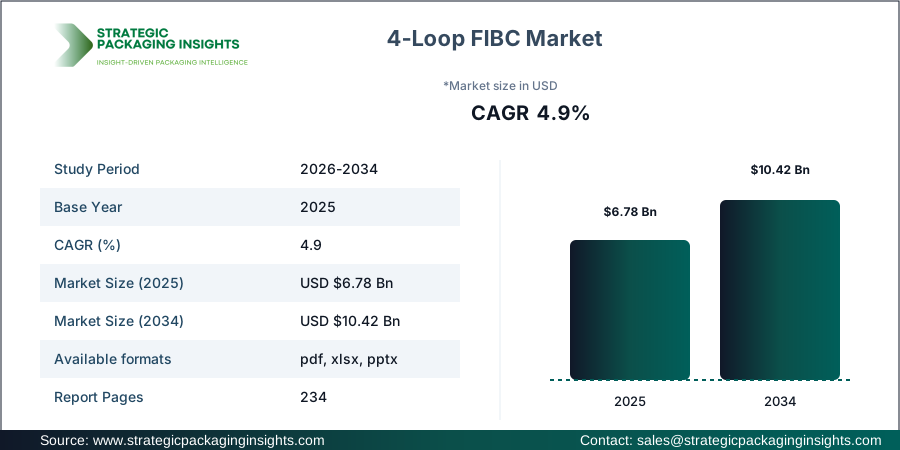
The 4-Loop FIBC market was valued at $6.78 billion in 2025 and is projected to reach $10.42 billion by 2034, growing at a CAGR of 4.9% during the forecast period 2026-2034. This market is witnessing significant growth due to the increasing demand for flexible intermediate bulk containers (FIBCs) across various industries such as chemicals, agriculture, and construction. The versatility and cost-effectiveness of 4-Loop FIBCs make them a preferred choice for bulk packaging solutions. Additionally, the rising focus on sustainable and eco-friendly packaging solutions is further propelling the market growth. The Asia Pacific region is expected to dominate the market due to rapid industrialization and the presence of a large number of manufacturing units.
Despite the promising growth prospects, the 4-Loop FIBC market faces certain challenges. Regulatory restrictions related to the use of plastics in packaging and the fluctuating prices of raw materials such as polypropylene can hinder market growth. However, advancements in material technology and the development of biodegradable FIBCs offer lucrative opportunities for market players. The increasing adoption of automation in the manufacturing process is also expected to enhance production efficiency and reduce operational costs, thereby driving market growth. Overall, the 4-Loop FIBC market holds significant potential for expansion, driven by technological innovations and the growing demand for efficient bulk packaging solutions.
Report Scope
| Attributes | Details |
| Report Title | 4-Loop FIBC Market Size, Future Growth and Forecast 2034 |
| By Bag Type | Type A, Type B, Type C, Type D |
| By Capacity | 500–1,000 kg, Above 1,000 kg |
| By Application | Chemicals, Agriculture, Construction, Food Ingredients |
| By End Use | Chemicals, Food, Agriculture, Mining |
| Region | Asia Pacific, North America, Latin America, Europe, Middle East & Africa |
| Base Year | 2025 |
| Historic Period | 2018-2024 |
| Forecast Period | 2026-2034 |
| Number of Pages | 234 |
| Customization Available | Yes* |
Opportunities & Threats
The 4-Loop FIBC market presents numerous opportunities for growth, primarily driven by the increasing demand for bulk packaging solutions in emerging economies. As industries such as chemicals, agriculture, and construction continue to expand, the need for efficient and cost-effective packaging solutions is on the rise. The versatility of 4-Loop FIBCs, which can be customized to meet specific requirements, makes them an attractive option for various applications. Additionally, the growing awareness about the environmental impact of traditional packaging materials is driving the demand for eco-friendly alternatives, providing a significant opportunity for manufacturers to innovate and offer sustainable solutions.
Another opportunity lies in the development of advanced materials and technologies that enhance the performance and durability of 4-Loop FIBCs. Manufacturers are investing in research and development to create FIBCs that are not only strong and durable but also lightweight and easy to handle. The integration of smart technologies, such as RFID tags, into FIBCs is also gaining traction, allowing for better tracking and management of inventory. These innovations are expected to open new avenues for growth and provide a competitive edge to market players.
However, the market is not without its threats. One of the major challenges is the stringent regulations imposed by governments on the use of plastics in packaging. These regulations can limit the use of traditional FIBCs and increase the cost of production, affecting the profitability of manufacturers. Additionally, the volatility in raw material prices, particularly polypropylene, can impact the overall cost structure and pricing strategies of companies. To mitigate these threats, manufacturers need to focus on developing sustainable and cost-effective solutions that comply with regulatory standards and meet the evolving needs of customers.
Drivers & Challenges
The primary driver of the 4-Loop FIBC market is the increasing demand for bulk packaging solutions across various industries. The chemical industry, in particular, is a major consumer of FIBCs due to the need for safe and efficient transportation of hazardous materials. The agriculture sector also relies heavily on FIBCs for the storage and transportation of grains, seeds, and fertilizers. The ability of 4-Loop FIBCs to handle large volumes of materials while ensuring safety and convenience is a key factor driving their adoption. Furthermore, the growing trend of outsourcing logistics and supply chain operations is boosting the demand for FIBCs as they offer a reliable and cost-effective packaging solution.
Another significant driver is the increasing focus on sustainability and environmental conservation. As consumers and businesses become more conscious of their environmental footprint, there is a growing demand for eco-friendly packaging solutions. 4-Loop FIBCs, made from recyclable materials, align with this trend and are gaining popularity as a sustainable alternative to traditional packaging options. The development of biodegradable FIBCs is further expected to drive market growth, as they offer an environmentally friendly solution without compromising on performance and durability.
Despite the positive drivers, the 4-Loop FIBC market faces several challenges. One of the major challenges is the competition from alternative packaging solutions such as rigid containers and drums. These alternatives, although less flexible, offer certain advantages in terms of durability and reusability, posing a threat to the growth of the FIBC market. Additionally, the lack of awareness about the benefits of FIBCs in certain regions can hinder market penetration. To overcome these challenges, manufacturers need to focus on educating potential customers about the advantages of FIBCs and developing innovative solutions that address the specific needs of different industries.
Market Share Analysis
The 4-Loop FIBC market is characterized by a competitive landscape with several key players vying for market share. Companies such as Greif, LC Packaging, and Berry Global are among the leading players in the market, known for their extensive product portfolios and strong distribution networks. These companies have established a significant presence in the market through strategic partnerships, mergers, and acquisitions, enabling them to expand their reach and enhance their product offerings. The competitive landscape is further intensified by the presence of regional players who cater to specific markets and offer customized solutions to meet local demands.
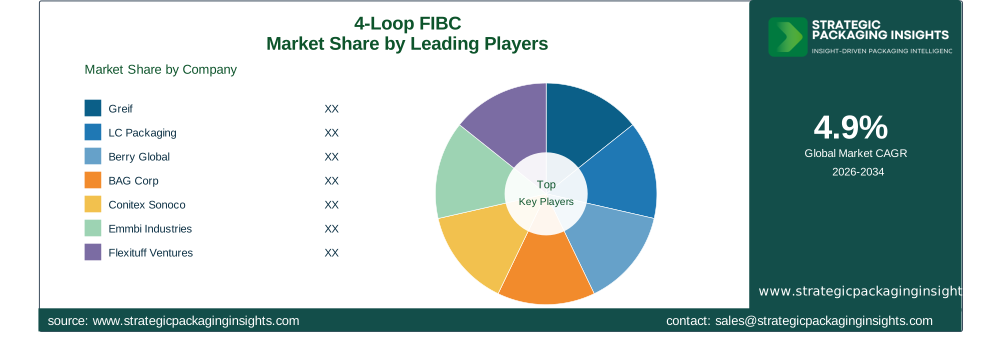
Greif, a global leader in industrial packaging, holds a substantial market share due to its diverse range of FIBC products and strong focus on sustainability. The company has been actively investing in research and development to create innovative packaging solutions that meet the evolving needs of customers. LC Packaging, another prominent player, is known for its high-quality FIBCs and commitment to sustainability. The company has a strong presence in Europe and is expanding its operations in other regions to capitalize on the growing demand for bulk packaging solutions.
Berry Global, a leading provider of packaging solutions, has a significant market share in the 4-Loop FIBC market. The company's focus on innovation and customer-centric approach has enabled it to maintain a competitive edge in the market. BAG Corp, Conitex Sonoco, and Emmbi Industries are also key players in the market, known for their extensive product offerings and strong customer relationships. These companies are continuously investing in technology and infrastructure to enhance their production capabilities and meet the increasing demand for FIBCs.
Flexituff Ventures, Bulk Lift, Rishi FIBC, and Kanpur Plastipack are other notable players in the market, each with a unique value proposition. Flexituff Ventures is recognized for its innovative packaging solutions and strong focus on quality, while Bulk Lift is known for its customized FIBC solutions that cater to specific industry needs. Rishi FIBC and Kanpur Plastipack have established themselves as reliable suppliers of FIBCs, offering a wide range of products to meet the diverse requirements of customers. Overall, the competitive landscape of the 4-Loop FIBC market is dynamic, with companies continuously striving to enhance their product offerings and expand their market presence.
Key Highlights
- The 4-Loop FIBC market is projected to grow at a CAGR of 4.9% from 2026 to 2034.
- Asia Pacific is expected to dominate the market due to rapid industrialization and a large number of manufacturing units.
- Increasing demand for eco-friendly packaging solutions is driving market growth.
- Advancements in material technology and the development of biodegradable FIBCs offer lucrative opportunities.
- The chemical industry is a major consumer of 4-Loop FIBCs due to the need for safe transportation of hazardous materials.
- Integration of smart technologies, such as RFID tags, into FIBCs is gaining traction.
- Regulatory restrictions on the use of plastics in packaging pose a challenge to market growth.
- Volatility in raw material prices, particularly polypropylene, can impact the cost structure of companies.
- Competition from alternative packaging solutions such as rigid containers and drums is a challenge.
Top Countries Insights
In the 4-Loop FIBC market, China stands out as a key player with a market size of approximately $2.5 billion and a CAGR of 6%. The country's rapid industrialization and the presence of a large number of manufacturing units drive the demand for bulk packaging solutions. Government initiatives promoting sustainable packaging and the increasing adoption of eco-friendly materials further boost market growth. However, challenges such as regulatory restrictions on plastic use and fluctuating raw material prices need to be addressed.
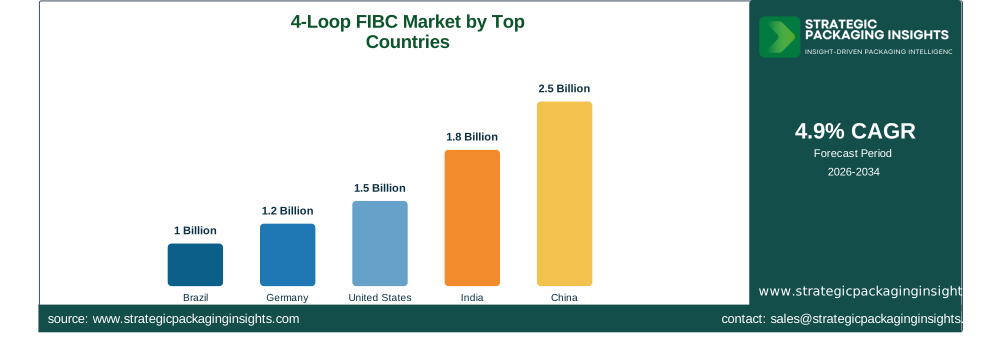
India is another significant market for 4-Loop FIBCs, with a market size of around $1.8 billion and a CAGR of 5%. The country's booming agriculture sector and the growing demand for efficient packaging solutions in the chemical industry are key growth drivers. The government's focus on promoting sustainable practices and the increasing awareness about the benefits of FIBCs contribute to market expansion. However, the lack of awareness in certain regions and competition from alternative packaging solutions pose challenges.
The United States, with a market size of approximately $1.5 billion and a CAGR of 4%, is a major consumer of 4-Loop FIBCs. The country's well-established chemical and agriculture industries drive the demand for bulk packaging solutions. The increasing focus on sustainability and the adoption of advanced technologies in packaging further support market growth. However, regulatory restrictions and the volatility in raw material prices remain challenges for market players.
Germany, with a market size of around $1.2 billion and a CAGR of 3%, is a key market for 4-Loop FIBCs in Europe. The country's strong industrial base and the growing demand for eco-friendly packaging solutions drive market growth. The government's stringent regulations on plastic use and the increasing adoption of sustainable practices further boost the demand for FIBCs. However, competition from alternative packaging solutions and the high cost of production are challenges that need to be addressed.
Brazil, with a market size of approximately $1 billion and a CAGR of 4%, is a significant market for 4-Loop FIBCs in Latin America. The country's expanding agriculture sector and the growing demand for efficient packaging solutions in the chemical industry are key growth drivers. The government's focus on promoting sustainable practices and the increasing awareness about the benefits of FIBCs contribute to market expansion. However, the lack of infrastructure and the volatility in raw material prices pose challenges.
4-Loop FIBC Market Segments Insights

Bag Type Analysis
The 4-Loop FIBC market is segmented by bag type into Type A, Type B, Type C, and Type D. Type A bags, being the most basic, are used for non-flammable materials and are widely adopted due to their cost-effectiveness. However, the demand for Type B and Type C bags is increasing due to their ability to handle materials with low ignition energy and flammable powders, respectively. Type D bags, which offer the highest level of safety by dissipating static electricity, are gaining traction in industries dealing with hazardous materials. The growing emphasis on safety and regulatory compliance is driving the demand for advanced bag types, with manufacturers focusing on innovation to enhance the performance and safety features of FIBCs.
Type B and Type C bags are particularly popular in the chemical and pharmaceutical industries, where the safe handling of sensitive materials is crucial. The increasing awareness about the risks associated with static electricity and the need for safe transportation of hazardous materials are key factors driving the demand for these bag types. Manufacturers are investing in research and development to create FIBCs that meet the stringent safety standards and offer enhanced protection against static discharge. The development of new materials and technologies that improve the safety and performance of FIBCs is expected to open new avenues for growth in this segment.
Capacity Analysis
The 4-Loop FIBC market is segmented by capacity into 500-1, 000 kg and above 1, 000 kg. The demand for FIBCs with a capacity of 500-1, 000 kg is driven by the agriculture and food industries, where they are used for the storage and transportation of grains, seeds, and food ingredients. These FIBCs offer a cost-effective and efficient solution for handling large volumes of materials, making them a preferred choice for bulk packaging. The increasing focus on reducing packaging waste and improving supply chain efficiency is further boosting the demand for FIBCs in this capacity range.
FIBCs with a capacity of above 1, 000 kg are gaining popularity in the chemical and construction industries, where the need for handling large volumes of materials is critical. These FIBCs offer enhanced durability and strength, making them suitable for heavy-duty applications. The growing demand for efficient and reliable packaging solutions in these industries is driving the adoption of high-capacity FIBCs. Manufacturers are focusing on developing FIBCs that offer superior performance and durability, with features such as reinforced seams and advanced lifting mechanisms to meet the specific needs of different industries.
Application Analysis
The 4-Loop FIBC market is segmented by application into chemicals, agriculture, construction, and food ingredients. The chemical industry is a major consumer of FIBCs, driven by the need for safe and efficient transportation of hazardous materials. The increasing demand for bulk packaging solutions in the agriculture sector, for the storage and transportation of grains, seeds, and fertilizers, is also contributing to market growth. The construction industry relies on FIBCs for the handling of construction materials such as sand, gravel, and cement, where the ability to handle large volumes of materials is crucial.
The food ingredients segment is witnessing significant growth due to the increasing demand for safe and hygienic packaging solutions. FIBCs offer a reliable and cost-effective solution for the storage and transportation of food ingredients, ensuring product safety and quality. The growing focus on food safety and the need for efficient supply chain management are driving the demand for FIBCs in this segment. Manufacturers are investing in the development of FIBCs that meet the stringent hygiene and safety standards required for food packaging, with features such as food-grade liners and advanced sealing mechanisms.
End Use Analysis
The 4-Loop FIBC market is segmented by end use into chemicals, food, agriculture, and mining. The chemical industry is a major end-user of FIBCs, driven by the need for safe and efficient transportation of hazardous materials. The increasing demand for bulk packaging solutions in the food industry, for the storage and transportation of food ingredients, is also contributing to market growth. The agriculture sector relies on FIBCs for the handling of grains, seeds, and fertilizers, where the ability to handle large volumes of materials is crucial.
The mining industry is witnessing significant growth in the adoption of FIBCs, driven by the need for efficient and reliable packaging solutions for the transportation of minerals and ores. FIBCs offer a cost-effective and durable solution for handling large volumes of materials, making them a preferred choice for bulk packaging in the mining industry. Manufacturers are focusing on developing FIBCs that offer superior performance and durability, with features such as reinforced seams and advanced lifting mechanisms to meet the specific needs of different industries.
4-Loop FIBC Market Segments
The 4-Loop FIBC market has been segmented on the basis ofBy Bag Type
- Type A
- Type B
- Type C
- Type D
By Capacity
- 500–1,000 kg
- Above 1,000 kg
By Application
- Chemicals
- Agriculture
- Construction
- Food Ingredients
By End Use
- Chemicals
- Food
- Agriculture
- Mining
Region
- Asia Pacific
- North America
- Latin America
- Europe
- Middle East & Africa




