


3D Printing Metal Market Outlook
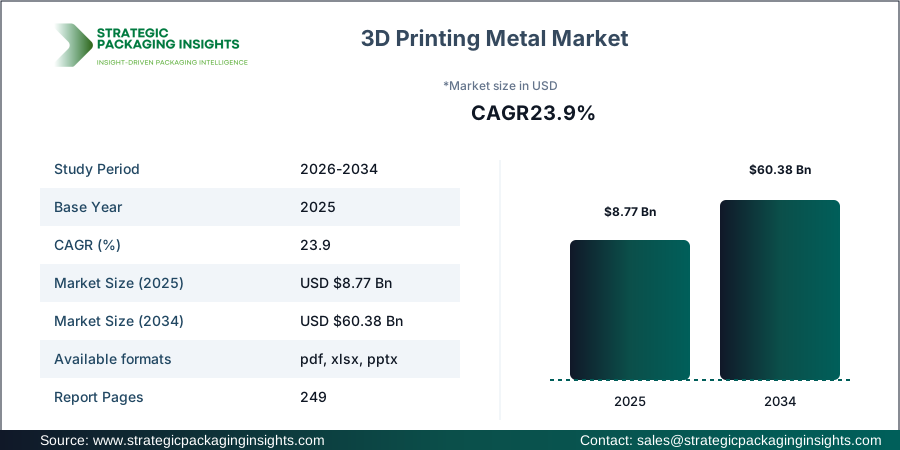
The 3D Printing Metal market size was valued at USD 8.77 billion in 2025 and is anticipated to reach USD 60.38 billion by 2034, growing at a CAGR of 23.9% during the forecast period according to Strategic Packaging Insights. This remarkable growth trajectory is driven by the increasing demand for lightweight and high-strength components across various industries, including aerospace, automotive, and healthcare. Companies like 3D Systems and GE Additive are at the forefront of this technological revolution, leveraging advanced materials and innovative printing techniques to meet the evolving needs of these sectors. The market's expansion is further fueled by the growing adoption of 3D printing technologies in manufacturing processes, which offer significant cost savings and design flexibility.
One of the most impactful drivers of the 3D Printing Metal market is the rising emphasis on sustainability and resource efficiency. According to industry experts, the ability to produce complex geometries with minimal waste is a key advantage of 3D printing technologies, aligning with global sustainability goals. Companies such as EOS and Renishaw are investing heavily in research and development to enhance the efficiency and environmental performance of their 3D printing solutions. This focus on sustainability is not only attracting investment but also driving regulatory support, as governments worldwide recognize the potential of 3D printing to reduce carbon footprints and promote circular economy practices.
Report Scope
| Attributes | Details |
| Report Title | 3D Printing Metal Market Size, Future Growth and Forecast 2034 |
| Material Type | Titanium, Stainless Steel, Aluminum, Nickel Alloys |
| Technology | Powder Bed Fusion, Directed Energy Deposition, Binder Jetting |
| Application | Aerospace Parts, Medical Implants, Tooling, Automotive Components |
| End Use | Aerospace & Defense, Healthcare, Automotive, Industrial |
| Region | Asia Pacific, North America, Latin America, Europe, Middle East & Africa |
| Base Year | 2025 |
| Historic Period | 2018-2024 |
| Forecast Period | 2026-2034 |
| Number of Pages | 249 |
| Customization Available | Yes* |
Sustainability & Circular Economy Analysis
Sustainability initiatives and circular economy practices are significantly influencing the 3D Printing Metal market. The adoption of recyclable materials and reusable packaging solutions is becoming increasingly prevalent as companies strive to reduce their environmental impact. Lightweight packaging and eco-friendly material innovations are at the forefront of this movement, with companies like Materialise and Stratasys leading the charge. These efforts are not only reducing waste but also enhancing the overall efficiency of the supply chain, as lighter materials require less energy for transportation and handling.
Moreover, waste reduction strategies and ESG initiatives are becoming integral to the business models of leading 3D printing companies. By focusing on carbon footprint reduction and aligning with consumer sustainability preferences, companies are gaining a competitive edge in the market. Packaging regulations and extended producer responsibility (EPR) are also playing a crucial role in shaping the industry's landscape, as manufacturers are required to comply with stringent environmental standards. This regulatory environment is driving innovation in packaging design and manufacturing processes, as companies seek to meet these requirements while maintaining cost-effectiveness.
In addition to regulatory compliance, sustainability trends are influencing investment decisions and long-term market competitiveness. Companies that prioritize eco-friendly practices are attracting more investors and gaining favor with environmentally conscious consumers. This shift is prompting a reevaluation of supply chain strategies, with a focus on localization and global sourcing to minimize environmental impact. As a result, the 3D Printing Metal market is poised for continued growth, driven by the increasing demand for sustainable solutions and the ongoing evolution of packaging technologies.
Packaging Value Chain & Supply Chain Analysis
The packaging value chain and supply chain ecosystem of the 3D Printing Metal market are complex and multifaceted, involving various stakeholders from raw material sourcing to recycling networks. Raw material availability is a critical factor influencing the market's performance, as the demand for high-quality metals like titanium and stainless steel continues to rise. Packaging converters and manufacturers play a pivotal role in transforming these raw materials into finished products, utilizing advanced packaging machinery to ensure precision and efficiency.
Logistics and distribution channels are equally important in the supply chain, as they facilitate the movement of products from manufacturers to end-users. Companies like Velo3D and Markforged are investing in strategic partnerships to enhance their distribution networks and improve supply chain resilience. These partnerships are crucial for maintaining a steady supply of materials and components, especially in times of global disruptions. Inventory management and procurement strategies are also key considerations, as companies strive to optimize their operations and reduce costs.
Supply chain efficiency is a major determinant of business competitiveness in the 3D Printing Metal market. Companies that can streamline their production capabilities and transportation processes are better positioned to meet customer demands and capitalize on market opportunities. Localization and global sourcing are becoming increasingly important as companies seek to balance cost-effectiveness with environmental sustainability. By leveraging these strategies, companies can enhance their market performance and secure a competitive advantage in the rapidly evolving 3D printing landscape.
Opportunities & Threats
The 3D Printing Metal market presents numerous opportunities for growth and innovation. One of the most promising areas is the development of new materials and alloys that offer enhanced performance characteristics. Companies like Desktop Metal and SLM Solutions are at the forefront of this research, exploring novel compositions that can withstand extreme conditions and deliver superior strength-to-weight ratios. This focus on material innovation is opening up new applications in industries such as aerospace and defense, where the demand for high-performance components is particularly strong.
Another significant opportunity lies in the expansion of 3D printing technologies into emerging markets. As countries in Asia Pacific and Latin America continue to industrialize, there is a growing need for advanced manufacturing solutions that can support their economic development. Companies that can establish a strong presence in these regions are well-positioned to capture a significant share of the market. Additionally, the increasing adoption of 3D printing in the healthcare sector presents a lucrative opportunity, as the technology enables the production of customized medical implants and devices.
Despite these opportunities, the 3D Printing Metal market also faces several threats that could hinder its growth. One of the primary challenges is the high cost of 3D printing equipment and materials, which can be a barrier to entry for smaller companies. Additionally, the market is subject to regulatory scrutiny, as governments seek to ensure the safety and quality of 3D printed products. Companies must navigate these regulatory hurdles while maintaining their competitive edge, which requires significant investment in research and development. Furthermore, the rapid pace of technological advancement means that companies must continuously innovate to stay ahead of the competition.
Drivers & Challenges
The 3D Printing Metal market is driven by several key factors that are shaping its growth trajectory. One of the primary drivers is the increasing demand for lightweight and high-strength components across various industries. Aerospace and automotive manufacturers, in particular, are turning to 3D printing technologies to produce complex geometries that are not feasible with traditional manufacturing methods. This demand is further fueled by the need for cost-effective production solutions that can reduce material waste and improve overall efficiency.
Another significant driver is the growing emphasis on sustainability and resource efficiency. As companies seek to reduce their environmental impact, 3D printing technologies offer a viable solution by minimizing waste and enabling the use of recyclable materials. This focus on sustainability is attracting investment and driving regulatory support, as governments recognize the potential of 3D printing to promote circular economy practices. Companies that can align their operations with these sustainability goals are well-positioned to capitalize on the market's growth potential.
However, the 3D Printing Metal market also faces several challenges that could impede its progress. One of the primary challenges is the high cost of 3D printing equipment and materials, which can be prohibitive for smaller companies. Additionally, the market is subject to regulatory scrutiny, as governments seek to ensure the safety and quality of 3D printed products. Companies must navigate these regulatory hurdles while maintaining their competitive edge, which requires significant investment in research and development. Furthermore, the rapid pace of technological advancement means that companies must continuously innovate to stay ahead of the competition.
Market Share Analysis
The competitive landscape of the 3D Printing Metal market is characterized by the presence of several key players that are driving innovation and shaping the industry's future. Companies like 3D Systems and EOS are leading the charge, leveraging their extensive experience and technological expertise to deliver cutting-edge solutions. These companies are investing heavily in research and development to enhance their product offerings and maintain their competitive edge in the market.
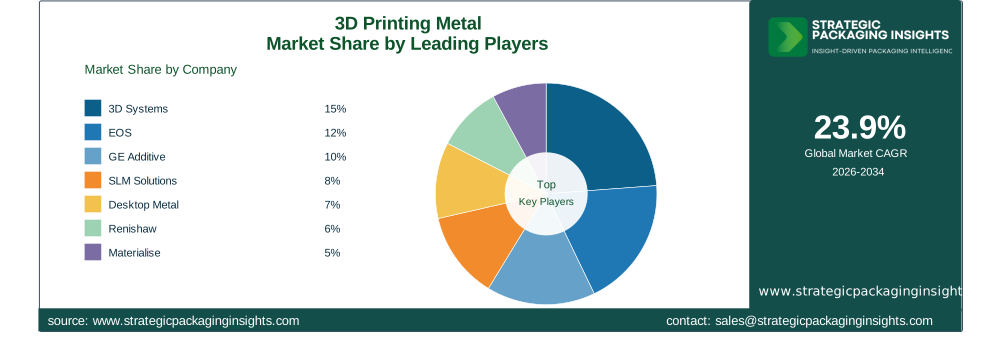
GE Additive is another major player in the 3D Printing Metal market, known for its advanced additive manufacturing technologies and strong focus on innovation. The company is committed to expanding its global footprint and has established strategic partnerships with leading aerospace and automotive manufacturers. SLM Solutions and Desktop Metal are also prominent players, recognized for their high-performance 3D printing systems and commitment to sustainability.
Renishaw and Materialise are key contributors to the market's growth, offering a wide range of 3D printing solutions that cater to various industries. These companies are known for their focus on quality and precision, which has earned them a strong reputation in the market. Stratasys and Velo3D are also significant players, with a focus on developing innovative technologies that address the evolving needs of their customers.
Markforged is another notable company in the 3D Printing Metal market, recognized for its advanced composite 3D printing solutions. The company is committed to pushing the boundaries of additive manufacturing and has established a strong presence in the market. These companies, along with others, are driving the market's growth and shaping its future through continuous innovation and strategic partnerships.
Key Highlights
- Market Size: The 3D Printing Metal market is projected to grow from USD 8.77 billion in 2025 to USD 60.38 billion by 2034.
- Growth Rate: The market is expected to grow at a CAGR of 23.9% during the forecast period.
- Material Innovation: Titanium and stainless steel are leading materials driving market growth.
- Technology Adoption: Powder Bed Fusion and Directed Energy Deposition are key technologies.
- Application Expansion: Aerospace parts and medical implants are major application areas.
- Regional Growth: Asia Pacific is expected to witness significant growth.
- Key Players: 3D Systems, EOS, GE Additive, and SLM Solutions are major market players.
3D Printing Metal Market Segments Insights

Material Type Analysis
The 3D Printing Metal market is segmented by material type, with titanium, stainless steel, aluminum, and nickel alloys being the primary materials driving growth. Titanium is particularly favored in the aerospace and medical sectors due to its high strength-to-weight ratio and biocompatibility. Companies like GE Additive and EOS are investing in the development of advanced titanium alloys to meet the increasing demand for lightweight and durable components. Stainless steel, on the other hand, is widely used in industrial applications due to its corrosion resistance and cost-effectiveness. The versatility of these materials is expanding the market's reach across various industries.
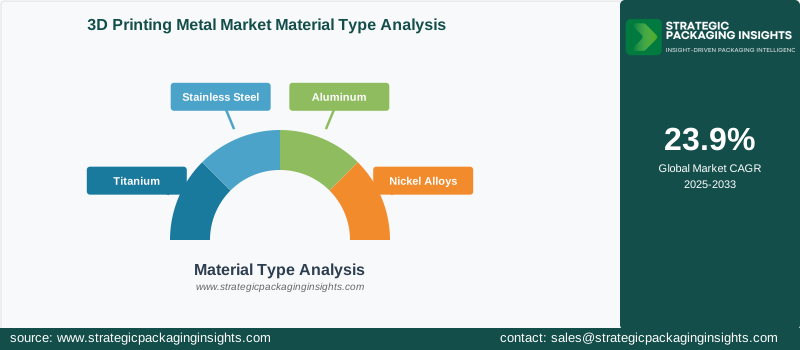
Aluminum and nickel alloys are also gaining traction in the 3D Printing Metal market, offering unique properties that cater to specific applications. Aluminum's lightweight nature and excellent thermal conductivity make it ideal for automotive and aerospace components, while nickel alloys are preferred for high-temperature applications in the energy and aerospace sectors. The continuous development of new alloys and material compositions is driving innovation in the market, enabling manufacturers to produce components with enhanced performance characteristics. This focus on material innovation is a key driver of the market's growth, as companies seek to differentiate themselves through advanced material solutions.
Technology Analysis
The 3D Printing Metal market is also segmented by technology, with Powder Bed Fusion, Directed Energy Deposition, and Binder Jetting being the primary technologies driving growth. Powder Bed Fusion is the most widely adopted technology, known for its ability to produce high-precision components with complex geometries. Companies like SLM Solutions and Renishaw are leading the development of advanced Powder Bed Fusion systems, which are widely used in the aerospace and medical sectors. Directed Energy Deposition, on the other hand, is favored for its ability to repair and add material to existing components, making it ideal for maintenance and repair applications.
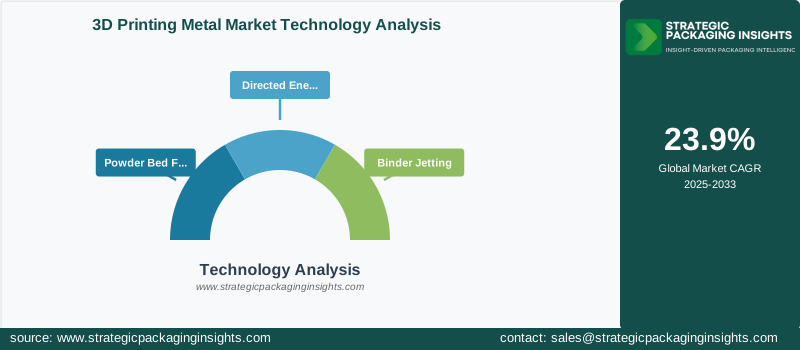
Binder Jetting is another emerging technology in the 3D Printing Metal market, offering the potential for high-speed production of metal components. This technology is gaining traction in the automotive and industrial sectors, where the demand for cost-effective and scalable manufacturing solutions is high. The continuous advancement of these technologies is driving the market's growth, as companies seek to leverage the unique capabilities of each technology to meet the evolving needs of their customers. The focus on technology innovation is a key driver of the market's expansion, as companies strive to enhance their production capabilities and maintain their competitive edge.
Application Analysis
The 3D Printing Metal market is segmented by application, with aerospace parts, medical implants, tooling, and automotive components being the primary areas of focus. Aerospace parts are a major application area, driven by the demand for lightweight and high-strength components that can withstand extreme conditions. Companies like 3D Systems and GE Additive are at the forefront of this market, leveraging advanced 3D printing technologies to produce complex geometries that are not feasible with traditional manufacturing methods. Medical implants are another significant application area, as 3D printing enables the production of customized implants that offer superior fit and performance.
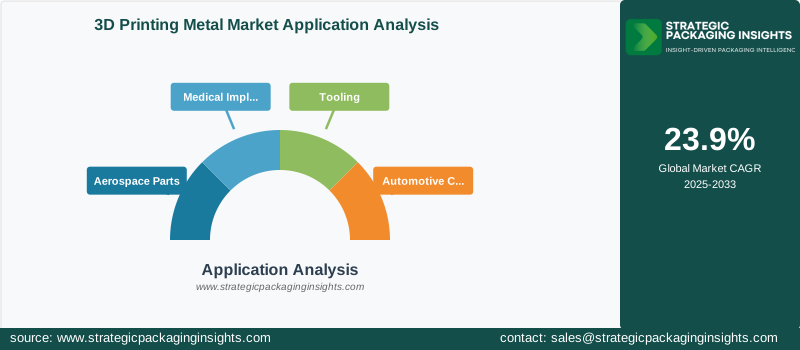
Tooling and automotive components are also key application areas in the 3D Printing Metal market, driven by the need for cost-effective and efficient manufacturing solutions. The ability to produce complex tooling geometries with minimal waste is a major advantage of 3D printing technologies, enabling manufacturers to reduce production costs and improve overall efficiency. The automotive sector is particularly interested in 3D printing for its potential to produce lightweight components that enhance fuel efficiency and reduce emissions. The continuous expansion of these application areas is driving the market's growth, as companies seek to capitalize on the unique capabilities of 3D printing technologies.
End Use Analysis
The 3D Printing Metal market is segmented by end use, with aerospace & defense, healthcare, automotive, and industrial sectors being the primary areas of focus. The aerospace & defense sector is a major driver of the market, as the demand for lightweight and high-performance components continues to rise. Companies like EOS and SLM Solutions are leading the development of advanced 3D printing solutions that cater to the unique needs of this sector. The healthcare sector is also a significant end-use market, driven by the increasing adoption of 3D printing technologies for the production of customized medical implants and devices.
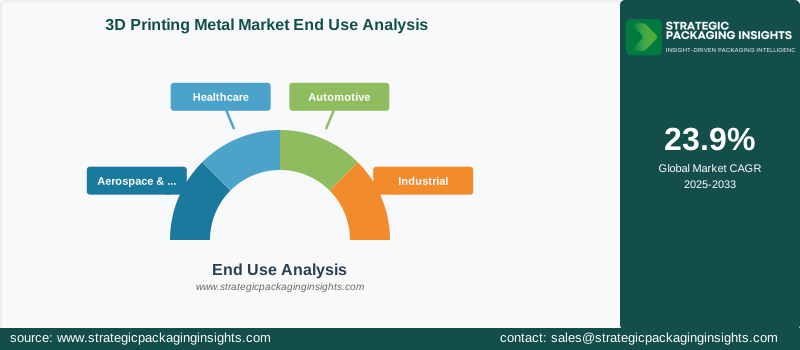
The automotive sector is another key end-use market, as manufacturers seek to leverage 3D printing technologies to produce lightweight components that enhance fuel efficiency and reduce emissions. The industrial sector is also embracing 3D printing for its potential to produce complex geometries with minimal waste, enabling manufacturers to reduce production costs and improve overall efficiency. The continuous expansion of these end-use markets is driving the market's growth, as companies seek to capitalize on the unique capabilities of 3D printing technologies to meet the evolving needs of their customers.
3D Printing Metal Market Segments
The 3D Printing Metal market has been segmented on the basis ofMaterial Type
- Titanium
- Stainless Steel
- Aluminum
- Nickel Alloys
Technology
- Powder Bed Fusion
- Directed Energy Deposition
- Binder Jetting
Application
- Aerospace Parts
- Medical Implants
- Tooling
- Automotive Components
End Use
- Aerospace & Defense
- Healthcare
- Automotive
- Industrial
Region
- Asia Pacific
- North America
- Latin America
- Europe
- Middle East & Africa




