


3-piece Can For Food And Beverage Market Outlook
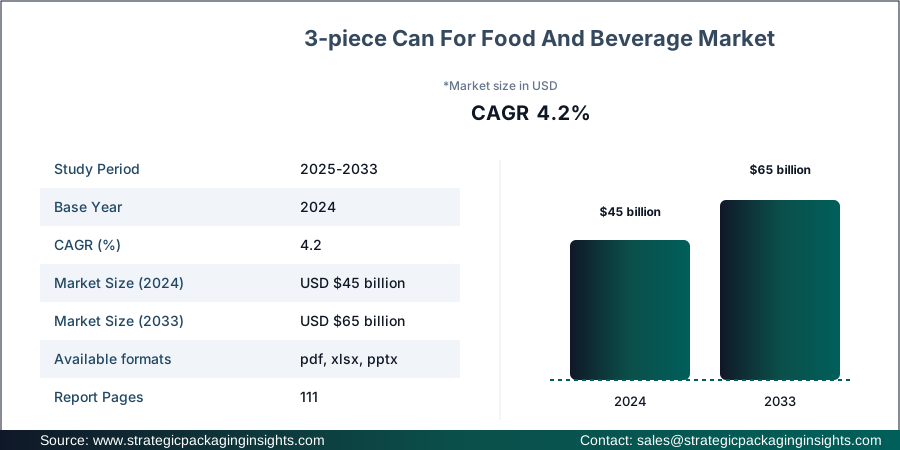
The 3-piece can for food and beverage market was valued at $45 billion in 2024 and is projected to reach $65 billion by 2033, growing at a CAGR of 4.2% during the forecast period 2025-2033. This market is driven by the increasing demand for sustainable and recyclable packaging solutions, as consumers and manufacturers alike are becoming more environmentally conscious. The versatility and durability of 3-piece cans make them an attractive option for packaging a wide range of food and beverage products, from soups and vegetables to carbonated drinks and juices. Additionally, the ability of these cans to preserve the freshness and quality of the contents for extended periods is a significant factor contributing to their popularity. The market is also benefiting from advancements in can manufacturing technologies, which have improved production efficiency and reduced costs, further driving market growth.
Report Scope
| Attributes | Details |
| Report Title | 3-piece Can For Food And Beverage Market Size, Future Growth and Forecast 2033 |
| Material | Aluminum, Steel, Tin |
| Application | Food, Beverage |
| End-User | Household, Commercial |
| Region | Asia Pacific, North America, Latin America, Europe, Middle East & Africa |
| Base Year | 2024 |
| Historic Period | 2017-2023 |
| Forecast Period | 2025-2033 |
| Number of Pages | 111 |
| Customization Available | Yes* |
Opportunities & Threats
One of the primary opportunities in the 3-piece can market is the growing trend towards eco-friendly packaging. As consumers become more aware of the environmental impact of packaging waste, there is a significant push towards using materials that are recyclable and have a lower carbon footprint. 3-piece cans, typically made from aluminum or steel, are highly recyclable, making them an attractive option for companies looking to enhance their sustainability credentials. Additionally, the rise of e-commerce and the increasing demand for packaged food and beverages in emerging markets present lucrative opportunities for market expansion. Companies that can innovate in terms of design and functionality, such as incorporating easy-open ends or resealable features, are likely to gain a competitive edge.
Another opportunity lies in the customization and branding potential of 3-piece cans. With advancements in printing technology, manufacturers can offer high-quality, vibrant graphics on cans, allowing brands to differentiate themselves on the shelves. This is particularly important in the beverage sector, where packaging plays a crucial role in consumer purchasing decisions. The ability to offer limited edition designs or personalized cans can also drive consumer engagement and brand loyalty. Furthermore, the increasing focus on health and wellness is driving demand for canned products that are perceived as fresh and natural, providing an opportunity for brands to market their products as such.
However, the market faces threats from alternative packaging solutions, such as flexible pouches and PET bottles, which are gaining popularity due to their lightweight and cost-effective nature. These alternatives often offer convenience features that are appealing to consumers, such as resealability and portability. Additionally, fluctuations in raw material prices, particularly for metals like aluminum and steel, can impact production costs and profit margins for manufacturers. Regulatory challenges, such as stringent food safety standards and environmental regulations, also pose a threat to market growth, as companies must invest in compliance and adapt their processes accordingly.
Drivers & Challenges
The primary driver of the 3-piece can market is the increasing demand for sustainable packaging solutions. As environmental concerns continue to rise, both consumers and manufacturers are seeking packaging options that minimize waste and reduce carbon emissions. 3-piece cans, being highly recyclable, align well with these sustainability goals. Additionally, the durability and protective qualities of metal cans make them ideal for preserving the quality and freshness of food and beverages, which is a significant driver of demand. The growing popularity of ready-to-eat meals and convenience foods is also boosting the demand for canned products, as they offer a long shelf life and are easy to store and transport.
Technological advancements in can manufacturing are another key driver of market growth. Innovations in production processes have led to increased efficiency and reduced costs, making 3-piece cans more competitive with alternative packaging solutions. For example, improvements in can coating technologies have enhanced the corrosion resistance and shelf life of canned products, while advancements in printing techniques have allowed for more vibrant and detailed graphics, enhancing the visual appeal of cans. These technological developments are enabling manufacturers to offer a wider range of products and cater to diverse consumer preferences.
Despite these drivers, the market faces several challenges. One of the main challenges is the competition from alternative packaging materials, such as plastic and glass, which offer different benefits and are preferred by some consumers. Additionally, the high energy consumption associated with metal can production is a concern, as it contributes to greenhouse gas emissions and increases production costs. Manufacturers must also navigate complex regulatory environments, as food safety and environmental regulations vary across regions and can impact production processes and costs. To overcome these challenges, companies must invest in research and development to innovate and improve the sustainability and efficiency of their products.
Market Share Analysis
The competitive landscape of the 3-piece can for food and beverage market is characterized by the presence of several key players who dominate the market with their extensive product portfolios and strong distribution networks. These companies are continuously investing in research and development to innovate and improve their product offerings, as well as expanding their production capacities to meet the growing demand. The market is highly competitive, with companies competing on factors such as product quality, price, and sustainability. Strategic partnerships and collaborations are common in this market, as companies seek to leverage each other's strengths and expand their market reach.
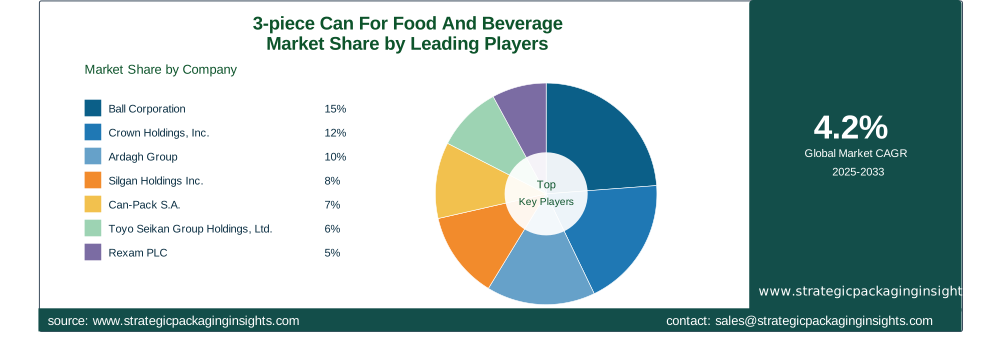
Major companies in the market include Ball Corporation, Crown Holdings, Inc., and Ardagh Group, who are among the leading manufacturers of 3-piece cans. Ball Corporation, for example, is known for its innovative packaging solutions and commitment to sustainability, with a focus on reducing the environmental impact of its products. Crown Holdings, Inc. is another key player, offering a wide range of metal packaging solutions for the food and beverage industry, with a strong emphasis on quality and customer service. Ardagh Group is also a significant player, with a diverse product portfolio and a strong presence in both the food and beverage sectors.
Other notable companies in the market include Silgan Holdings Inc., Can-Pack S.A., and Toyo Seikan Group Holdings, Ltd. Silgan Holdings Inc. is a leading supplier of metal containers for food products, with a focus on innovation and sustainability. Can-Pack S.A. is known for its high-quality packaging solutions and commitment to environmental responsibility, while Toyo Seikan Group Holdings, Ltd. offers a wide range of packaging solutions, including metal cans, with a focus on quality and customer satisfaction. These companies are continuously investing in research and development to enhance their product offerings and maintain their competitive edge in the market.
In addition to these major players, there are several regional and local companies that contribute to the market's competitiveness. These companies often focus on niche markets or specific regions, offering customized solutions to meet the unique needs of their customers. The presence of these smaller players adds to the market's diversity and dynamism, as they often bring innovative products and solutions to the market. Overall, the 3-piece can for food and beverage market is characterized by intense competition, with companies striving to differentiate themselves through innovation, quality, and sustainability.
Key Highlights
- The 3-piece can market is projected to grow at a CAGR of 4.2% from 2025 to 2033.
- Increasing demand for sustainable and recyclable packaging solutions is driving market growth.
- Technological advancements in can manufacturing are enhancing production efficiency and reducing costs.
- Customization and branding potential of 3-piece cans offer significant opportunities for market players.
- Competition from alternative packaging solutions, such as flexible pouches and PET bottles, poses a threat to market growth.
- Fluctuations in raw material prices, particularly for metals like aluminum and steel, can impact production costs.
- Regulatory challenges, such as stringent food safety standards and environmental regulations, must be navigated by market players.
Top Countries Insights
In the 3-piece can for food and beverage market, the United States is a leading player, with a market size of $12 billion and a CAGR of 3%. The country's strong demand for canned food and beverages, driven by convenience and long shelf life, is a significant growth driver. Additionally, the focus on sustainability and recycling initiatives is boosting the demand for metal cans. However, the market faces challenges from alternative packaging solutions and regulatory requirements.
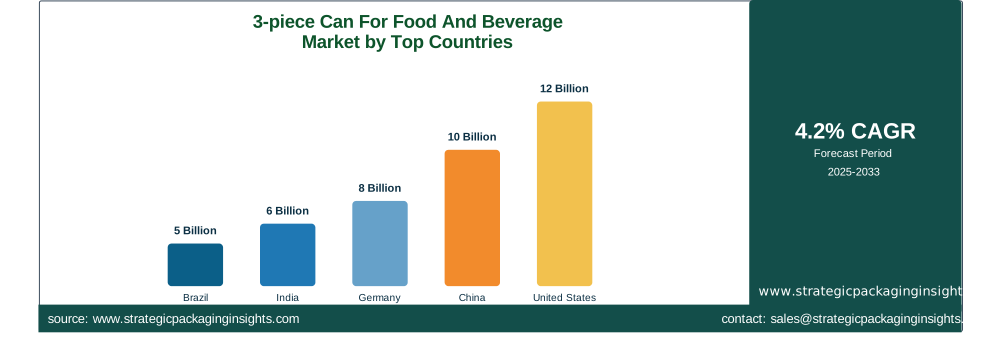
China is another key market, with a market size of $10 billion and a CAGR of 5%. The country's growing middle class and increasing demand for packaged food and beverages are driving market growth. Additionally, government initiatives to promote sustainable packaging solutions are supporting the demand for 3-piece cans. However, the market faces challenges from fluctuating raw material prices and competition from alternative packaging solutions.
Germany is a significant player in the European market, with a market size of $8 billion and a CAGR of 4%. The country's strong focus on sustainability and recycling is driving the demand for metal cans. Additionally, the growing demand for convenience foods and beverages is supporting market growth. However, the market faces challenges from stringent regulatory requirements and competition from alternative packaging solutions.
India is an emerging market, with a market size of $6 billion and a CAGR of 6%. The country's growing population and increasing demand for packaged food and beverages are driving market growth. Additionally, government initiatives to promote sustainable packaging solutions are supporting the demand for 3-piece cans. However, the market faces challenges from fluctuating raw material prices and competition from alternative packaging solutions.
Brazil is a key market in Latin America, with a market size of $5 billion and a CAGR of 4%. The country's growing demand for convenience foods and beverages is driving market growth. Additionally, the focus on sustainability and recycling initiatives is boosting the demand for metal cans. However, the market faces challenges from alternative packaging solutions and regulatory requirements.
3-piece Can For Food And Beverage Market Segments Insights

Material Analysis
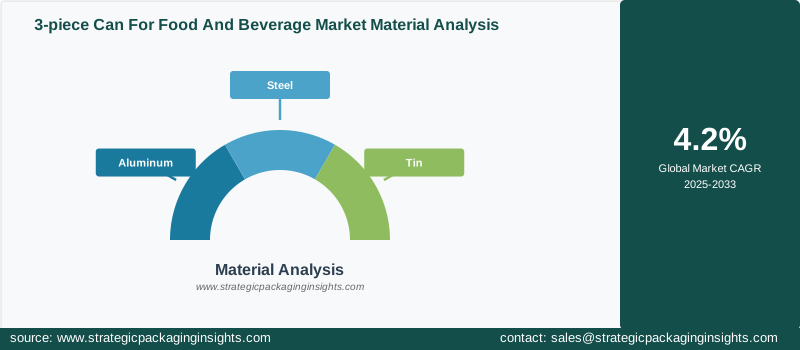
The material segment of the 3-piece can market is primarily dominated by aluminum, steel, and tin. Aluminum is favored for its lightweight properties and excellent recyclability, making it a popular choice for beverage cans. The demand for aluminum cans is driven by the increasing focus on sustainability and the need for lightweight packaging solutions that reduce transportation costs and carbon emissions. Steel, on the other hand, is preferred for food cans due to its strength and durability, which provide excellent protection for the contents. The use of tin as a coating material enhances the corrosion resistance of steel cans, ensuring the quality and safety of the packaged food.
In recent years, there has been a shift towards using more sustainable materials in can manufacturing, with companies exploring alternatives to traditional metals. This trend is driven by the growing demand for eco-friendly packaging solutions and the need to reduce the environmental impact of packaging waste. As a result, manufacturers are investing in research and development to explore new materials and coatings that offer improved sustainability and performance. The material segment is expected to continue evolving as companies seek to balance the need for durability and protection with the demand for sustainability.
Application Analysis
The application segment of the 3-piece can market is divided into food and beverage categories. The food segment includes canned vegetables, fruits, soups, and ready-to-eat meals, which are popular due to their convenience and long shelf life. The demand for canned food is driven by the increasing preference for convenience foods and the need for long-lasting, shelf-stable products. The beverage segment includes carbonated drinks, juices, and alcoholic beverages, where cans are favored for their ability to preserve the freshness and quality of the contents. The demand for canned beverages is driven by the growing popularity of on-the-go consumption and the need for lightweight, portable packaging solutions.
In both the food and beverage segments, there is a growing trend towards premiumization, with consumers seeking high-quality, natural, and organic products. This trend is driving demand for innovative packaging solutions that enhance the perceived value of the products. Additionally, the increasing focus on health and wellness is influencing consumer preferences, with a growing demand for products that are perceived as fresh and natural. As a result, manufacturers are investing in new packaging designs and technologies to meet these evolving consumer needs and preferences.
End-User Analysis
The end-user segment of the 3-piece can market is divided into household and commercial categories. The household segment includes individual consumers who purchase canned food and beverages for personal consumption. The demand for canned products in this segment is driven by the need for convenience and long shelf life, as well as the increasing focus on sustainability and recycling. The commercial segment includes restaurants, hotels, and catering services, where canned products are used for their convenience and cost-effectiveness. The demand for canned products in this segment is driven by the need for consistent quality and ease of storage and transportation.
In both the household and commercial segments, there is a growing focus on sustainability and environmental responsibility, with consumers and businesses alike seeking packaging solutions that minimize waste and reduce carbon emissions. This trend is driving demand for recyclable and eco-friendly packaging solutions, such as 3-piece cans. Additionally, the increasing focus on health and wellness is influencing consumer preferences, with a growing demand for products that are perceived as fresh and natural. As a result, manufacturers are investing in new packaging designs and technologies to meet these evolving consumer needs and preferences.
Region Analysis
The regional segment of the 3-piece can market is divided into Asia Pacific, North America, Latin America, Europe, and the Middle East & Africa. The Asia Pacific region is the largest market for 3-piece cans, driven by the growing demand for packaged food and beverages in countries like China and India. The region's large population and increasing disposable income are significant growth drivers, as consumers seek convenient and affordable packaging solutions. Additionally, government initiatives to promote sustainable packaging solutions are supporting the demand for 3-piece cans in the region.
North America is another key market, with a strong demand for canned food and beverages driven by convenience and long shelf life. The region's focus on sustainability and recycling initiatives is boosting the demand for metal cans, as consumers and manufacturers alike seek packaging solutions that minimize waste and reduce carbon emissions. In Europe, the demand for 3-piece cans is driven by the region's strong focus on sustainability and recycling, as well as the growing demand for convenience foods and beverages. The market faces challenges from stringent regulatory requirements and competition from alternative packaging solutions.
3-piece Can For Food And Beverage Market Segments
The 3-piece Can For Food And Beverage market has been segmented on the basis ofMaterial
- Aluminum
- Steel
- Tin
Application
- Food
- Beverage
End-User
- Household
- Commercial
Region
- Asia Pacific
- North America
- Latin America
- Europe
- Middle East & Africa




