


BOPP Films Market Outlook
The BOPP Films market was valued at $32.92 billion in 2025 and is projected to reach $51.94 billion by 2034, growing at a CAGR of 5.2% during the forecast period 2026-2034. This growth is driven by the increasing demand for flexible packaging solutions across various industries, including food and beverage, personal care, and industrial applications. BOPP films are favored for their excellent clarity, strength, and barrier properties, making them ideal for packaging applications that require durability and protection. The market is also benefiting from technological advancements in film production, which enhance the performance characteristics of BOPP films, further boosting their adoption in diverse end-use sectors.
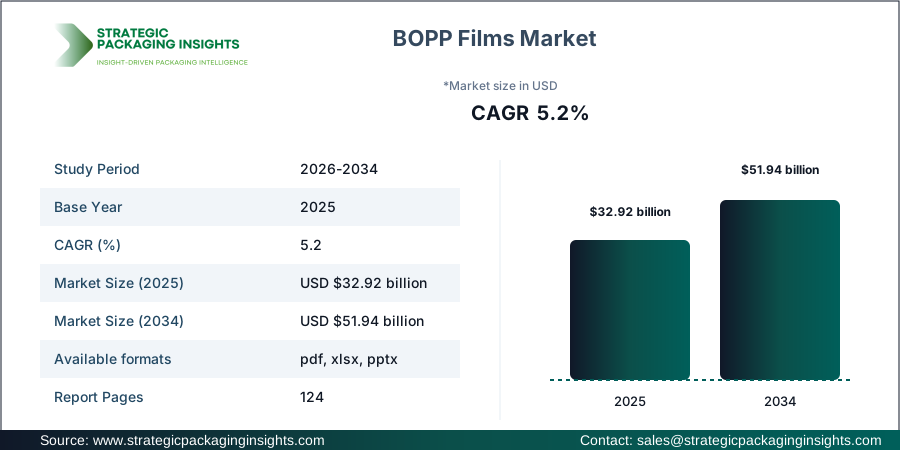
Despite the promising growth prospects, the BOPP Films market faces certain challenges that could restrain its expansion. Regulatory restrictions related to plastic usage and environmental concerns are significant hurdles that manufacturers must navigate. However, the market holds substantial growth potential, particularly with the increasing focus on sustainable packaging solutions. Innovations in biodegradable and recyclable BOPP films are expected to open new avenues for market players, aligning with the global shift towards eco-friendly packaging materials. Additionally, the rising demand for packaged food products and the expansion of the retail sector in emerging economies present lucrative opportunities for market growth.
Report Scope
| Attributes | Details |
| Report Title | BOPP Films Market Size, Future Growth and Forecast 2034 |
| Product Type | Plain BOPP Film, Metallized BOPP Film, Matte BOPP Film |
| Thickness | Below 15 Micron, 15–30 Micron, Above 30 Micron |
| Application | Food Packaging, Labels, Tapes, Lamination |
| End Use | Food & Beverage, Personal Care, Industrial, Retail |
| Region | Asia Pacific, North America, Latin America, Europe, Middle East & Africa |
| Base Year | 2025 |
| Historic Period | 2018-2024 |
| Forecast Period | 2026-2034 |
| Number of Pages | 124 |
| Customization Available | Yes* |
Opportunities & Threats
The BOPP Films market is poised for significant opportunities, primarily driven by the burgeoning demand for sustainable packaging solutions. As consumers and regulatory bodies increasingly emphasize environmental sustainability, the development of biodegradable and recyclable BOPP films presents a lucrative opportunity for manufacturers. Companies investing in research and development to create eco-friendly alternatives are likely to gain a competitive edge, catering to the growing demand for green packaging solutions. Furthermore, the expansion of the e-commerce sector is boosting the demand for flexible packaging materials, as online retailers seek lightweight, durable, and cost-effective packaging solutions to enhance product protection during transit.
Another opportunity lies in the growing food and beverage industry, which is a major consumer of BOPP films. The increasing consumption of packaged food products, driven by changing lifestyles and urbanization, is propelling the demand for high-quality packaging materials. BOPP films, with their excellent barrier properties and printability, are ideal for food packaging applications, ensuring product freshness and extending shelf life. Additionally, the rising trend of ready-to-eat meals and convenience foods is further augmenting the demand for BOPP films, as manufacturers seek packaging solutions that offer both functionality and aesthetic appeal.
However, the BOPP Films market is not without its threats. The stringent regulations on plastic usage and the growing environmental concerns pose significant challenges to market growth. Governments worldwide are implementing policies to reduce plastic waste, which could impact the demand for traditional BOPP films. Manufacturers are under pressure to innovate and develop sustainable alternatives to comply with these regulations. Moreover, the volatility in raw material prices, particularly polypropylene, can affect the profitability of BOPP film manufacturers, as fluctuations in costs can lead to pricing pressures and reduced margins.
Drivers & Challenges
The BOPP Films market is driven by several key factors, including the increasing demand for flexible packaging solutions across various industries. The food and beverage sector, in particular, is a major driver, as BOPP films offer excellent barrier properties, ensuring product freshness and extending shelf life. The growing consumer preference for packaged and convenience foods is further boosting the demand for BOPP films. Additionally, the expansion of the e-commerce sector is driving the need for lightweight, durable, and cost-effective packaging materials, as online retailers seek to enhance product protection during transit. Technological advancements in film production are also contributing to market growth, as manufacturers develop innovative BOPP films with enhanced performance characteristics.
Another significant driver is the increasing focus on sustainable packaging solutions. As environmental concerns and regulatory pressures mount, manufacturers are investing in research and development to create biodegradable and recyclable BOPP films. These eco-friendly alternatives are gaining traction among consumers and businesses alike, aligning with the global shift towards sustainable packaging materials. The development of innovative BOPP films that meet environmental standards while maintaining functionality and aesthetic appeal is expected to drive market growth in the coming years.
Despite these drivers, the BOPP Films market faces several challenges that could hinder its growth. One of the primary challenges is the stringent regulations on plastic usage, as governments worldwide implement policies to reduce plastic waste. Manufacturers must navigate these regulatory hurdles and develop sustainable alternatives to comply with environmental standards. Additionally, the volatility in raw material prices, particularly polypropylene, poses a challenge to market players. Fluctuations in raw material costs can lead to pricing pressures and reduced profit margins, affecting the overall profitability of BOPP film manufacturers. Companies must adopt effective cost management strategies to mitigate the impact of raw material price volatility.
Market Share Analysis
The BOPP Films market is characterized by a competitive landscape with several key players vying for market share. Taghleef Industries is a prominent player, known for its extensive product portfolio and strong global presence. The company focuses on innovation and sustainability, offering a range of BOPP films that cater to diverse industry needs. Cosmo First is another major player, recognized for its advanced manufacturing capabilities and commitment to quality. The company has a significant market share, driven by its focus on customer-centric solutions and continuous product development.
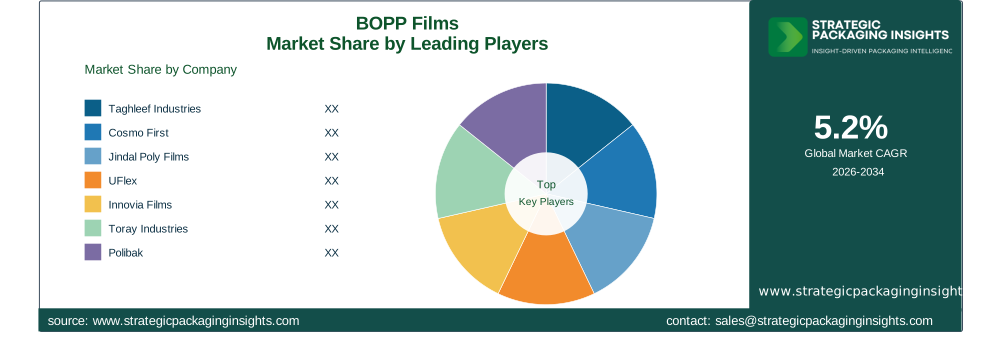
Jindal Poly Films is a leading player in the BOPP Films market, with a strong emphasis on research and development. The company invests heavily in technology to enhance its product offerings and maintain a competitive edge. UFlex is also a key player, known for its innovative packaging solutions and global reach. The company's focus on sustainability and eco-friendly products has helped it capture a significant share of the market. Innovia Films, with its expertise in specialty films, is another important player, offering high-performance BOPP films for various applications.
Toray Industries is a notable player in the BOPP Films market, leveraging its advanced technology and extensive research capabilities to deliver high-quality products. The company has a strong presence in the Asia Pacific region, contributing to its market share. Polibak, Oben Group, and Treofan are other key players, each with a unique value proposition and a focus on innovation. These companies are actively expanding their product portfolios and investing in sustainable solutions to meet the evolving demands of the market.
SRF Limited is a significant player in the BOPP Films market, known for its diverse product range and commitment to quality. The company focuses on customer satisfaction and continuous improvement, which has helped it maintain a strong market position. The competitive landscape of the BOPP Films market is dynamic, with companies striving to differentiate themselves through innovation, sustainability, and customer-centric solutions. As the market continues to evolve, players are expected to focus on strategic partnerships, mergers, and acquisitions to strengthen their market presence and expand their product offerings.
Key Highlights
- The BOPP Films market is projected to grow from $32.92 billion in 2025 to $51.94 billion by 2034, at a CAGR of 5.2%.
- Increasing demand for flexible packaging solutions is a major driver of market growth.
- Technological advancements in film production are enhancing the performance characteristics of BOPP films.
- Regulatory restrictions on plastic usage pose a challenge to market growth.
- Innovations in biodegradable and recyclable BOPP films present significant growth opportunities.
- The food and beverage industry is a major consumer of BOPP films, driving demand.
- Volatility in raw material prices, particularly polypropylene, can affect market profitability.
- The expansion of the e-commerce sector is boosting the demand for flexible packaging materials.
- Key players are focusing on sustainability and eco-friendly products to gain a competitive edge.
- Strategic partnerships, mergers, and acquisitions are expected to shape the competitive landscape.
Top Countries Insights
In the BOPP Films market, China stands out as a leading player, with a market size of approximately $10.5 billion and a CAGR of 7%. The country's robust manufacturing sector and increasing demand for packaged food products are key growth drivers. Government initiatives promoting sustainable packaging solutions further bolster market expansion. However, environmental regulations and the need for innovation in eco-friendly films present challenges for manufacturers.
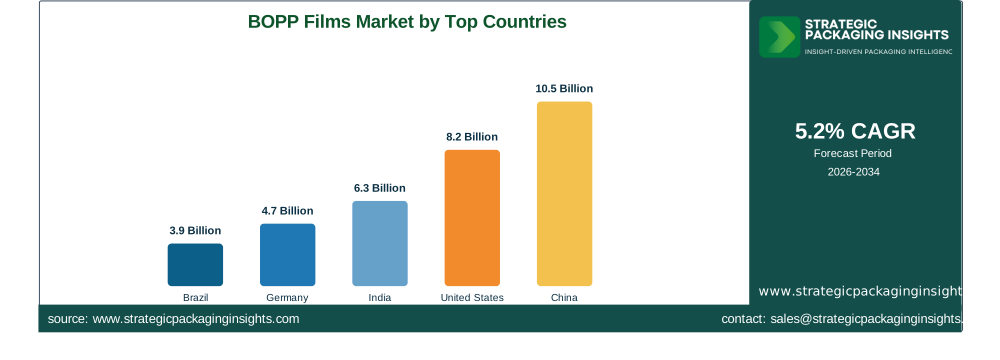
The United States is another significant market, valued at around $8.2 billion, with a CAGR of 5%. The growing e-commerce sector and consumer preference for convenience foods drive demand for BOPP films. The focus on sustainability and regulatory compliance is pushing manufacturers to develop innovative, eco-friendly packaging solutions. However, fluctuations in raw material prices pose a challenge to market growth.
India's BOPP Films market is experiencing rapid growth, with a market size of $6.3 billion and a CAGR of 8%. The expanding food and beverage industry and increasing urbanization are key growth drivers. Government policies supporting the packaging sector and investments in infrastructure development further enhance market prospects. However, the market faces challenges related to environmental regulations and the need for sustainable packaging solutions.
Germany, with a market size of $4.7 billion and a CAGR of 4%, is a key player in the European BOPP Films market. The country's strong industrial base and focus on innovation drive demand for high-quality packaging materials. Regulatory pressures and the emphasis on sustainability are encouraging manufacturers to develop eco-friendly BOPP films. However, the market faces challenges related to raw material price volatility and competition from alternative packaging solutions.
Brazil's BOPP Films market, valued at $3.9 billion with a CAGR of 6%, is driven by the growing demand for packaged food products and the expansion of the retail sector. Government initiatives promoting sustainable packaging solutions and investments in infrastructure development support market growth. However, economic fluctuations and regulatory challenges pose risks to market expansion.
BOPP Films Market Segments Insights

Product Type Analysis
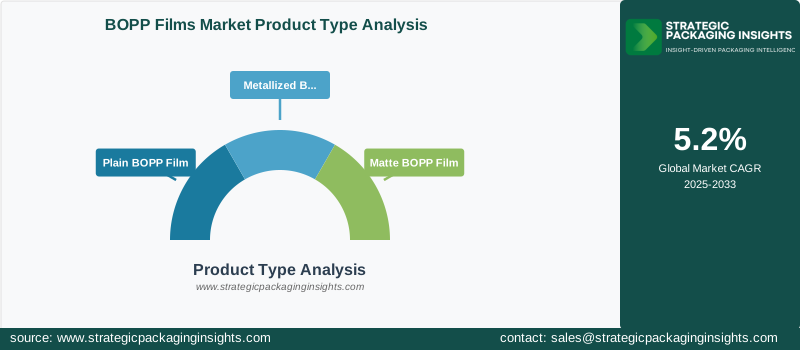
The BOPP Films market is segmented by product type into Plain BOPP Film, Metallized BOPP Film, and Matte BOPP Film. Plain BOPP films are widely used due to their excellent clarity and printability, making them ideal for packaging applications that require high-quality graphics and branding. The demand for plain BOPP films is driven by the food and beverage industry, where they are used for packaging snacks, confectionery, and other food products. Metallized BOPP films, on the other hand, offer superior barrier properties, making them suitable for applications that require protection against moisture, oxygen, and light. These films are increasingly used in the packaging of perishable goods, as well as in the production of labels and decorative packaging. Matte BOPP films are gaining popularity due to their aesthetic appeal and ability to provide a premium look to packaged products. They are commonly used in the personal care and luxury goods sectors, where packaging plays a crucial role in product differentiation.
Thickness Analysis
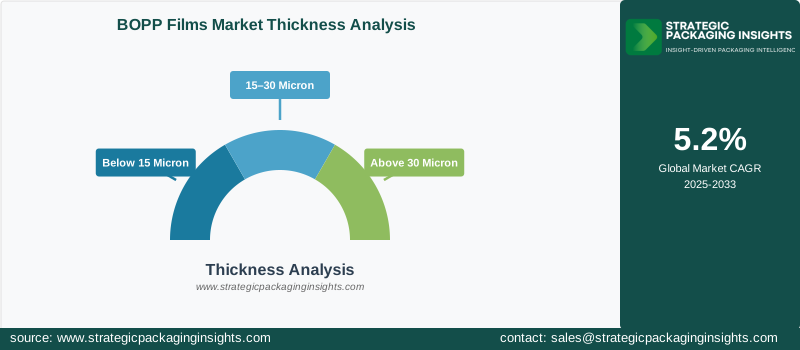
The BOPP Films market is also segmented by thickness into Below 15 Micron, 15-30 Micron, and Above 30 Micron. Films with a thickness below 15 microns are primarily used in applications where lightweight and cost-effective packaging solutions are required. These films are commonly used in the production of labels and tapes, where flexibility and ease of handling are essential. The 15-30 micron segment is the most widely used, as it offers a balance between strength and flexibility, making it suitable for a wide range of packaging applications, including food packaging and lamination. Films with a thickness above 30 microns are used in applications that require enhanced durability and protection, such as industrial packaging and heavy-duty bags. The demand for thicker films is driven by the need for robust packaging solutions that can withstand harsh environmental conditions and provide extended shelf life for packaged products.
Application Analysis
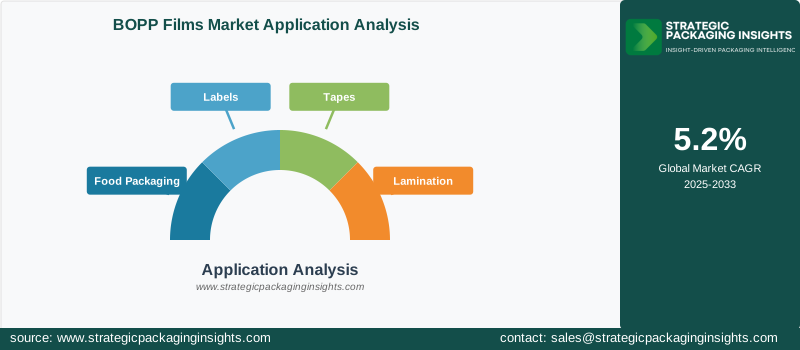
The BOPP Films market is segmented by application into Food Packaging, Labels, Tapes, and Lamination. Food packaging is the largest application segment, driven by the increasing demand for packaged food products and the need for high-quality packaging materials that ensure product freshness and safety. BOPP films are widely used in the packaging of snacks, confectionery, and ready-to-eat meals, where their excellent barrier properties and printability are highly valued. The labels segment is also experiencing significant growth, as BOPP films offer excellent adhesion and print quality, making them ideal for product labeling in various industries, including food and beverage, personal care, and pharmaceuticals. The tapes segment is driven by the demand for durable and reliable adhesive solutions, where BOPP films are used as backing materials for packaging tapes. Lamination is another key application, where BOPP films are used to enhance the appearance and durability of printed materials, such as book covers, brochures, and posters.
End Use Analysis
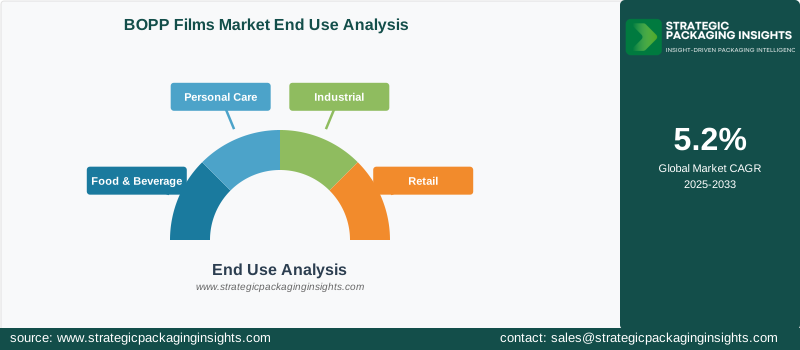
The BOPP Films market is segmented by end use into Food & Beverage, Personal Care, Industrial, and Retail. The food and beverage industry is the largest end-use segment, driven by the increasing consumption of packaged food products and the need for high-quality packaging materials that ensure product safety and freshness. BOPP films are widely used in the packaging of snacks, confectionery, and ready-to-eat meals, where their excellent barrier properties and printability are highly valued. The personal care segment is also experiencing significant growth, as BOPP films are used in the packaging of cosmetics, toiletries, and other personal care products, where packaging plays a crucial role in product differentiation and consumer appeal. The industrial segment is driven by the demand for durable and reliable packaging solutions, where BOPP films are used in the production of heavy-duty bags, industrial tapes, and other packaging materials that require enhanced strength and protection. The retail segment is also growing, as BOPP films are used in the production of shopping bags, gift wraps, and other retail packaging solutions that require high-quality graphics and branding.
BOPP Films Market Segments
The BOPP Films market has been segmented on the basis ofProduct Type
- Plain BOPP Film
- Metallized BOPP Film
- Matte BOPP Film
Thickness
- Below 15 Micron
- 15–30 Micron
- Above 30 Micron
Application
- Food Packaging
- Labels
- Tapes
- Lamination
End Use
- Food & Beverage
- Personal Care
- Industrial
- Retail
Region
- Asia Pacific
- North America
- Latin America
- Europe
- Middle East & Africa




