


Aluminum Containers Market Outlook
The Aluminum Containers market was valued at $7.24 billion in 2025 and is projected to reach $11.16 billion by 2034, growing at a CAGR of 4.90% during the forecast period 2026-2034. This growth is driven by the increasing demand for sustainable and recyclable packaging solutions across various industries, particularly in the food and beverage sector. Aluminum containers are favored for their lightweight, durability, and excellent barrier properties, which preserve the quality and freshness of the contents. The rising trend of takeout and delivery services, especially in urban areas, further fuels the demand for aluminum containers, as they provide a convenient and eco-friendly packaging option.
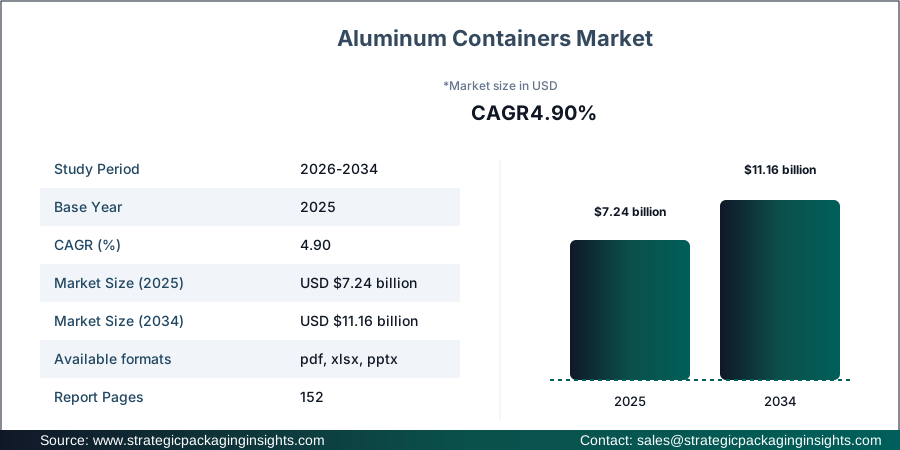
Despite the promising growth prospects, the aluminum containers market faces certain challenges. Regulatory restrictions on the use of aluminum due to environmental concerns and the high cost of raw materials can hinder market expansion. However, advancements in recycling technologies and the development of cost-effective production methods present significant growth opportunities. The market also benefits from the increasing consumer awareness regarding the environmental impact of packaging materials, driving the shift towards more sustainable options like aluminum containers. As a result, manufacturers are focusing on innovation and product development to meet the evolving consumer preferences and regulatory requirements.
Report Scope
| Attributes | Details |
| Report Title | Aluminum Containers Market Size, Future Growth and Forecast 2034 |
| Type | Round, Rectangular |
| Capacity | 250ml-1L |
| Application | Food Takeout, Baking |
| Region | Asia Pacific, North America, Latin America, Europe, Middle East & Africa |
| Base Year | 2025 |
| Historic Period | 2018-2024 |
| Forecast Period | 2026-2034 |
| Number of Pages | 152 |
| Customization Available | Yes* |
Opportunities & Threats
The aluminum containers market presents numerous opportunities, particularly in the realm of sustainability and environmental consciousness. As consumers become more aware of the environmental impact of packaging, there is a growing demand for recyclable and eco-friendly options. Aluminum containers, being 100% recyclable, fit perfectly into this trend, offering manufacturers a chance to capitalize on the increasing preference for sustainable packaging solutions. Additionally, the rise of e-commerce and food delivery services has created a surge in demand for convenient and durable packaging, further boosting the market for aluminum containers. Companies that can innovate and offer unique, sustainable packaging solutions are likely to gain a competitive edge in this evolving market landscape.
Another significant opportunity lies in the expansion of the food and beverage industry, particularly in emerging markets. As disposable incomes rise and consumer lifestyles change, there is an increasing demand for packaged and ready-to-eat foods, which in turn drives the need for effective packaging solutions like aluminum containers. The versatility of aluminum containers, which can be used for a wide range of applications from food takeout to baking, makes them an attractive option for manufacturers looking to cater to diverse consumer needs. Moreover, advancements in technology and manufacturing processes are enabling the production of more cost-effective and efficient aluminum containers, further enhancing their appeal in the market.
However, the market is not without its threats. One of the primary challenges is the fluctuating cost of raw materials, which can impact the profitability of manufacturers. Additionally, stringent regulations regarding the use of aluminum and its environmental impact can pose hurdles for market growth. Companies need to navigate these regulatory landscapes carefully and invest in sustainable practices to mitigate potential risks. Furthermore, the competition from alternative packaging materials, such as biodegradable plastics and paper-based solutions, presents a threat to the aluminum containers market. To remain competitive, manufacturers must focus on innovation and differentiation, offering unique value propositions to their customers.
Drivers & Challenges
The aluminum containers market is primarily driven by the increasing demand for sustainable packaging solutions. As environmental concerns continue to rise, consumers and businesses alike are seeking packaging options that minimize their ecological footprint. Aluminum containers, being fully recyclable and reusable, offer a compelling solution to this demand. Additionally, the lightweight nature of aluminum reduces transportation costs and energy consumption, further enhancing its appeal as a sustainable packaging material. The growing trend of urbanization and the rise of on-the-go lifestyles have also contributed to the increased demand for convenient and durable packaging solutions, driving the growth of the aluminum containers market.
Another key driver of the market is the expanding food and beverage industry. With the rise in disposable incomes and changing consumer preferences, there is a growing demand for packaged and ready-to-eat foods. Aluminum containers, with their excellent barrier properties and ability to preserve the freshness and quality of food, are increasingly being used in the food and beverage sector. The versatility of aluminum containers, which can be used for a wide range of applications from food takeout to baking, further enhances their appeal in the market. Moreover, advancements in manufacturing technologies are enabling the production of more cost-effective and efficient aluminum containers, driving their adoption across various industries.
Despite the positive growth drivers, the aluminum containers market faces several challenges. One of the primary challenges is the fluctuating cost of raw materials, which can impact the profitability of manufacturers. Additionally, stringent regulations regarding the use of aluminum and its environmental impact can pose hurdles for market growth. Companies need to navigate these regulatory landscapes carefully and invest in sustainable practices to mitigate potential risks. Furthermore, the competition from alternative packaging materials, such as biodegradable plastics and paper-based solutions, presents a threat to the aluminum containers market. To remain competitive, manufacturers must focus on innovation and differentiation, offering unique value propositions to their customers.
Market Share Analysis
The aluminum containers market is characterized by a competitive landscape with several key players vying for market share. Companies such as Reynolds Consumer Products, HandiFoil, ZF Fruitful, Sarten Ambalaj, Alupack-Honsel, Wyda, Eco-Products, Pactiv Evergreen, Berry Global, and Amcor are some of the prominent players in the market. These companies are focusing on innovation, product development, and strategic partnerships to strengthen their market position and expand their product offerings. The competitive landscape is further intensified by the presence of regional players who cater to specific markets and customer needs.
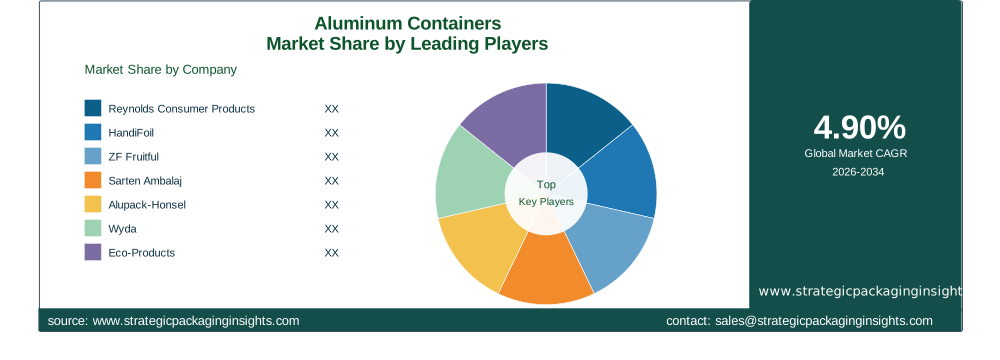
Reynolds Consumer Products is a leading player in the aluminum containers market, known for its wide range of high-quality and innovative packaging solutions. The company has a strong presence in the North American market and is continuously expanding its product portfolio to cater to the evolving consumer demands. HandiFoil, another key player, is recognized for its focus on sustainability and eco-friendly packaging solutions. The company is committed to reducing its environmental impact and offers a range of recyclable aluminum containers that meet the needs of environmentally conscious consumers.
ZF Fruitful and Sarten Ambalaj are prominent players in the European market, known for their extensive product offerings and strong distribution networks. These companies are focused on expanding their market presence through strategic partnerships and collaborations with key stakeholders in the industry. Alupack-Honsel and Wyda are also significant players in the market, offering a wide range of aluminum containers for various applications. These companies are investing in research and development to enhance their product offerings and meet the changing consumer preferences.
Eco-Products, Pactiv Evergreen, Berry Global, and Amcor are other notable players in the aluminum containers market. These companies are leveraging their strong brand presence and extensive distribution networks to capture a significant share of the market. They are focused on innovation and sustainability, offering a range of eco-friendly packaging solutions that cater to the growing demand for sustainable packaging options. The competitive landscape of the aluminum containers market is dynamic, with companies continuously striving to enhance their product offerings and expand their market presence.
Key Highlights
- The aluminum containers market is projected to grow from $7.24 billion in 2025 to $11.16 billion by 2034, at a CAGR of 4.90%.
- Increasing demand for sustainable and recyclable packaging solutions is driving market growth.
- The food and beverage industry is a major end-user of aluminum containers, contributing significantly to market demand.
- Advancements in recycling technologies and cost-effective production methods present growth opportunities.
- Fluctuating raw material costs and stringent regulations pose challenges to market growth.
- Key players in the market include Reynolds Consumer Products, HandiFoil, ZF Fruitful, and Sarten Ambalaj.
- Innovation and product development are critical strategies for companies to gain a competitive edge.
- The market is characterized by a competitive landscape with several key players vying for market share.
- Emerging markets offer significant growth potential for aluminum container manufacturers.
Top Countries Insights
In the aluminum containers market, the United States stands out as a key player, with a market size of approximately $2.5 billion and a CAGR of 5%. The country's robust food and beverage industry, coupled with the increasing demand for sustainable packaging solutions, drives the growth of the aluminum containers market. Government initiatives promoting recycling and sustainability further bolster market expansion. However, challenges such as fluctuating raw material costs and stringent regulations need to be addressed to sustain growth.
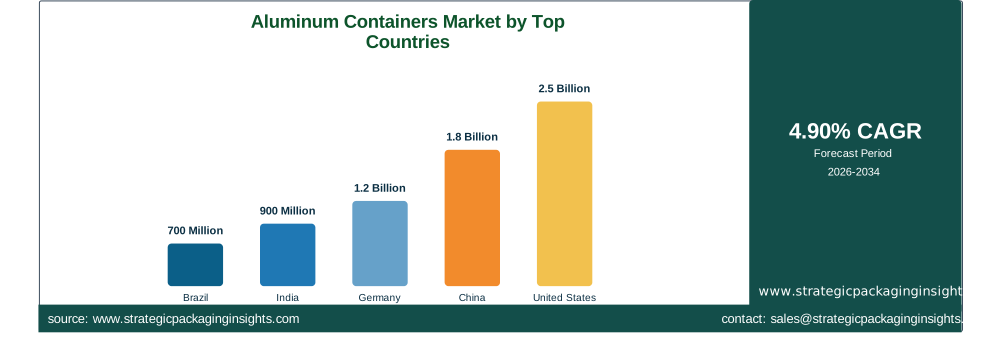
China is another significant market for aluminum containers, with a market size of around $1.8 billion and a CAGR of 6%. The country's rapid urbanization and growing middle class have led to an increased demand for packaged and ready-to-eat foods, driving the need for effective packaging solutions like aluminum containers. The Chinese government's focus on environmental sustainability and recycling initiatives further supports market growth. However, competition from alternative packaging materials poses a challenge to market expansion.
Germany, with a market size of approximately $1.2 billion and a CAGR of 4%, is a key player in the European aluminum containers market. The country's strong emphasis on sustainability and recycling, coupled with a well-established food and beverage industry, drives the demand for aluminum containers. However, regulatory restrictions and the high cost of raw materials present challenges to market growth. Companies need to focus on innovation and cost-effective production methods to remain competitive.
India, with a market size of around $900 million and a CAGR of 7%, offers significant growth potential for aluminum container manufacturers. The country's expanding food and beverage industry, driven by rising disposable incomes and changing consumer preferences, fuels the demand for aluminum containers. Government initiatives promoting sustainable packaging solutions further support market growth. However, challenges such as inadequate recycling infrastructure and competition from alternative materials need to be addressed.
Brazil, with a market size of approximately $700 million and a CAGR of 5%, is a key player in the Latin American aluminum containers market. The country's growing food and beverage industry, coupled with increasing consumer awareness regarding sustainable packaging, drives market growth. However, economic instability and regulatory challenges pose hurdles to market expansion. Companies need to focus on innovation and strategic partnerships to capture market opportunities.
Aluminum Containers Market Segments Insights

Type Analysis
The aluminum containers market is segmented by type into round and rectangular containers. Round containers are widely used in the food and beverage industry due to their versatility and ease of use. They are particularly popular for food takeout and delivery services, as they provide a convenient and secure packaging solution. The demand for round aluminum containers is driven by the increasing trend of on-the-go lifestyles and the growing popularity of food delivery services. Manufacturers are focusing on innovation and product development to enhance the functionality and appeal of round containers, catering to the evolving consumer preferences.
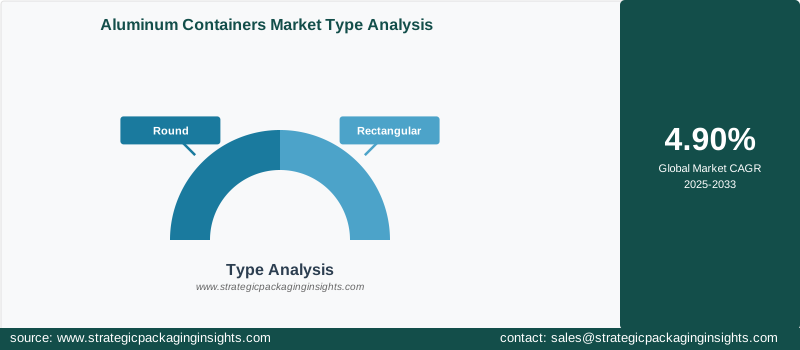
Rectangular aluminum containers, on the other hand, are favored for their space-efficient design and ability to accommodate a wide range of food products. They are commonly used in the baking industry, as they provide an ideal packaging solution for baked goods. The demand for rectangular containers is driven by the expanding bakery industry and the increasing consumer preference for packaged and ready-to-eat foods. Manufacturers are investing in advanced manufacturing technologies to produce high-quality and cost-effective rectangular containers, meeting the diverse needs of consumers and businesses alike.
Capacity Analysis
The aluminum containers market is segmented by capacity into containers ranging from 250ml to 1L. This segment caters to a wide range of applications, from food takeout to baking, offering consumers and businesses a variety of options to choose from. The demand for containers in this capacity range is driven by the increasing trend of portion control and the growing popularity of single-serve packaging solutions. Manufacturers are focusing on innovation and product development to offer a diverse range of container sizes, catering to the evolving consumer preferences and market demands.
Containers in the 250ml to 1L capacity range are particularly popular in the food and beverage industry, as they provide a convenient and cost-effective packaging solution for a wide range of products. The demand for these containers is driven by the increasing trend of on-the-go lifestyles and the growing popularity of food delivery services. Manufacturers are investing in advanced manufacturing technologies to produce high-quality and cost-effective containers in this capacity range, meeting the diverse needs of consumers and businesses alike.
Application Analysis
The aluminum containers market is segmented by application into food takeout and baking. The food takeout segment is a major driver of market growth, as the increasing trend of on-the-go lifestyles and the growing popularity of food delivery services drive the demand for convenient and durable packaging solutions. Aluminum containers are favored for their lightweight, durability, and excellent barrier properties, which preserve the quality and freshness of the contents. Manufacturers are focusing on innovation and product development to enhance the functionality and appeal of aluminum containers, catering to the evolving consumer preferences.
The baking segment is another significant driver of market growth, as the expanding bakery industry and the increasing consumer preference for packaged and ready-to-eat foods drive the demand for aluminum containers. Rectangular aluminum containers are particularly popular in the baking industry, as they provide an ideal packaging solution for baked goods. Manufacturers are investing in advanced manufacturing technologies to produce high-quality and cost-effective aluminum containers for the baking industry, meeting the diverse needs of consumers and businesses alike.
Aluminum Containers Market Segments
The Aluminum Containers market has been segmented on the basis ofType
- Round
- Rectangular
Capacity
- 250ml-1L
Application
- Food Takeout
- Baking
Region
- Asia Pacific
- North America
- Latin America
- Europe
- Middle East & Africa




