
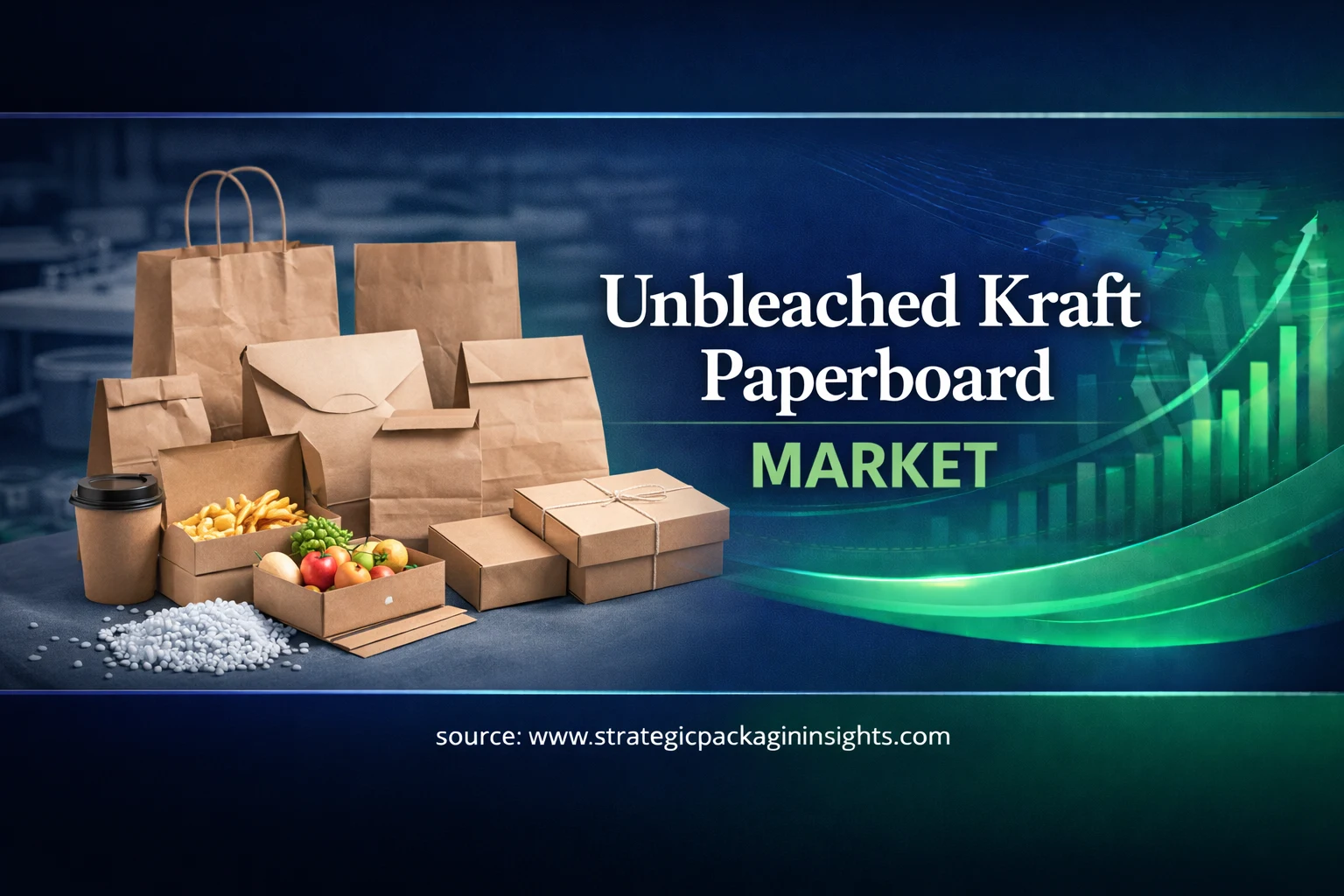
Explore the Unbleached Kraft Paperboard Market with a detailed analysis of its growth trajectory from 2017 to 2033, including market size, CAGR, segment landscape, and strategic insights.
Strategic Market Overview
The Unbleached Kraft Paperboard Market is poised for significant growth, driven by increasing demand for sustainable packaging solutions and the rising awareness of environmental conservation. As industries worldwide pivot towards eco-friendly materials, unbleached kraft paperboard emerges as a preferred choice due to its biodegradability and recyclability. This market is characterized by its diverse applications across various sectors, including food and beverage, healthcare, and personal care, which are increasingly adopting sustainable practices.
https://www.strategicpackaginginsights.com/report/unbleached-kraft-paperboard-market
From 2017 to 2033: Evolution of the Market
Between 2017 and 2023, the Unbleached Kraft Paperboard Market experienced steady growth, fueled by the global shift towards sustainable packaging solutions. The period saw increased investments in research and development to enhance the quality and performance of kraft paperboard. As we look towards the forecast period of 2025 to 2033, the market is expected to continue its upward trajectory, driven by technological advancements and the expansion of end-user industries. The growing emphasis on reducing carbon footprints and the implementation of stringent environmental regulations are anticipated to further propel market growth.
Interpreting Market Size & CAGR
In 2024, the Unbleached Kraft Paperboard Market was valued at $15.2 billion. By 2033, it is projected to reach $22.8 billion, reflecting a compound annual growth rate (CAGR) of 4.5%. This growth is indicative of the increasing adoption of unbleached kraft paperboard across various applications and regions. The market's expansion is supported by the rising demand for sustainable packaging solutions, particularly in the food and beverage and healthcare sectors, which are major contributors to the market's revenue.
Segment Landscape
| Segment | Details |
|---|---|
| Application | Packaging, Printing, Others |
| End-User | Food & Beverage, Healthcare, Personal Care, Industrial, Others |
| Material Type | Virgin, Recycled |
| Region | Asia Pacific, North America, Latin America, Europe, Middle East & Africa |
The segment landscape of the Unbleached Kraft Paperboard Market is diverse, with applications spanning packaging, printing, and other uses. The packaging segment dominates the market, driven by the increasing demand for sustainable packaging solutions in the food and beverage industry. The end-user segment is led by the food and beverage sector, followed by healthcare and personal care. The market is also segmented by material type, with both virgin and recycled kraft paperboard being widely used. Geographically, Asia Pacific is a key market, owing to the region's large consumer base and rapid industrialization.
Value Chain & Stakeholder Impact
The value chain of the Unbleached Kraft Paperboard Market involves multiple stakeholders, including raw material suppliers, manufacturers, distributors, and end-users. Each stakeholder plays a crucial role in ensuring the efficient production and distribution of kraft paperboard. Raw material suppliers provide the necessary inputs, while manufacturers focus on producing high-quality paperboard. Distributors ensure the product reaches end-users, who are increasingly demanding sustainable solutions. The market's growth is positively impacting stakeholders by creating new opportunities for innovation and collaboration.
Opportunities vs Constraints
The Unbleached Kraft Paperboard Market presents numerous opportunities, particularly in the development of innovative and sustainable packaging solutions. The growing consumer preference for eco-friendly products is driving demand, creating opportunities for manufacturers to expand their product offerings. However, the market also faces constraints, such as the high cost of raw materials and the need for continuous technological advancements to improve product quality. Additionally, regulatory challenges related to environmental standards can pose hurdles for market players.
SWOT Analysis
| Strengths | Weaknesses | Opportunities | Threats |
|---|---|---|---|
| Strong demand for sustainable packaging | High production costs | Expansion in emerging markets | Regulatory challenges |
| Wide application range | Limited raw material availability | Technological advancements | Intense competition |
The SWOT analysis of the Unbleached Kraft Paperboard Market highlights its strengths, such as the strong demand for sustainable packaging and a wide range of applications. However, weaknesses like high production costs and limited raw material availability pose challenges. Opportunities exist in expanding into emerging markets and leveraging technological advancements. Threats include regulatory challenges and intense competition from alternative materials.
Technology, Regulation & Sustainability Impact
Technological advancements are playing a pivotal role in the Unbleached Kraft Paperboard Market, with innovations aimed at enhancing product quality and performance. The development of advanced manufacturing processes and the use of sustainable raw materials are key trends. Regulatory frameworks focused on environmental conservation are driving the adoption of unbleached kraft paperboard, as companies strive to comply with stringent standards. Sustainability is at the core of market growth, with stakeholders increasingly prioritizing eco-friendly practices.
Strategic Outlook to 2033
Looking ahead to 2033, the Unbleached Kraft Paperboard Market is expected to continue its growth trajectory, driven by the increasing demand for sustainable solutions across various industries. Market players are likely to focus on expanding their product portfolios and enhancing their production capabilities to meet the rising demand. Strategic partnerships and collaborations will be crucial in navigating the competitive landscape and capitalizing on emerging opportunities. As sustainability remains a key priority, the market is poised for robust growth, with significant potential for innovation and expansion.