
The Supply Chain Traceable Packaging market was valued at $12.5 billion in 2024 and is projected to reach $25.8 billion by 2033, growing at a CAGR of 8.2% during the forecast period 2025–2033.
Here’s the thing. Packaging is no longer just about protection or shelf appeal. It has quietly become a data layer for global supply chains. The Supply Chain Traceable Packaging Market sits right at that intersection where physical goods, digital intelligence, and regulatory pressure collide. And the numbers tell a clear story.
Valued at $12.5 billion in 2024, the market is projected to reach $25.8 billion by 2033, growing at a CAGR of 8.2% through the 2025–2033 period. That’s not hype-driven growth. It’s necessity-driven growth.
Let’s break down what’s really happening.
Why Traceability Is No Longer Optional
Global supply chains are more fragmented than ever. Products move across borders, vendors, contract manufacturers, distributors, and last-mile delivery partners. At every handoff, risk creeps in. Counterfeiting. Spoilage. Diversion. Compliance gaps.
Traceable packaging exists to close those gaps.
At its core, traceable packaging embeds identification and sensing technologies into packaging formats, enabling products to be tracked, verified, and monitored throughout their lifecycle. This isn’t just about knowing where something is. It’s about knowing what happened to it, who handled it, and whether it meets regulatory and quality expectations.
E-commerce acceleration, globalization, and rising consumer scrutiny have pushed companies toward radical transparency. In industries like food, pharmaceuticals, and electronics, traceability has shifted from a competitive advantage to a baseline requirement.
https://www.strategicpackaginginsights.com/report/supply-chain-traceable-packaging-market
Market Drivers: What’s Actually Fueling Growth
Three forces stand out.
First, regulatory pressure. Governments are tightening rules around product safety, recalls, serialization, and sourcing transparency. Pharmaceuticals and food products face especially stringent requirements, where traceability can mean the difference between compliance and massive penalties.
Second, technology maturity. RFID, IoT sensors, GPS, and data analytics have reached a point where real-time tracking is commercially viable at scale. Costs are coming down. Accuracy is going up. Integration is becoming less painful.
Third, consumer expectations. Buyers increasingly want proof. Proof of origin. Proof of authenticity. Proof of sustainability. Traceable packaging allows brands to communicate that story credibly, often through a simple scan.
What this really means is that traceability has moved beyond operations and into brand trust.
Technology Landscape: From Barcodes to Intelligent Systems
The market spans multiple technologies, each serving a different maturity and cost profile.
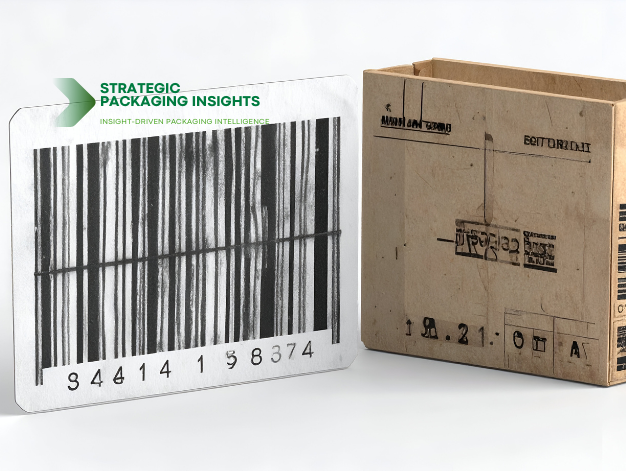
Barcode systems remain foundational. They’re inexpensive, widely adopted, and easy to integrate. For many companies, barcodes are still the entry point into traceability.
RFID is where the market gets more powerful. RFID enables non-line-of-sight scanning, bulk reading, and real-time inventory visibility. It’s particularly valuable in high-volume logistics, retail, and pharmaceutical applications.
Sensors and GPS add another layer entirely. These technologies track not just location, but condition. Temperature, humidity, shock, and time delays can all be monitored. For cold-chain logistics and high-value electronics, this data is critical.
Then comes the next wave: blockchain, IoT platforms, and AI-driven analytics. Blockchain brings tamper-proof records and trust across multiple stakeholders. AI turns traceability data into predictive insights, helping companies anticipate disruptions rather than react to them.
The shift is clear. Traceable packaging is evolving from identification to intelligence.
Application Hotspots: Where Adoption Is Fastest
Not all industries move at the same speed.
Food and Beverage leads adoption, driven by safety regulations, recall management, and consumer demand for origin transparency. Traceability reduces recall scope, limits waste, and protects brand equity when things go wrong.
Pharmaceuticals follow closely. Counterfeit drugs remain a global issue, and serialization requirements have made traceable packaging essential. Here, traceability isn’t about optimization. It’s about patient safety.
Electronics and Automotive use traceable packaging to combat counterfeiting, manage complex supplier networks, and optimize logistics. As product complexity increases, so does the value of visibility.
Across all applications, traceable packaging acts as a risk-control mechanism.
Materials: Performance Meets Sustainability
Plastic still dominates traceable packaging due to durability, flexibility, and compatibility with embedded technologies like RFID and sensors. It’s reliable and cost-effective, especially for long-distance logistics.
But sustainability pressures are reshaping material choices.
Paper-based traceable packaging is gaining momentum, particularly in food and consumer goods. Advances in printable electronics and smart labels are making paper a viable carrier for traceability features.
Metal and glass remain niche but important for high-value or sensitive products, where protection and integrity matter more than weight or cost.
The underlying tension is clear. Companies must balance performance, cost, and environmental responsibility. Traceable packaging increasingly has to deliver all three.
End Users: Who’s Driving Adoption
Manufacturers are the primary adopters. They need upstream and downstream visibility to manage quality, compliance, and supplier risk.
Retailers use traceable packaging to improve inventory accuracy, reduce shrinkage, and meet transparency expectations. For omnichannel retail, traceability enables smoother fulfillment and fewer errors.
Logistics providers rely on traceability to optimize routing, monitor conditions, and provide accountability across complex networks.
Even consumers are now part of the system, accessing product data directly through QR codes and smart labels.
Traceability is no longer confined to the back office. It’s becoming customer-facing.
Regional Dynamics: Where Growth Is Concentrated
The United States leads the market with a size of $3.5 billion, supported by strong technology adoption and regulatory enforcement. Transparency and compliance are non-negotiable in food and pharma supply chains.
China, at $2.8 billion, is growing faster, fueled by e-commerce scale, industrial expansion, and government efforts to reduce counterfeiting.
Germany anchors Europe with its manufacturing strength and emphasis on quality standards.
India stands out with a 10% CAGR, driven by rapid retail expansion, digitalization initiatives, and rising awareness of product authenticity.
The growth center of gravity is gradually shifting toward Asia-Pacific, even as North America and Europe remain dominant.
Challenges: The Friction Points
Despite strong momentum, adoption isn’t frictionless.
High implementation costs remain a barrier, especially for SMEs. RFID infrastructure, sensors, systems integration, and cybersecurity all require upfront investment.
Integration complexity is another hurdle. Traceable packaging systems must work with existing ERP, WMS, and logistics platforms. Poor integration kills ROI.
There’s also data security risk. Traceability generates vast amounts of sensitive data. Breaches can undermine trust faster than any operational failure.
The winners in this market will be those who reduce complexity without sacrificing capability.
Strategic Outlook: What Comes Next
Looking ahead to 2025–2033, the market is moving from adoption to optimization.
Traceable packaging will increasingly support predictive supply chains, where disruptions are anticipated and mitigated in advance. Sustainability reporting, ESG compliance, and ethical sourcing will become tightly linked to traceability data.
Collaboration between technology providers and packaging manufacturers will accelerate innovation. Scalable, modular solutions will replace bespoke, high-cost implementations.
The takeaway is simple. Traceable packaging is no longer about tracking boxes. It’s about building trust at scale.
And in a world where trust is fragile and supply chains are under constant stress, that makes this market not just relevant, but inevitable.