
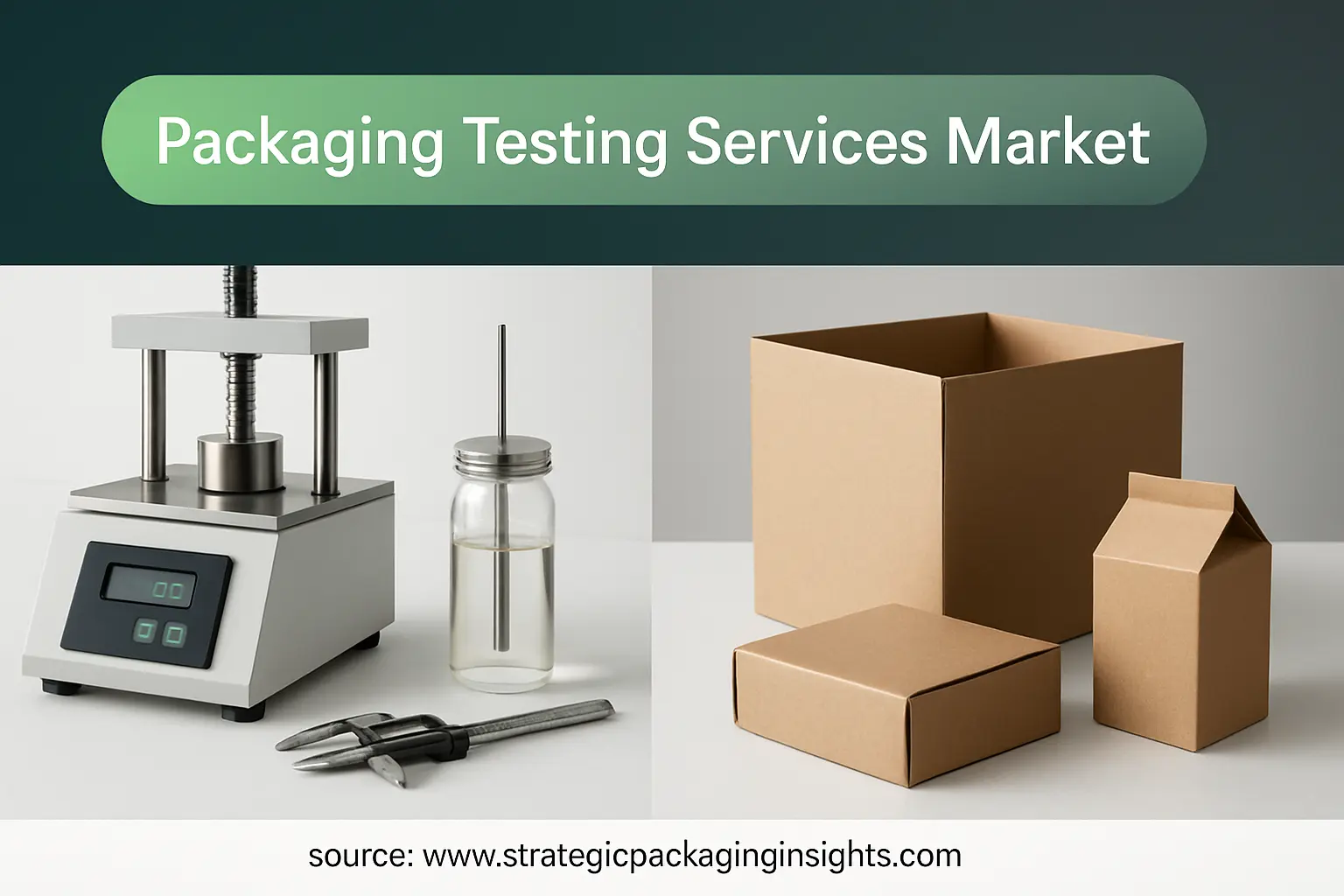
Explore the Packaging Testing Services Market from 2017 to 2033, analyzing growth drivers, market size, segment intelligence, and strategic recommendations for stakeholders.
Market Storyline (Historic to Forecast)
The Packaging Testing Services Market has undergone significant transformation from 2017 to 2023, driven by increasing consumer awareness and stringent regulatory standards. As we look towards the forecast period of 2025 to 2033, the market is poised for robust growth, fueled by technological advancements and the rising demand for sustainable packaging solutions. This evolution reflects a broader trend towards ensuring product safety and compliance, which is expected to continue shaping the market dynamics.
https://www.strategicpackaginginsights.com/report/packaging-testing-services-market
What Drives Growth
The growth of the Packaging Testing Services Market is primarily driven by the increasing complexity of packaging materials and the need for compliance with international standards. The rise in e-commerce has also necessitated more rigorous testing to ensure packaging integrity during transit. Additionally, the growing focus on sustainability and environmental impact has led to innovations in biodegradable and recyclable packaging, further driving the demand for comprehensive testing services.
Market Size Interpretation
In 2024, the Packaging Testing Services Market was valued at $12.5 billion. By 2033, it is projected to reach $21.8 billion, growing at a CAGR of 6.2%. This substantial growth indicates a strong market demand for testing services, reflecting the increasing importance of packaging in product safety and brand reputation. The projected market size underscores the potential for significant investment opportunities and the need for strategic positioning by market players to capitalize on this growth.
Segment Intelligence
| Segment | Strategic Insights |
|---|---|
| Physical Testing | Critical for assessing the durability and strength of packaging materials, especially in e-commerce and logistics. |
| Chemical Testing | Essential for ensuring packaging materials do not react adversely with contents, crucial for food and healthcare sectors. |
| Microbiological Testing | Vital for preventing contamination, particularly in food & beverage and healthcare applications. |
| Food & Beverage | Largest application segment, driven by stringent safety standards and consumer demand for safe packaging. |
| Healthcare | Growing rapidly due to the critical nature of packaging in maintaining product sterility and safety. |
| Personal Care | Increasing focus on packaging aesthetics and safety, driving demand for comprehensive testing. |
| Electronics | Requires specialized testing to ensure packaging protects sensitive components during shipping. |
| Manufacturers | Primary end-users, investing heavily in testing to ensure compliance and product safety. |
| Retailers | Increasingly involved in testing to ensure product integrity and customer satisfaction. |
| Regulatory Bodies | Driving demand for testing services through stringent compliance requirements. |
| North America | Leading region due to advanced regulatory frameworks and high consumer awareness. |
| Europe | Strong growth driven by sustainability initiatives and stringent safety standards. |
| Asia Pacific | Fastest-growing region, with increasing industrialization and consumer demand. |
| Latin America | Emerging market with growing awareness and regulatory developments. |
| Middle East & Africa | Gradual growth with increasing focus on quality and safety standards. |
End-User Implications
For manufacturers, the emphasis on packaging testing is crucial for maintaining product quality and meeting regulatory standards. Retailers benefit from ensuring product integrity, which enhances customer satisfaction and brand loyalty. Regulatory bodies play a pivotal role in shaping market dynamics by enforcing compliance, thereby driving the demand for testing services. Each end-user segment must adapt to evolving standards and consumer expectations to remain competitive.
Investment & Strategy Lens
Investors should focus on companies that are innovating in testing technologies and expanding their service offerings to include sustainability assessments. Strategic partnerships and acquisitions can provide competitive advantages by broadening service capabilities and geographic reach. Companies should also invest in R&D to stay ahead of regulatory changes and technological advancements, ensuring they can offer cutting-edge solutions to their clients.
SWOT Matrix
| Strengths | Weaknesses | Opportunities | Threats |
|---|---|---|---|
| Strong regulatory frameworks driving demand | High cost of advanced testing technologies | Growing demand for sustainable packaging solutions | Intense competition leading to price pressures |
| Technological advancements in testing methods | Limited awareness in emerging markets | Expansion into emerging markets | Regulatory changes increasing compliance costs |
Packaging Trends Shaping This Market
The shift towards sustainable packaging is a major trend influencing the Packaging Testing Services Market. Innovations in biodegradable and recyclable materials are driving the need for new testing methodologies. Additionally, the rise of smart packaging, which incorporates technology to enhance functionality, is creating new testing challenges and opportunities. These trends highlight the need for continuous innovation and adaptation in testing services to meet evolving market demands.
Outlook & Strategic Recommendations
The Packaging Testing Services Market is set for significant growth, driven by regulatory pressures and consumer demand for safe, sustainable packaging. Companies should focus on expanding their testing capabilities and investing in new technologies to stay competitive. Strategic collaborations and geographic expansion can provide additional growth opportunities. By aligning their strategies with market trends and consumer expectations, businesses can position themselves for long-term success in this dynamic market.