
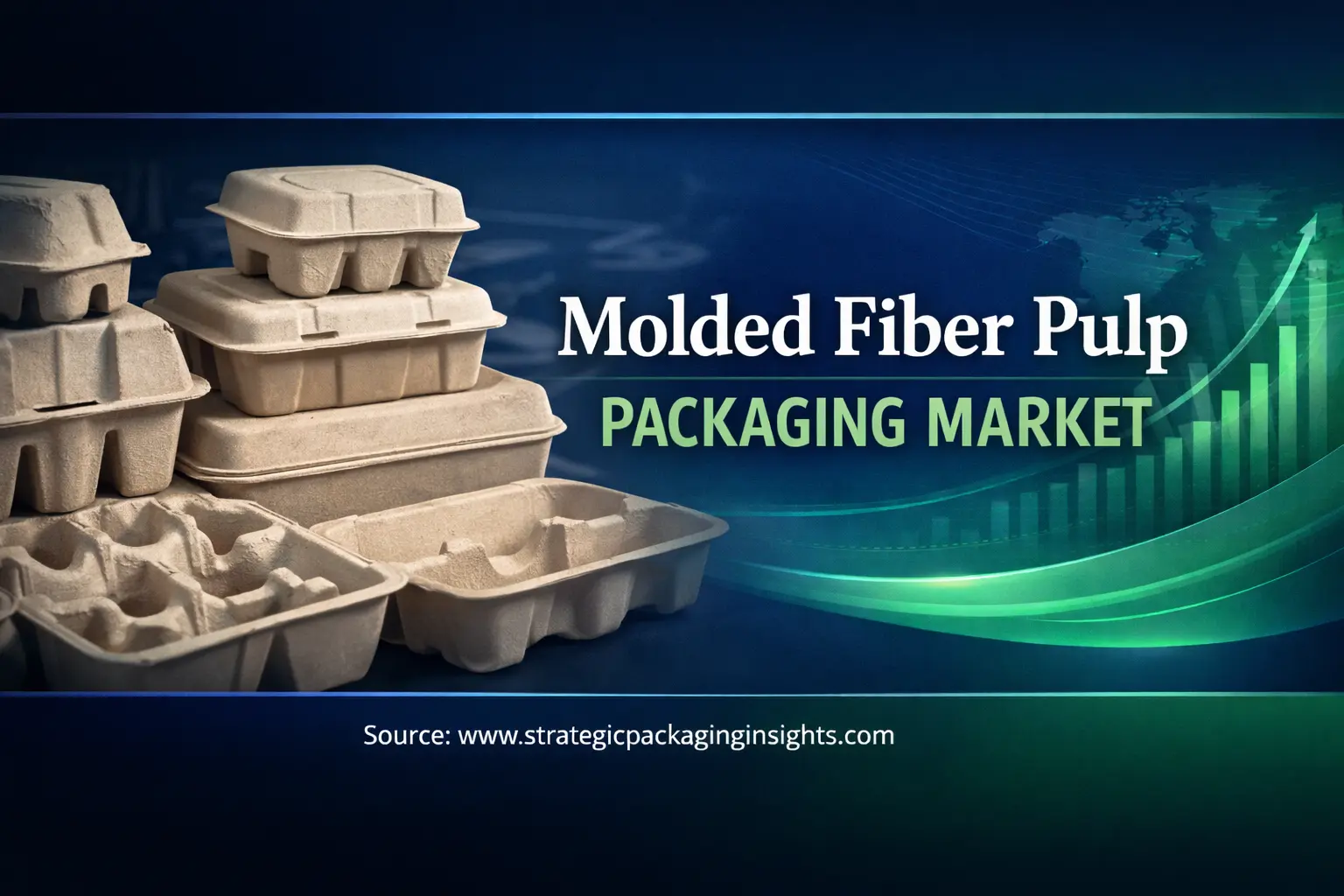
Dive into the evolving landscape of the Molded Fiber Pulp Packaging Market, exploring its growth trajectory, key segments, industry applications, and strategic insights for packaging leaders.
Executive Market Narrative
The Molded Fiber Pulp Packaging Market has undergone significant transformation over the past decade, driven by increasing environmental awareness and the global shift towards sustainable packaging solutions. Historically, from 2017 to 2023, the market witnessed a steady rise in demand as industries sought alternatives to plastic packaging. This evolution was catalyzed by stringent regulations on plastic use and a growing consumer preference for eco-friendly products. As we stand in 2024, the market is poised at a pivotal juncture, with innovations in material science and manufacturing processes promising to redefine the landscape further.
https://www.strategicpackaginginsights.com/report/molded-fiber-pulp-packaging-market
Why This Market Matters
The importance of the Molded Fiber Pulp Packaging Market cannot be overstated. As global environmental concerns mount, industries are under pressure to adopt sustainable practices. Molded fiber pulp packaging offers a biodegradable and recyclable solution, aligning with the circular economy principles. This market not only addresses ecological concerns but also meets the functional requirements of diverse industries, from food and beverage to electronics, thereby playing a crucial role in reducing the carbon footprint of packaging.
Market Size & Growth Trajectory
In 2024, the market size was valued at $8.5 billion. Looking ahead to 2033, projections indicate a robust growth trajectory, with the market expected to reach $15.2 billion. This growth is underpinned by a compound annual growth rate (CAGR) of 6.8%, reflecting the increasing adoption of molded fiber pulp packaging across various sectors. The market's expansion is fueled by technological advancements, increased investment in sustainable packaging solutions, and a broader acceptance of eco-friendly materials by consumers and businesses alike.
Key Market Segmentation
| Segment | Description |
|---|---|
| Type | Includes Thick-Wall, Transfer Molded, Thermoformed Fiber, and Processed Pulp, each offering unique properties for different packaging needs. |
| Application | Covers Food & Beverage, Electronics, Healthcare, Personal Care, Automotive, and Industrial sectors, highlighting the versatility of molded fiber pulp packaging. |
| End-User | Comprises Retail, Institutional, and Industrial users, reflecting the broad applicability of the packaging solutions. |
| Region | Encompasses Asia Pacific, North America, Latin America, Europe, and the Middle East & Africa, indicating the global reach and regional dynamics of the market. |
Industry Use-Case Mapping
The diverse segments of the Molded Fiber Pulp Packaging Market find applications across various industries. In the food and beverage sector, molded fiber is used for packaging eggs, fruits, and take-out containers, providing a sustainable alternative to plastic. The electronics industry utilizes transfer molded and thermoformed fiber for protective packaging of delicate components. In healthcare, molded fiber is employed for packaging medical devices and supplies, ensuring sterility and protection. Personal care products benefit from the aesthetic and functional properties of processed pulp packaging, while the automotive and industrial sectors leverage thick-wall molded fiber for robust protective packaging solutions.
Competitive & Value Chain Insights
The competitive landscape of the Molded Fiber Pulp Packaging Market is characterized by a mix of established players and innovative startups. Companies are investing in research and development to enhance the performance and cost-effectiveness of molded fiber products. The value chain involves raw material suppliers, manufacturers, distributors, and end-users, with a growing emphasis on collaboration and sustainability across the chain. Strategic partnerships and mergers are common as companies seek to expand their market presence and technological capabilities.
Short SWOT Analysis
| Strengths | Weaknesses | Opportunities | Threats |
|---|---|---|---|
| Eco-friendly and biodegradable | Higher cost compared to traditional materials | Rising demand for sustainable packaging | Competition from alternative sustainable materials |
| Versatile applications across industries | Limited awareness in some regions | Technological advancements in material science | Regulatory changes impacting raw material sourcing |
Future Outlook (2033)
Looking towards 2033, the Molded Fiber Pulp Packaging Market is expected to continue its upward trajectory, driven by ongoing innovations and increasing global demand for sustainable packaging solutions. The market will likely see enhanced product offerings with improved performance characteristics, catering to the evolving needs of various industries. Regional markets, particularly in Asia Pacific and North America, are anticipated to lead growth, supported by favorable regulatory environments and consumer preferences.
Why This Matters for Packaging Leaders
For packaging leaders, understanding the dynamics of the Molded Fiber Pulp Packaging Market is crucial for strategic decision-making. As sustainability becomes a key differentiator in the packaging industry, companies that invest in molded fiber solutions stand to gain a competitive edge. By aligning with environmental goals and consumer expectations, packaging leaders can drive innovation, enhance brand reputation, and capture new market opportunities. Staying informed about market trends and technological advancements will be essential for navigating the future landscape of packaging.