
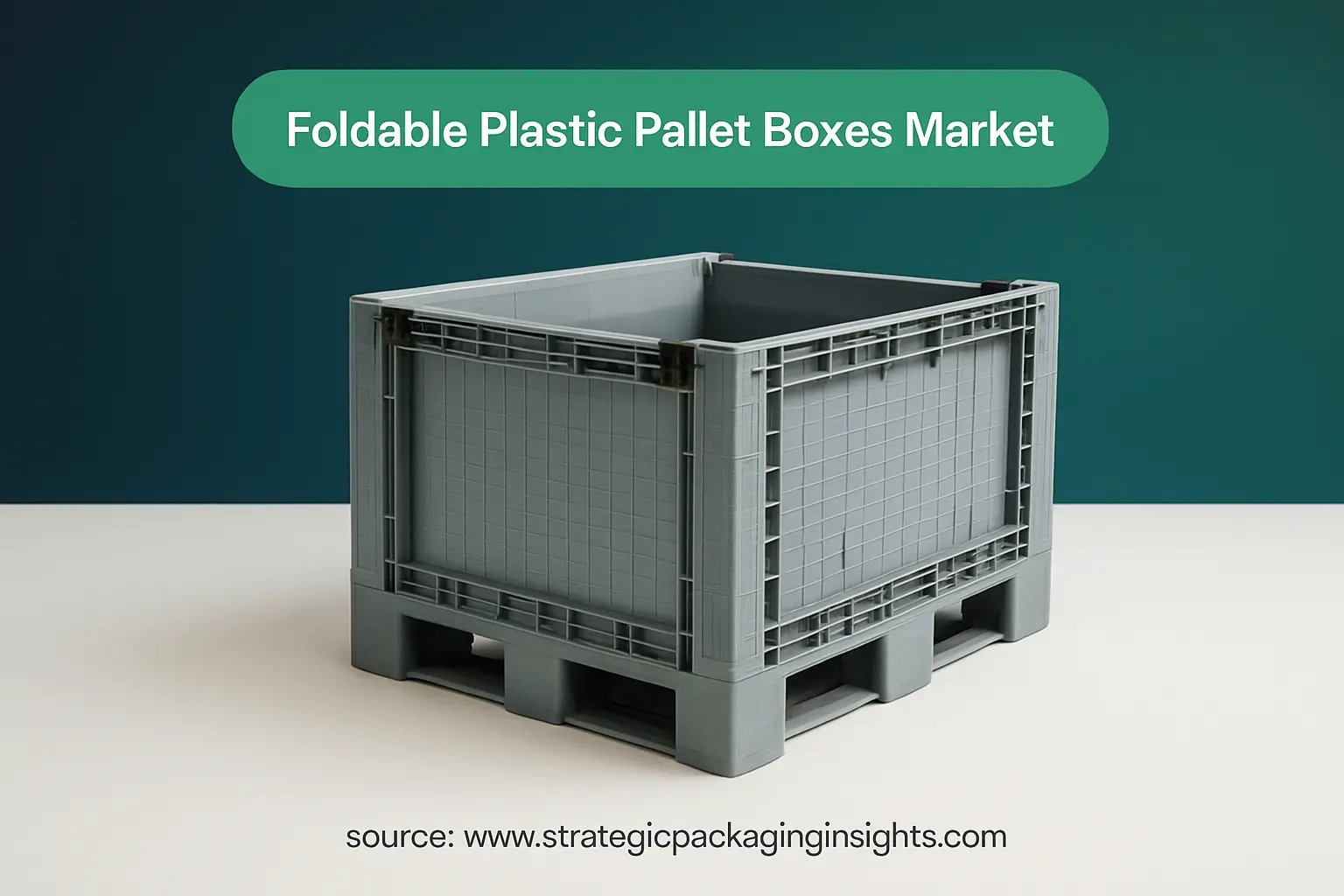
Explore the evolution, significance, and future outlook of the Foldable Plastic Pallet Boxes Market. Understand market size, growth trajectory, segmentation, and strategic insights for industry leaders.
Executive Market Narrative
The Foldable Plastic Pallet Boxes Market has undergone significant transformation over the past decade, driven by the increasing demand for efficient and sustainable packaging solutions. From 2018 to 2024, the market witnessed a steady growth trajectory, fueled by advancements in material technology and the rising emphasis on reducing carbon footprints in logistics and supply chain operations. The evolution of this market is marked by the shift from traditional wooden and metal pallets to more versatile and eco-friendly plastic alternatives. This transition is not merely a trend but a strategic move by industries to enhance operational efficiency and sustainability.
https://www.strategicpackaginginsights.com/report/foldable-plastic-pallet-boxes-market
As we moved into the base year of 2025, the market was valued at $2.61 billion, reflecting the growing adoption of foldable plastic pallet boxes across various sectors. The market's evolution is characterized by innovations in design and functionality, catering to the diverse needs of industries ranging from retail logistics to automotive manufacturing. The forecast period from 2026 to 2034 is expected to witness further advancements, with a projected market size of $3.71 billion, driven by a compound annual growth rate (CAGR) of 4.0%.
Why This Market Matters
The significance of the Foldable Plastic Pallet Boxes Market lies in its ability to address critical challenges faced by modern supply chains. These boxes offer a sustainable alternative to traditional packaging solutions, reducing waste and enhancing the efficiency of logistics operations. Their foldable nature allows for space-saving during transportation and storage, leading to cost reductions and improved resource utilization. Moreover, the durability and reusability of plastic pallet boxes contribute to their growing popularity, aligning with global sustainability goals and regulatory requirements.
Industries such as retail, agriculture, and automotive are increasingly relying on these solutions to streamline their operations and meet the demands of a rapidly evolving market landscape. The market's growth is also indicative of a broader shift towards circular economy practices, where the focus is on minimizing environmental impact while maximizing economic value.
Market Size & Growth Trajectory
In 2025, the Foldable Plastic Pallet Boxes Market was valued at $2.61 billion. By 2034, it is projected to reach $3.71 billion, reflecting a steady CAGR of 4.0%. This growth trajectory underscores the increasing adoption of foldable plastic pallet boxes across various industries, driven by their cost-effectiveness, durability, and environmental benefits. The market's expansion is further supported by technological advancements in material science, enabling the development of more robust and versatile packaging solutions.
Key Market Segmentation
| Segment | Description |
|---|---|
| By Product Type | Foldable Bulk Boxes, Pallet Boxes, Collapsible Crates |
| By Material Type | HDPE, PP, Recycled Plastic |
| By Application | Retail Logistics, Agriculture, Automotive, Industrial Handling |
| By End Use | Warehousing, Food Distribution, Manufacturing, Logistics |
| Region | Asia Pacific, North America, Latin America, Europe, Middle East & Africa |
Industry Use-Case Mapping
The diverse segments of the Foldable Plastic Pallet Boxes Market cater to a wide range of applications. In retail logistics, these boxes are used for efficient transportation and storage of goods, reducing handling time and costs. In agriculture, they provide a durable and hygienic solution for transporting fresh produce, ensuring product integrity and minimizing spoilage. The automotive industry utilizes foldable plastic pallet boxes for the safe and secure transport of parts and components, enhancing supply chain efficiency. In industrial handling, these boxes offer a robust solution for managing heavy and bulky items, streamlining operations and reducing labor costs.
Competitive & Value Chain Insights
The competitive landscape of the Foldable Plastic Pallet Boxes Market is characterized by the presence of key players focusing on innovation and strategic partnerships to enhance their market position. Companies are investing in research and development to introduce advanced materials and designs that meet the evolving needs of end-users. The value chain of this market involves raw material suppliers, manufacturers, distributors, and end-users, each playing a crucial role in delivering high-quality and cost-effective solutions to the market.
Short SWOT Analysis
| Strengths | Weaknesses | Opportunities | Threats |
|---|---|---|---|
| Durability and reusability | Higher initial cost compared to traditional materials | Growing demand for sustainable packaging | Fluctuating raw material prices |
| Space-saving design | Limited awareness in emerging markets | Technological advancements in materials | Intense competition from alternative solutions |
Future Outlook (2034)
Looking ahead to 2034, the Foldable Plastic Pallet Boxes Market is poised for continued growth, driven by the increasing emphasis on sustainability and efficiency in supply chain operations. The market is expected to benefit from ongoing innovations in material technology, leading to the development of more durable and versatile products. As industries continue to prioritize environmental responsibility, the demand for foldable plastic pallet boxes is likely to rise, offering significant opportunities for market players to expand their offerings and capture new markets.
Why This Matters for Packaging Leaders
For packaging leaders, understanding the dynamics of the Foldable Plastic Pallet Boxes Market is crucial for strategic decision-making. The market's growth potential and alignment with sustainability goals present a unique opportunity to innovate and differentiate in a competitive landscape. By investing in advanced materials and designs, companies can enhance their product offerings and meet the evolving needs of their customers. Additionally, staying informed about market trends and consumer preferences will enable packaging leaders to anticipate changes and adapt their strategies accordingly, ensuring long-term success and resilience in the face of industry challenges.