
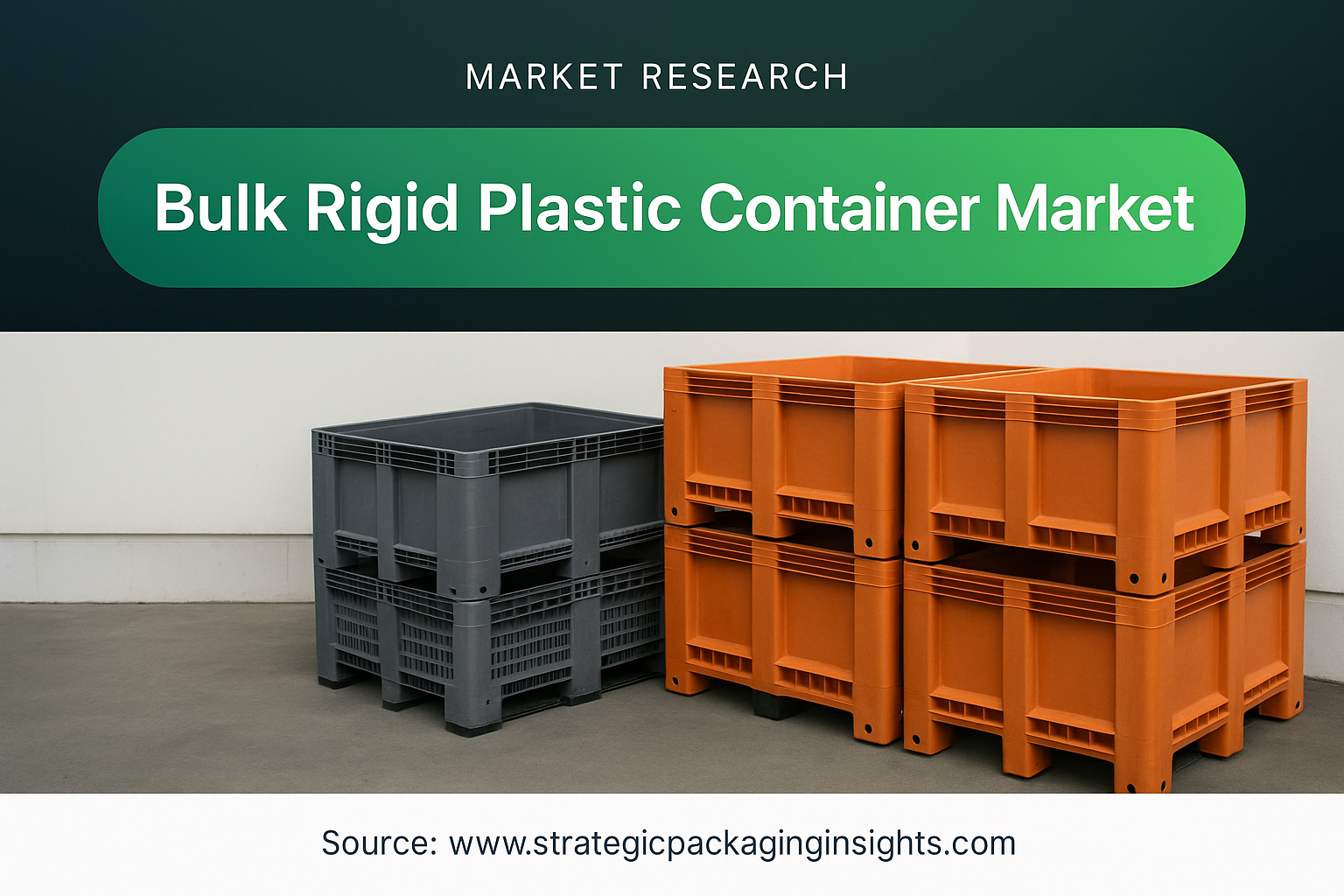
Explore the evolution, significance, and future trajectory of the Bulk Rigid Plastic Container Market, including key segments, industry applications, and strategic insights for packaging leaders.
Executive Market Narrative
The Bulk Rigid Plastic Container Market has undergone significant transformation over the past decade, driven by technological advancements, evolving consumer preferences, and stringent regulatory frameworks. From 2017 to 2023, the market witnessed a steady growth trajectory, fueled by the increasing demand for durable and sustainable packaging solutions across various industries. The shift towards eco-friendly materials and the rise of e-commerce have further accelerated the adoption of bulk rigid plastic containers, positioning them as a critical component in the global packaging landscape.
https://www.strategicpackaginginsights.com/report/bulk-rigid-plastic-container-market
As we move into 2024, the market is poised for continued expansion, with innovations in material science and design playing a pivotal role in shaping its future. The integration of smart technologies and the emphasis on circular economy principles are expected to redefine the competitive dynamics, offering new avenues for growth and differentiation.
Why This Market Matters
The Bulk Rigid Plastic Container Market is integral to the global supply chain, providing essential packaging solutions that ensure the safe and efficient transport of goods. These containers offer unparalleled durability, versatility, and cost-effectiveness, making them indispensable across a wide range of industries, including food and beverage, pharmaceuticals, and chemicals.
In an era where sustainability and resource efficiency are paramount, bulk rigid plastic containers offer a viable solution to reduce environmental impact while maintaining product integrity. Their ability to be reused and recycled aligns with the growing consumer and regulatory demand for sustainable packaging, underscoring their importance in the transition towards a circular economy.
Market Size & Growth Trajectory
In 2024, the Bulk Rigid Plastic Container Market was valued at $8.5 billion. Looking ahead to 2033, the market is projected to reach $12.3 billion, reflecting a compound annual growth rate (CAGR) of 4.2%. This growth is indicative of the increasing adoption of these containers across various sectors, driven by their functional benefits and alignment with sustainability goals.
The steady CAGR highlights the market's resilience and adaptability in the face of evolving industry trends and consumer expectations. As businesses continue to prioritize efficiency and sustainability, the demand for bulk rigid plastic containers is expected to rise, offering significant opportunities for innovation and expansion.
Key Market Segmentation
| Segment | Description |
|---|---|
| Material Type | Includes Polyethylene and Polypropylene, known for their durability and recyclability. |
| End-User Industry | Comprises Food & Beverage and Pharmaceuticals, sectors that demand high standards of safety and hygiene. |
| Capacity | Ranges from Less than 5 Liters to 5-20 Liters, catering to diverse storage and transportation needs. |
| Region | Focuses on Asia Pacific and North America, key markets with significant growth potential. |
Industry Use-Case Mapping
In the food and beverage industry, bulk rigid plastic containers are essential for the storage and transportation of raw materials and finished products, ensuring freshness and preventing contamination. Polyethylene containers, in particular, are favored for their resistance to moisture and chemicals, making them ideal for this sector.
The pharmaceutical industry relies on these containers for the secure handling of sensitive products, where polypropylene's high chemical resistance and strength are crucial. The varying capacities available allow for tailored solutions that meet specific logistical requirements, enhancing operational efficiency.
Competitive & Value Chain Insights
The competitive landscape of the Bulk Rigid Plastic Container Market is characterized by a mix of established players and emerging innovators. Companies are increasingly focusing on product differentiation through material innovation and sustainable practices. The value chain is evolving to incorporate advanced manufacturing techniques and digital technologies, enhancing product quality and supply chain transparency.
Strategic partnerships and collaborations are becoming more prevalent, enabling companies to leverage complementary strengths and expand their market reach. As the market continues to grow, the ability to adapt to changing consumer demands and regulatory standards will be key to maintaining a competitive edge.
Short SWOT Analysis
| Strengths | Weaknesses | Opportunities | Threats |
|---|---|---|---|
| Durability and versatility of materials. | Environmental concerns over plastic waste. | Growing demand for sustainable packaging solutions. | Regulatory pressures and competition from alternative materials. |
Future Outlook (2033)
Looking towards 2033, the Bulk Rigid Plastic Container Market is expected to continue its upward trajectory, driven by ongoing innovations in material science and design. The integration of smart technologies, such as IoT-enabled tracking and monitoring, will enhance the functionality and value proposition of these containers.
As sustainability remains a top priority, the development of biodegradable and bio-based plastics will gain momentum, offering new opportunities for differentiation and growth. The market will also see increased regional diversification, with Asia Pacific and North America leading the charge in terms of adoption and innovation.
Why This Matters for Packaging Leaders
For packaging leaders, understanding the dynamics of the Bulk Rigid Plastic Container Market is crucial to staying ahead in a competitive landscape. The market's growth potential and alignment with sustainability goals present significant opportunities for innovation and strategic investment.
By leveraging insights into key market segments and industry applications, packaging leaders can develop targeted solutions that meet the evolving needs of their customers. Embracing sustainable practices and technological advancements will not only enhance their competitive positioning but also contribute to a more sustainable future for the packaging industry.