
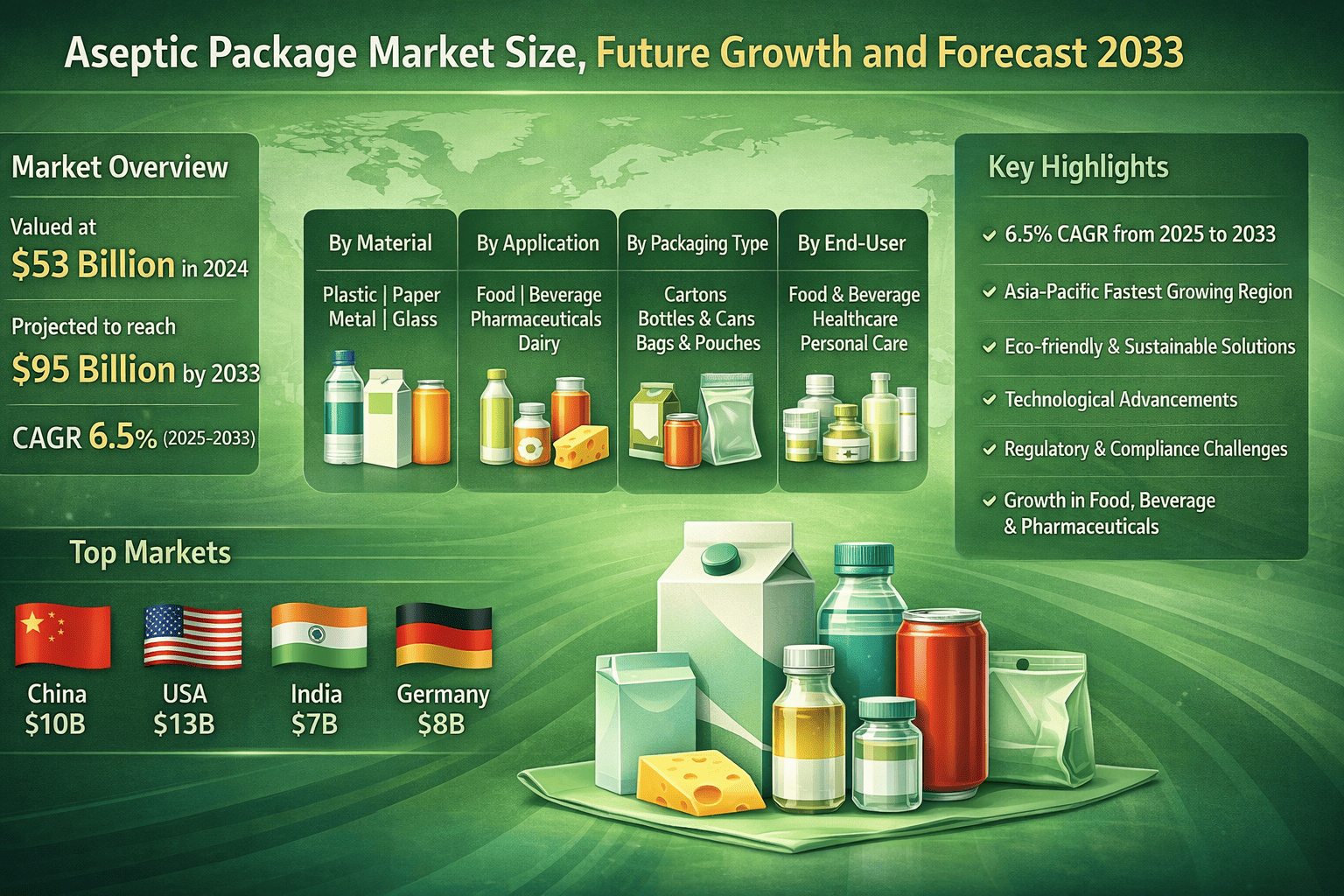
The aseptic package market was valued at $53 billion in 2024 and is projected to reach $95 billion by 2033, growing at a CAGR of 6.5% during the forecast period 2025-2033.
The aseptic package market is undergoing a significant transformation, driven by shifting consumer preferences, technological breakthroughs, and the global push toward sustainable packaging. Valued at $53 billion in 2024, the market is projected to reach $95 billion by 2033, expanding at a compound annual growth rate (CAGR) of 6.5% during the forecast period. From food and beverages to pharmaceuticals and personal care, aseptic packaging has become an indispensable solution for industries that prioritize product safety, shelf-life extension, and environmental responsibility.
https://www.strategicpackaginginsights.com/report/aseptic-package-market
What Is Aseptic Packaging and Why Does It Matter?
Aseptic packaging refers to the process of filling a commercially sterile product into a sterile container under sterile conditions, then sealing it to prevent recontamination. The approach eliminates the need for preservatives while maintaining product freshness and safety over extended periods. This makes it particularly valuable in sectors where product integrity is non-negotiable, such as dairy, pharmaceuticals, and ready-to-eat foods.
As consumers worldwide grow more health-conscious and demand cleaner labels, aseptic packaging offers the perfect balance between safety and naturalness. Manufacturers no longer need to rely on chemical preservatives to protect their products, allowing them to cater to a more discerning consumer base without compromising shelf life or quality.
Key Market Drivers Fueling Growth
Several powerful forces are propelling the aseptic package market forward. The most prominent driver is the rising global demand for packaged food and beverages with extended shelf lives. As urbanization accelerates and lifestyles become busier, consumers are increasingly turning to convenient, ready-to-consume products, creating a strong tailwind for aseptic packaging adoption.
Technological advancements in packaging materials and processes are also playing a critical role. Innovations in barrier technologies, sterile filling systems, and material science have significantly improved the efficiency and reliability of aseptic packaging solutions. These improvements have made it possible to package a broader range of products under aseptic conditions, expanding the addressable market considerably.
The pharmaceutical sector represents another vital growth engine. Aseptic packaging ensures the sterility and efficacy of medical products, including injectables, intravenous solutions, and sensitive biologics. With the global pharmaceutical industry continuing to expand, driven by aging populations and increased healthcare spending, demand for high-quality aseptic packaging in this segment is set to rise steadily.
Challenges Facing Market Players
Despite its promising outlook, the aseptic package market is not without its hurdles. The high initial investment required to set up aseptic packaging operations remains a significant barrier, particularly for small and medium-sized enterprises. Aseptic packaging requires specialized equipment, controlled environments, and rigorously trained personnel, all of which translate into substantial capital expenditure.
The complexity of aseptic processes also creates operational challenges. Maintaining sterility throughout production demands precision and consistency, leaving little room for error. Any contamination during filling or sealing can compromise the entire batch, resulting in costly product recalls and reputational damage.
Regulatory compliance adds another layer of complexity. Companies must adhere to stringent guidelines set by food safety and pharmaceutical regulatory bodies across different geographies. Navigating these varying standards requires considerable expertise, resources, and time, which can slow market entry and product launches.
Material Segment Breakdown
Plastic remains the most widely used material in aseptic packaging, prized for its versatility, lightweight properties, and cost-effectiveness. Its superior barrier properties make it ideal for protecting products from oxygen, moisture, and microbial contamination. However, growing environmental concerns and regulatory pressure around single-use plastics are pushing manufacturers toward sustainable alternatives, including biodegradable plastics and materials made from recycled content.
Paper and paperboard are gaining ground as eco-friendly substitutes, offering renewable sourcing and recyclability. These materials are increasingly being used in aseptic cartons for beverages and dairy products. Metal packaging, though a smaller segment, remains valued for its durability and ability to provide robust protection, especially in the beverage sector. Glass, while less prevalent due to its weight and fragility, continues to hold appeal for premium product lines where perceived quality and inertness are priorities.
Application and End-User Landscape
The food and beverage industry dominates the application landscape, accounting for the largest share of aseptic packaging consumption. Aseptic cartons and pouches are widely used for juices, soups, sauces, dairy products, and ready-to-eat meals, all of which benefit from extended shelf life and reduced dependence on cold-chain logistics.
The dairy segment deserves special mention, as aseptic packaging plays a foundational role in preserving the freshness and quality of milk, cream, and related products throughout the supply chain. The pharmaceutical sector follows closely, relying on aseptic packaging to protect sterile drug formulations from contamination. Personal care and cosmetics companies are also increasingly adopting aseptic solutions to safeguard sensitive formulations and enhance product safety claims.
Regional Insights and Fastest-Growing Markets
North America, with a market size of $15 billion in 2024, represents a mature but steadily growing regional market. The region's established food processing industry and focus on sustainability are sustaining demand for advanced aseptic solutions. Europe, valued at $12 billion, is driven by strict regulatory standards and a robust consumer preference for eco-friendly packaging.
Asia-Pacific stands out as the fastest-growing region, with a market size of $18 billion in 2024 and a projected CAGR of 15% through 2033. China and India are leading this charge, with CAGRs of 18% and 20% respectively. Rapid urbanization, an expanding middle class, and increasing consumer awareness about food safety are fueling adoption across both countries. Latin America and the Middle East and Africa are also witnessing gradual growth, though at more moderate paces due to economic and infrastructural constraints.
Competitive Landscape and Key Players
The aseptic package market is highly competitive, with Tetra Pak maintaining its dominant position through an extensive product portfolio and unwavering commitment to sustainability. SIG Combibloc is recognized for its advanced carton packaging systems and strong research and development focus. Amcor Limited, Elopak, and Greatview Aseptic Packaging round out the competitive field, each carving out differentiated positions through innovation, geographic expansion, and sustainability initiatives.
The Road Ahead
The aseptic package market is firmly on a growth trajectory, with sustainability and innovation emerging as the twin pillars shaping its future. As biodegradable and recyclable materials continue to advance, manufacturers that invest in eco-friendly aseptic solutions will be well-positioned to capture growing demand from both consumers and regulators. The convergence of food safety, environmental stewardship, and technological progress makes aseptic packaging one of the most dynamic and opportunity-rich segments in the global packaging industry today.