
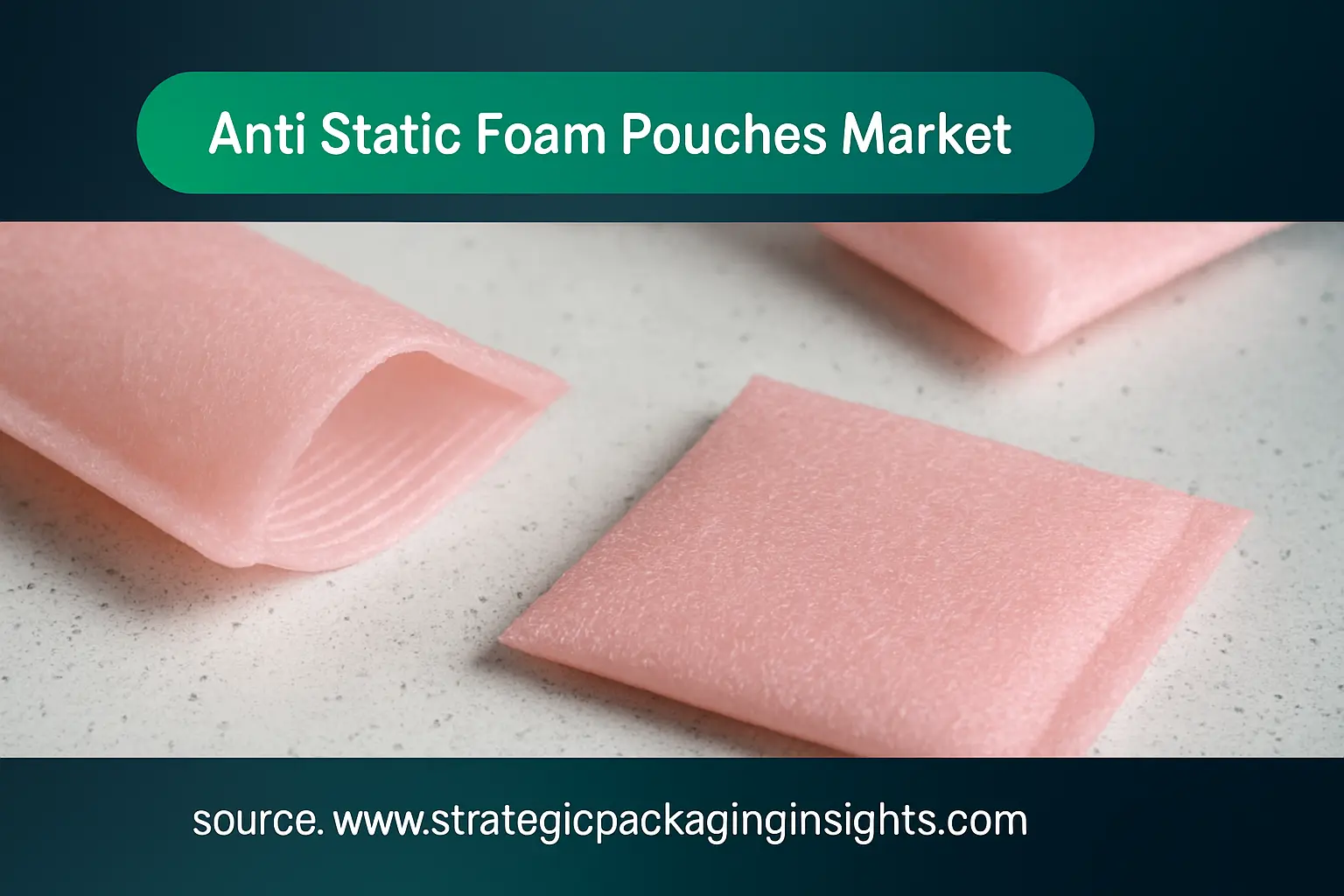
Explore the Anti Static Foam Pouches Market with a detailed analysis of market evolution, size, CAGR, segment landscape, and strategic outlook from 2026 to 2034.
Strategic Market Overview
The Anti Static Foam Pouches Market is poised for significant growth, driven by increasing demand across various industries such as electronics, aerospace, and medical devices. These pouches are essential for protecting sensitive electronic components from electrostatic discharge (ESD), which can cause damage during storage and transportation. As industries continue to innovate and expand, the need for reliable packaging solutions like anti-static foam pouches becomes increasingly critical.
https://www.strategicpackaginginsights.com/report/anti-static-foam-pouches-market
From 2018 to 2034: Evolution of the Market
Between 2018 and 2024, the market witnessed steady growth, fueled by advancements in electronic manufacturing and the rising importance of ESD protection. The base year of 2025 marked a pivotal point, with the market valued at $6.48 billion. Looking ahead to the forecast period of 2026 to 2034, the market is expected to reach $10.54 billion, reflecting a compound annual growth rate (CAGR) of 5.5%. This growth trajectory underscores the expanding applications and technological advancements in anti-static packaging solutions.
Interpreting Market Size & CAGR
The base year market size of $6.48 billion in 2025 serves as a benchmark for understanding the market's potential. By 2034, the forecasted market size of $10.54 billion highlights the robust demand and adoption of anti-static foam pouches. The projected CAGR of 5.5% indicates a healthy growth rate, driven by factors such as increased electronic device production, heightened awareness of ESD risks, and the proliferation of high-tech industries requiring advanced packaging solutions.
Segment Landscape
| Segment | Details |
|---|---|
| By Product Type | Pink Antistatic Foam Pouches, Conductive Foam Pouches, Dissipative Foam Pouches |
| By Material Type | PE Foam, PU Foam, ESD Foam |
| By Application | Electronics, Circuit Boards, Precision Components |
| By End Use | Electronics Manufacturers, Logistics, Aerospace, Medical Devices |
| Region | Asia Pacific, North America, Latin America, Europe, Middle East & Africa |
The segment landscape of the Anti Static Foam Pouches Market is diverse, with product types such as pink antistatic, conductive, and dissipative foam pouches catering to different levels of ESD protection. Material types like PE, PU, and ESD foam offer varying degrees of durability and cost-effectiveness. Applications span across electronics, circuit boards, and precision components, while end-use sectors include electronics manufacturers, logistics, aerospace, and medical devices. Geographically, the market is segmented into regions such as Asia Pacific, North America, Latin America, Europe, and the Middle East & Africa, each with unique growth drivers and challenges.
Value Chain & Stakeholder Impact
The value chain of the Anti Static Foam Pouches Market involves raw material suppliers, manufacturers, distributors, and end-users. Each stakeholder plays a crucial role in ensuring the quality and effectiveness of the final product. Raw material suppliers provide essential components like PE and PU foam, while manufacturers focus on innovation and production efficiency. Distributors bridge the gap between manufacturers and end-users, ensuring timely delivery and customer satisfaction. End-users, including electronics manufacturers and logistics companies, rely on these pouches to protect their products and maintain operational integrity.
Opportunities vs Constraints
Opportunities in the market are abundant, with technological advancements and increasing demand for ESD protection driving growth. The rise of e-commerce and global trade further amplifies the need for reliable packaging solutions. However, constraints such as fluctuating raw material prices and stringent environmental regulations pose challenges. Companies must navigate these hurdles by investing in sustainable practices and cost-effective production methods.
SWOT Analysis
| Factor | Details |
|---|---|
| Strengths | High demand in electronics, diverse product offerings, strong distribution networks |
| Weaknesses | Dependency on raw material prices, limited awareness in emerging markets |
| Opportunities | Expansion in emerging markets, technological innovations, sustainability initiatives |
| Threats | Environmental regulations, competitive market landscape, economic fluctuations |
The SWOT analysis reveals that the market's strengths lie in its high demand and diverse product offerings. However, weaknesses such as dependency on raw material prices and limited awareness in emerging markets need to be addressed. Opportunities for growth include expansion into new markets and embracing sustainability initiatives, while threats from environmental regulations and economic fluctuations require strategic planning.
Technology, Regulation & Sustainability Impact
Technological advancements are pivotal in enhancing the performance and cost-effectiveness of anti-static foam pouches. Innovations in material science and manufacturing processes are leading to more efficient and environmentally friendly products. Regulatory frameworks, particularly those related to environmental impact, are shaping industry practices, pushing companies towards sustainable solutions. As sustainability becomes a key focus, companies are investing in eco-friendly materials and processes to meet regulatory requirements and consumer expectations.
Strategic Outlook to 2034
Looking ahead to 2034, the Anti Static Foam Pouches Market is expected to continue its upward trajectory, driven by technological advancements and increasing demand across various sectors. Companies that prioritize innovation, sustainability, and strategic partnerships will be well-positioned to capitalize on emerging opportunities. As the market evolves, stakeholders must remain agile, adapting to changing consumer preferences and regulatory landscapes to maintain competitive advantage and drive long-term growth.